
Story 6: The Modern Library That Remembers
Modern Library with Computers — 8 AI terms: Hallucination, Grounding, Retrieval, RAG, Summarization, Fact-Check, Citation, Long-Term Memory
1. Story (Days 1–2): Read the text with no pictures
Your child becomes the illustrator — ask, “What did you see?”
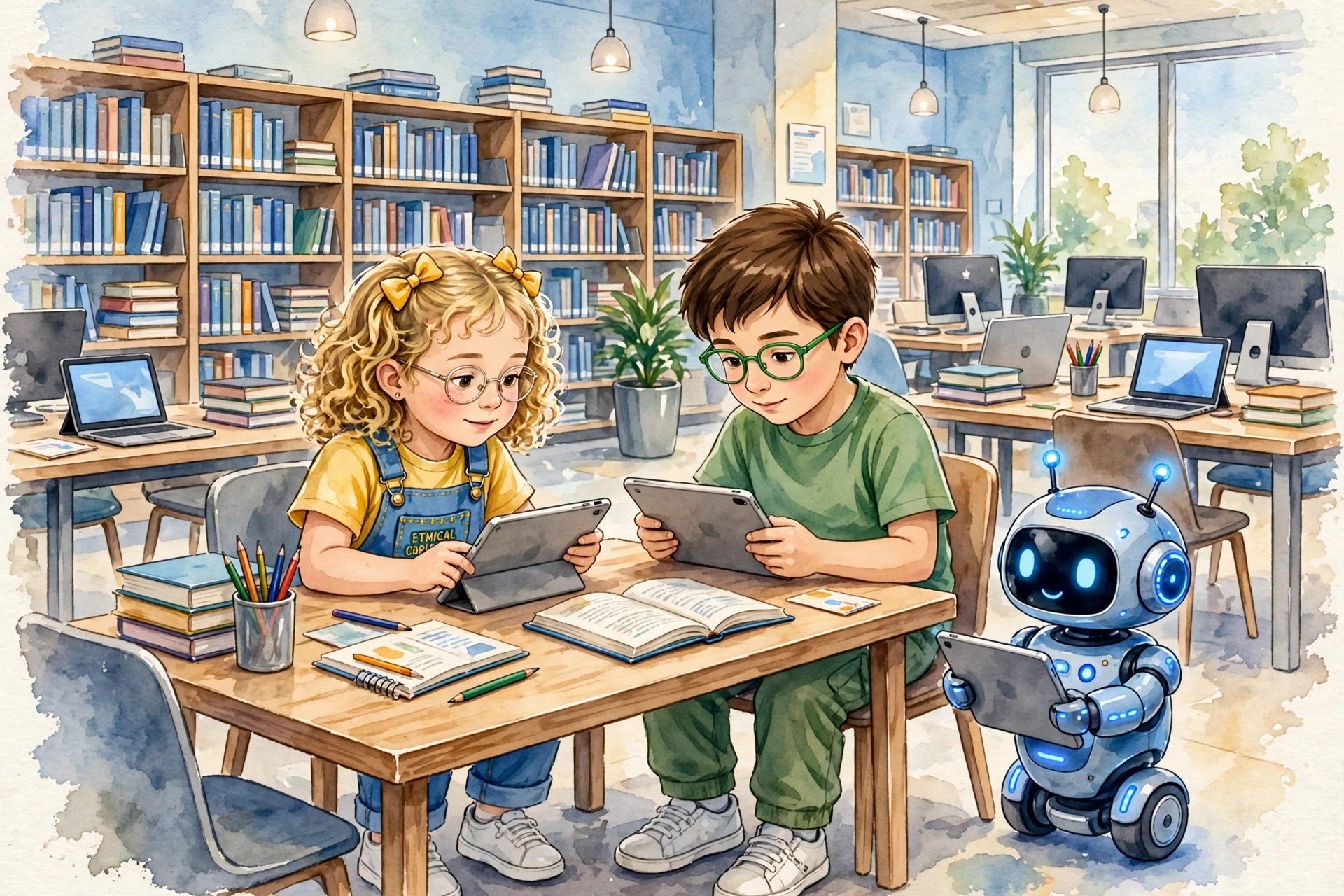
Lina, seven with blonde curly hair and yellow bows, and Umar, eight with brown hair, love the modern library where books sit on racks but everyone reads on tablets and laptops today.
This library is not old and quiet with only paper — it has computers humming, laptops open, tablets glowing, and Pip the bot holding a tablet too.
Pip says sometimes AI makes up a story that never happened, and making up false facts is called Hallucination.
Lina says “We need to keep AI tied to real books!” and keeping AI tied to true facts is called Grounding.
Umar taps his tablet to search the shelves, and searching for the right book is called Retrieval.
When AI searches books and then answers using what it found, search plus answer is called RAG, which means Retrieval-Augmented Generation.
Pip has ten books open, but makes them short, and making long things short is called Summarization.
Lina checks if Pip’s answer matches the book, and checking if it is true is called Fact-Check.
When Pip shows “This came from page 12,” showing where info came from is called Citation.
Remembering your favorite dinosaur book from last year is called Long-Term Memory.
Lina asks “Where do bees sleep?” and Pip starts to say “On the moon!” — that is a silly Hallucination.
Umar says “Let’s do Grounding! Look at the real bee book on the rack!”
Pip does quick Retrieval — scanning tablets and bookshelves together.
With RAG, Pip finds the bee page and then answers correctly.
Pip does Summarization: “Bees sleep in their hive, close together, staying warm.”
Lina does Fact-Check on her tablet, tapping the book to see if Pip is right.
Pip adds a Citation: “Source: Bee Book, page 8, rack 3.”
And Pip saves it in Long-Term Memory so next time Pip remembers.
Good modern library AI avoids Hallucination by using Grounding.
It uses Retrieval and RAG to find true answers on tablets and books.
It uses Summarization to make long pages short, and Fact-Check to stay honest.
It shows Citation so you know where facts came from, and keeps Long-Term Memory to remember.
Lina and Umar love this modern library where books on racks and tablets reading work together, with Pip as their co-pilot.
No parents, just two kids and a bot, learning how to make AI truthful, helpful, and kind in today’s world of computers, laptops, and tablets.
2. Image 1 — Association Anchor (Days 3–4)
Reveal the first image. It anchors what your child already imagined, and introduces the day’s AI vocabulary by pointing to and naming the tech icons in the picture.

3. Meet a Special Word (one per day)
Eight AI pre-literacy words are introduced gradually through simple metaphors — see the table below.
4. Quiz — Did You Catch It?
A short check-in, asked aloud or answered by clicking, to confirm the new word landed.
1. What is Hallucination?
2. What is Grounding?
3. What is Retrieval?
4. What is RAG?
5. What is Summarization?
6. What is Fact-Check?
7. What is Citation?
8. What is Long-Term Memory?
5. Image 2 — Creator Prompt (Day 5)
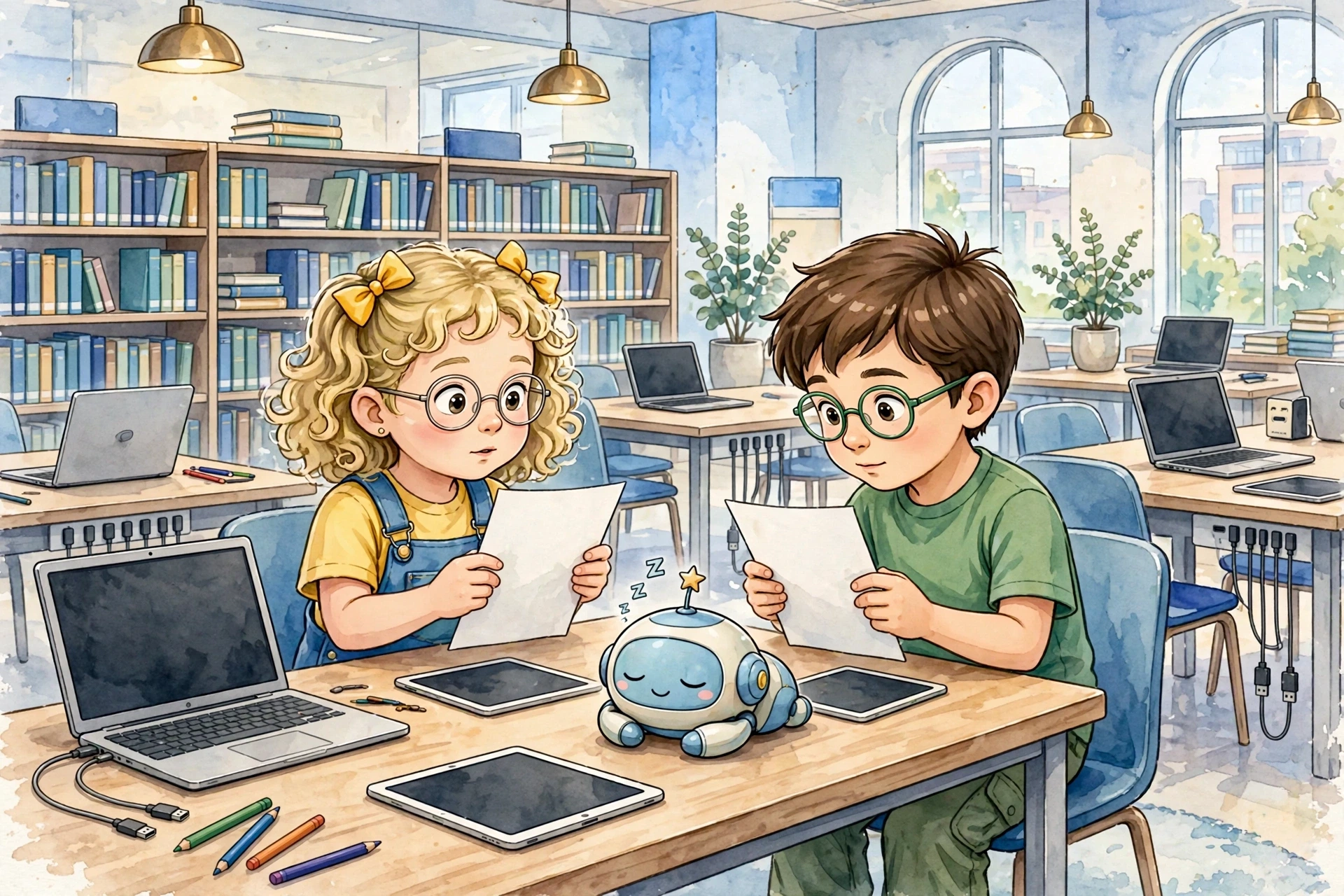
This image never appears in the story text. It’s an open invitation for your child to become the author of something new, using the words they’ve just learned.

6. Bring It Together (Days 6–7)
Your child retells the whole week in their own words — the original story, what they noticed in Image 1, and the new story they invented from Image 2. The family listens and celebrates; there’s nothing to correct. In a classroom, this doubles nicely as a weekly show-and-tell.