
AI Literacy Activities for 3-Year-Old Preschoolers: Imagination Scientist
Imagination Scientist is Volume 1 of the Wonder Algorithm: ten gentle AI literacy activities for 3-year-old preschoolers. Each week, a parent or teacher reads one short story aloud, invites the child to imagine it before seeing pictures, explores eight new AI-related words, and finishes with a child-led story and retelling.
What Is Imagination Scientist?
Imagination Scientist helps young children take their first steps toward understanding the intelligent technology around them. Through familiar stories about a robot helper, weather, sorting toys, a market, a bus, ducks, and a garden, children learn that technology can sense, sort, predict, count, and help people solve problems.
The volume is designed for shared reading, not independent screen use. A parent or teacher reads the story aloud, asks simple questions, listens to the child’s ideas, and helps connect new words to everyday life.
AI Literacy Activities for 3-Year-Old Preschoolers
These activities introduce AI ideas through familiar childhood experiences rather than technical definitions. Children meet ideas such as sensing, patterns, prediction, sorting, counting, feedback, mistakes, and problem-solving through stories they can understand and discuss.
The goal is not to make a three-year-old a technical expert. It is to help the child become curious, confident, and familiar with the language of AI before formal AI literacy begins at school.
Each story introduces eight AI pre-literacy words in context. Children hear the words during the story, see them connected to images and events, use them in conversation, and revisit them through retelling.
How a Weekly Story Works
One story each week. Ten minutes a day. Shared screen. Parent-led. Gentle.
Imagine
You read the story aloud. There are no pictures yet. The child becomes the illustrator in their own mind.
See
You open the first image together. This is what you imagined — now you can see it.
Name
You meet eight AI pre-literacy words. Each one comes from something a character did or said, not from a dictionary definition.
Create
You open a second image. The child invents their own story from it. There is no wrong answer.
Retell
The child retells the week’s story in their own words. You listen, celebrate, and help the story become part of their memory and language.
Ten Stories for Ages 3–4
Read one story each week. Each story introduces eight AI pre-literacy words through a familiar, child-centered experience.
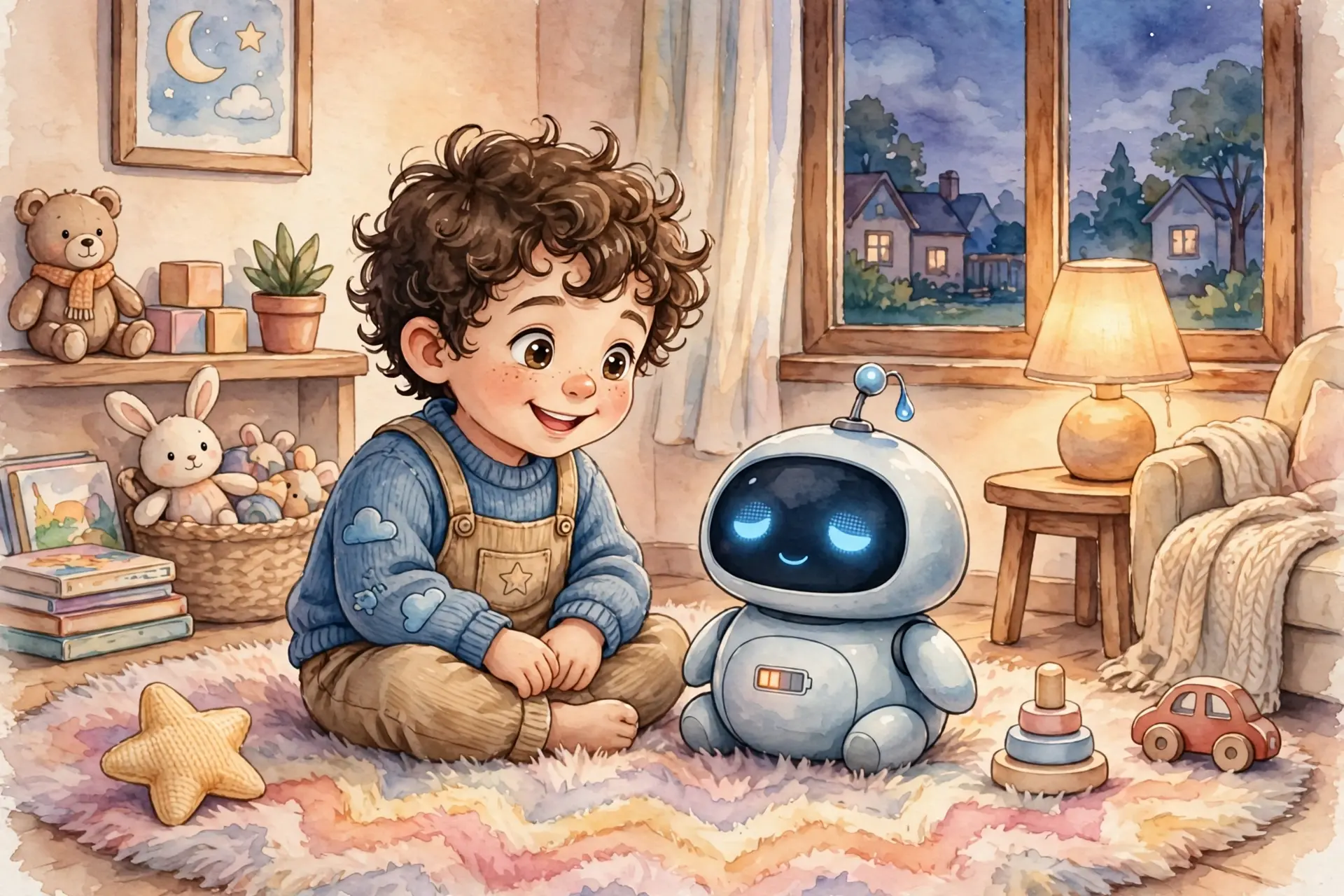
Leo and Pip, the Smart Helper
A small blue robot helps Leo search a messy room — and learns that mistakes are just a step to fix.
Read story →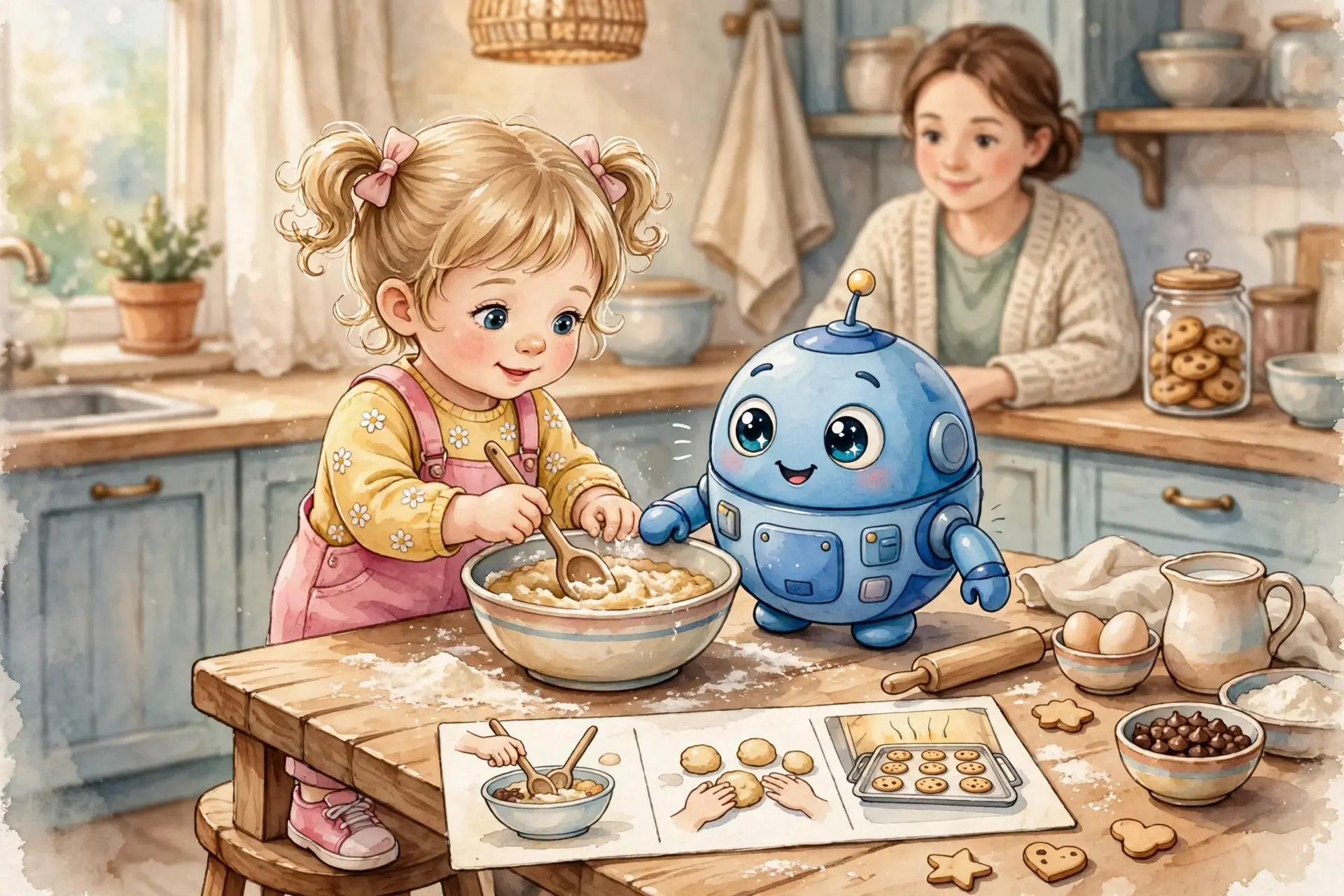
Mina and the Cookie Algorithm
Mina discovers that a recipe can be a set of steps — and that following them in order matters.
Read story →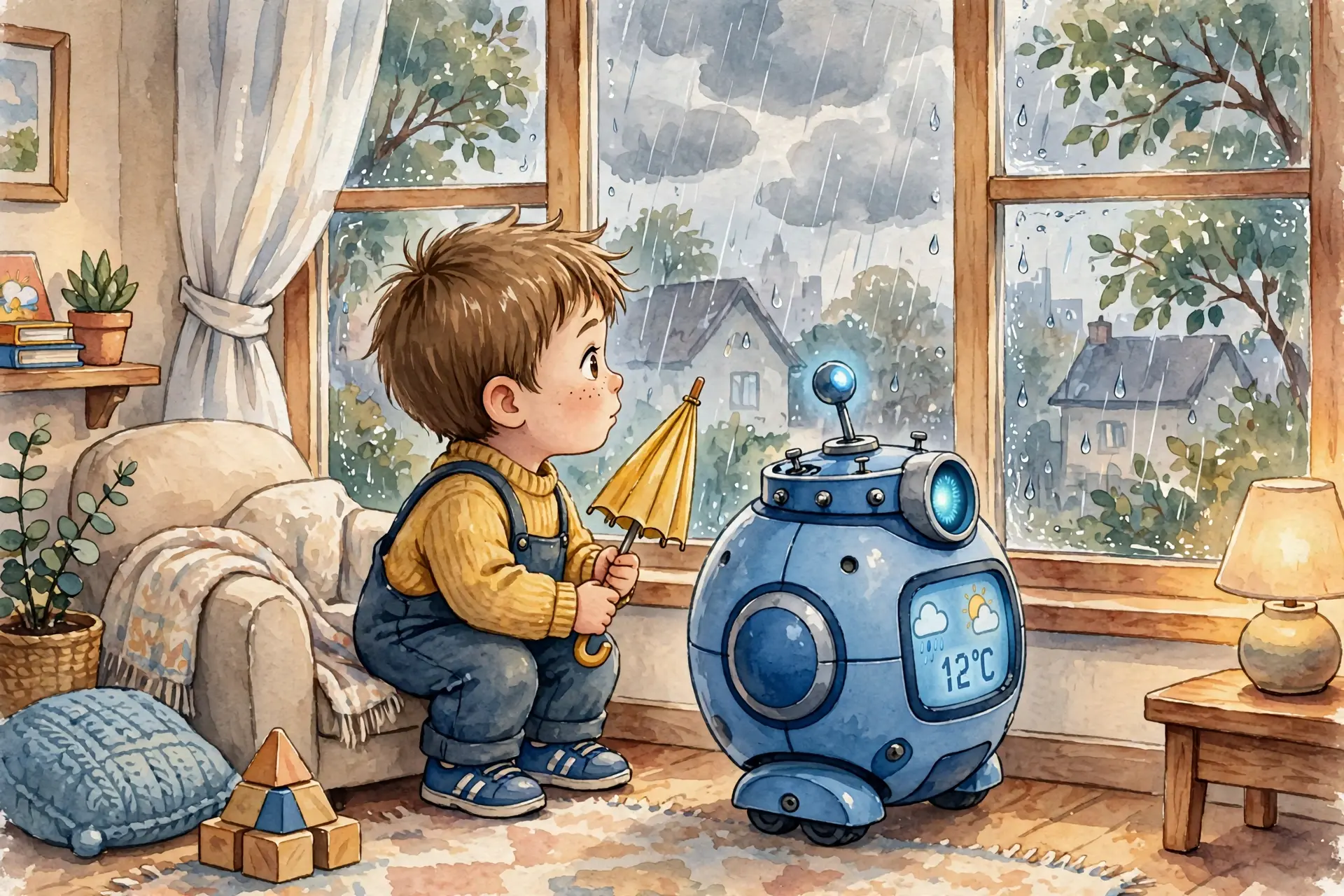
Leo, Pip and the Rainy Day Prediction
Grey clouds, fast wind, cool air. Can Pip guess the rain before it comes?
Read story →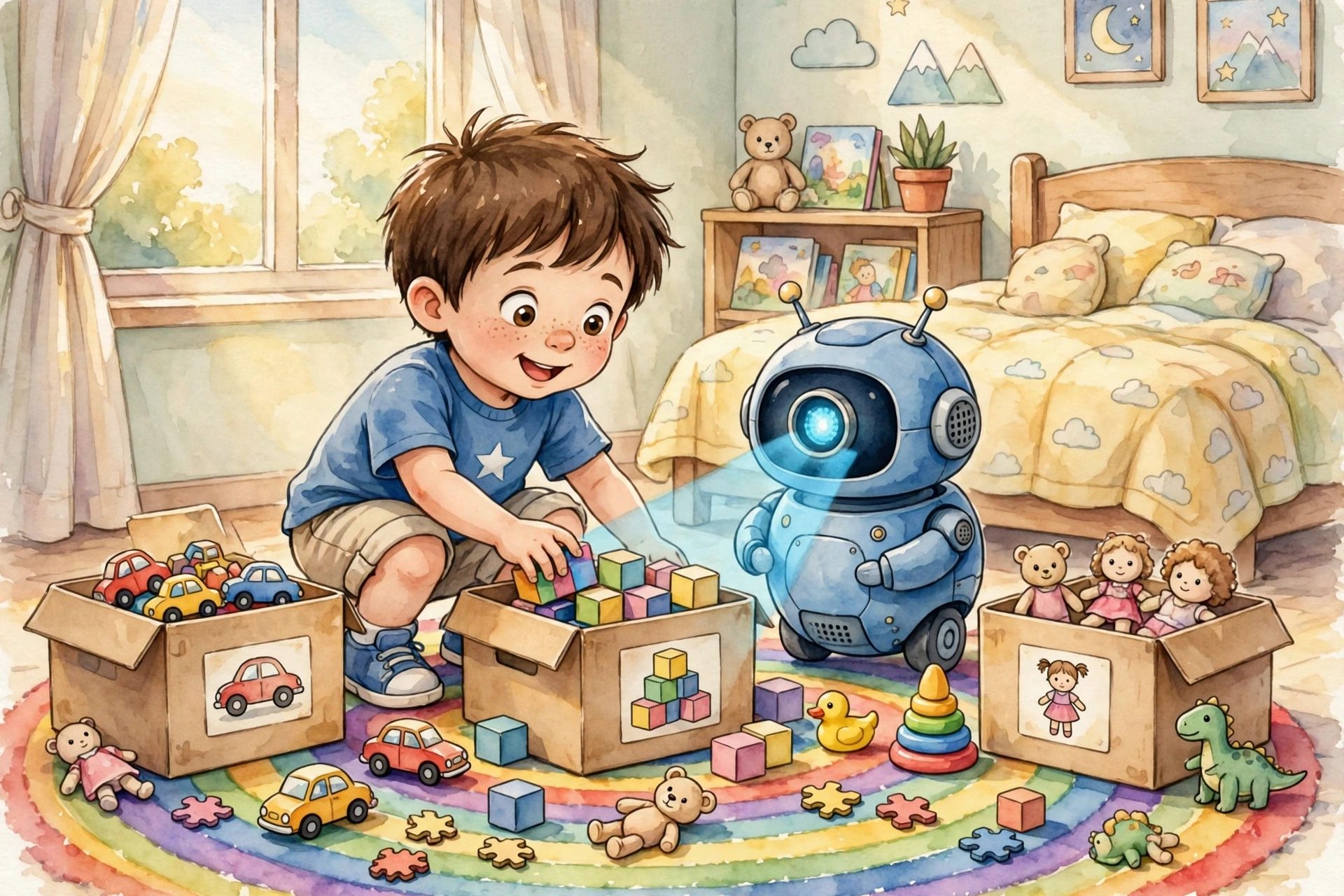
Leo, Pip and the Great Toy Sorting
Red Racer is missing. The room is a big mess. Pip knows a way — look, find, read, sort.
Read story →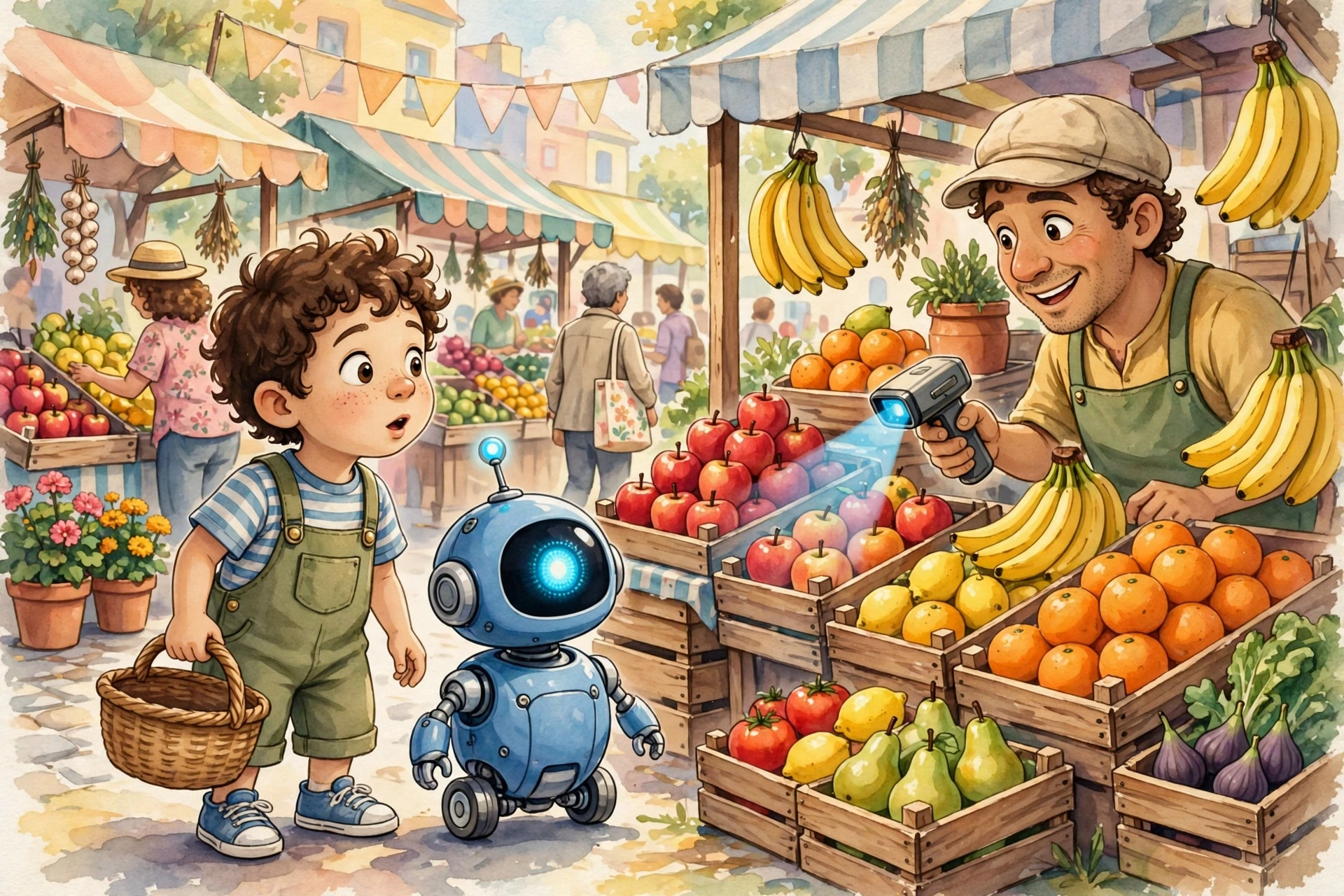
Leo, Pip and the Busy Market
A beeping scanner, a bus that’s late, and a drone flying overhead with a little box below.
Read story →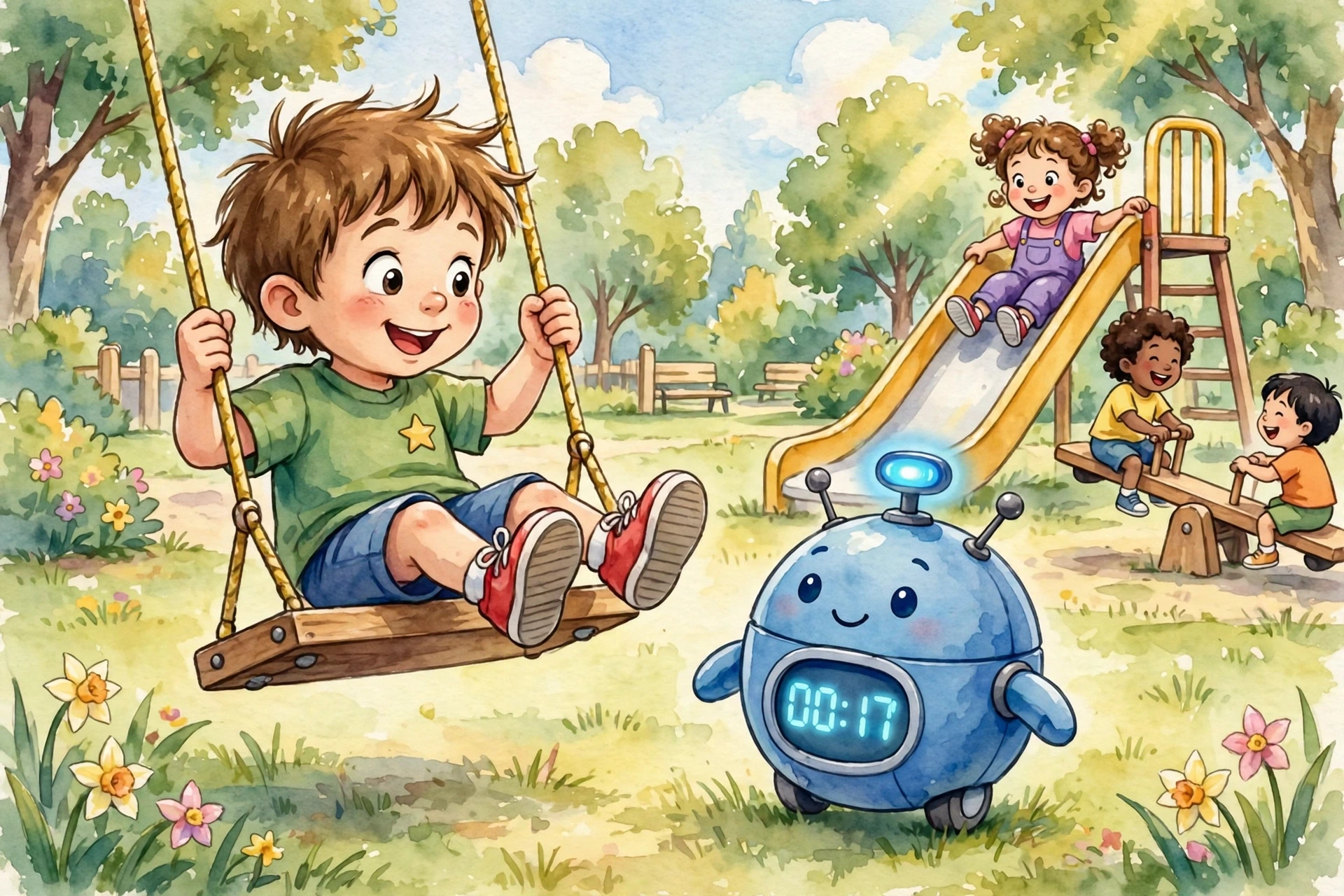
Leo, Pip and the Playground Swing
Swings, slides, and a sandpit. A whole afternoon at the playground — and a guess that turns out right.
Read story →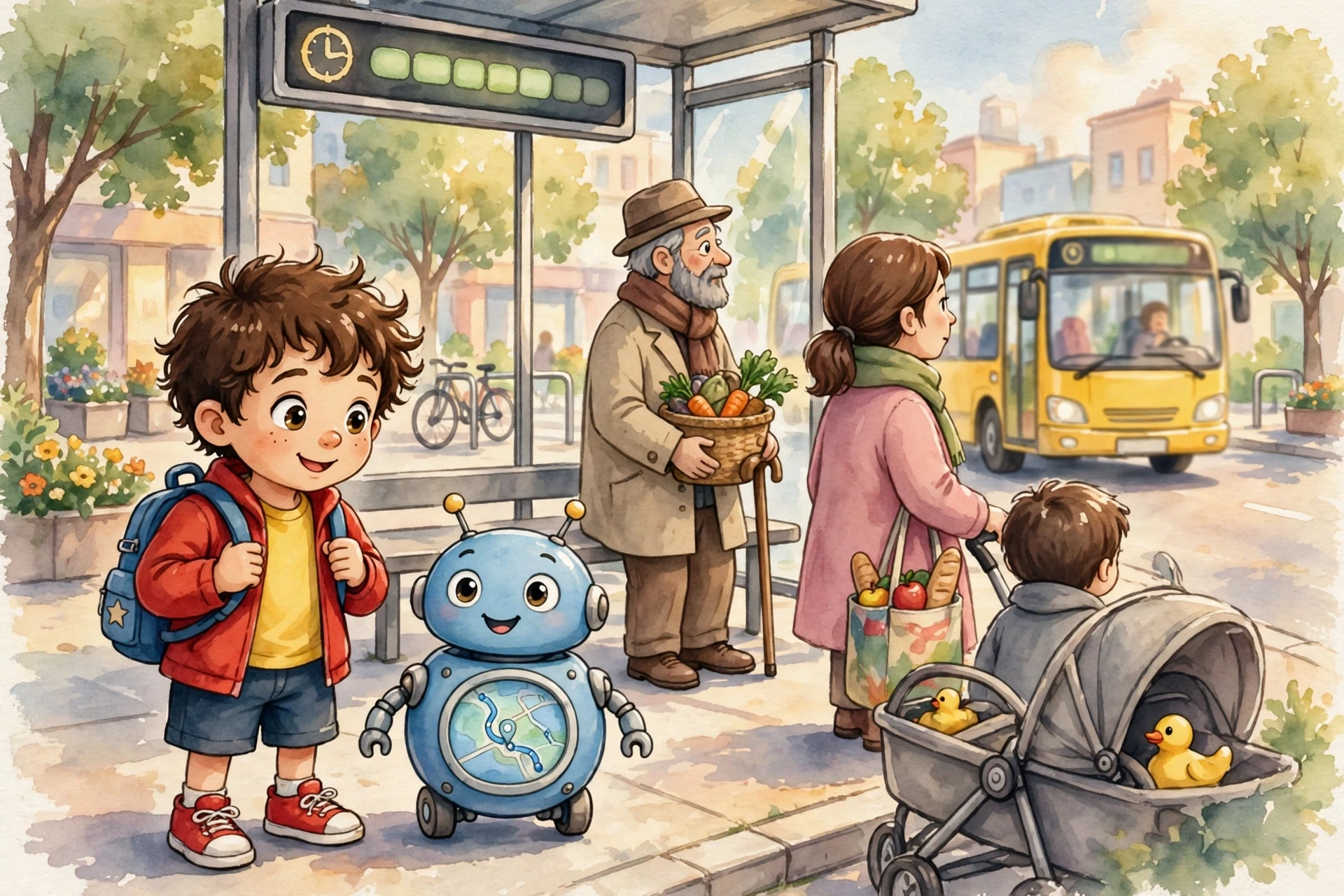
Leo, Pip and the Big Yellow Bus
Leo’s first bus ride. The sign says “3 minutes” — how does the sign know?
Read story →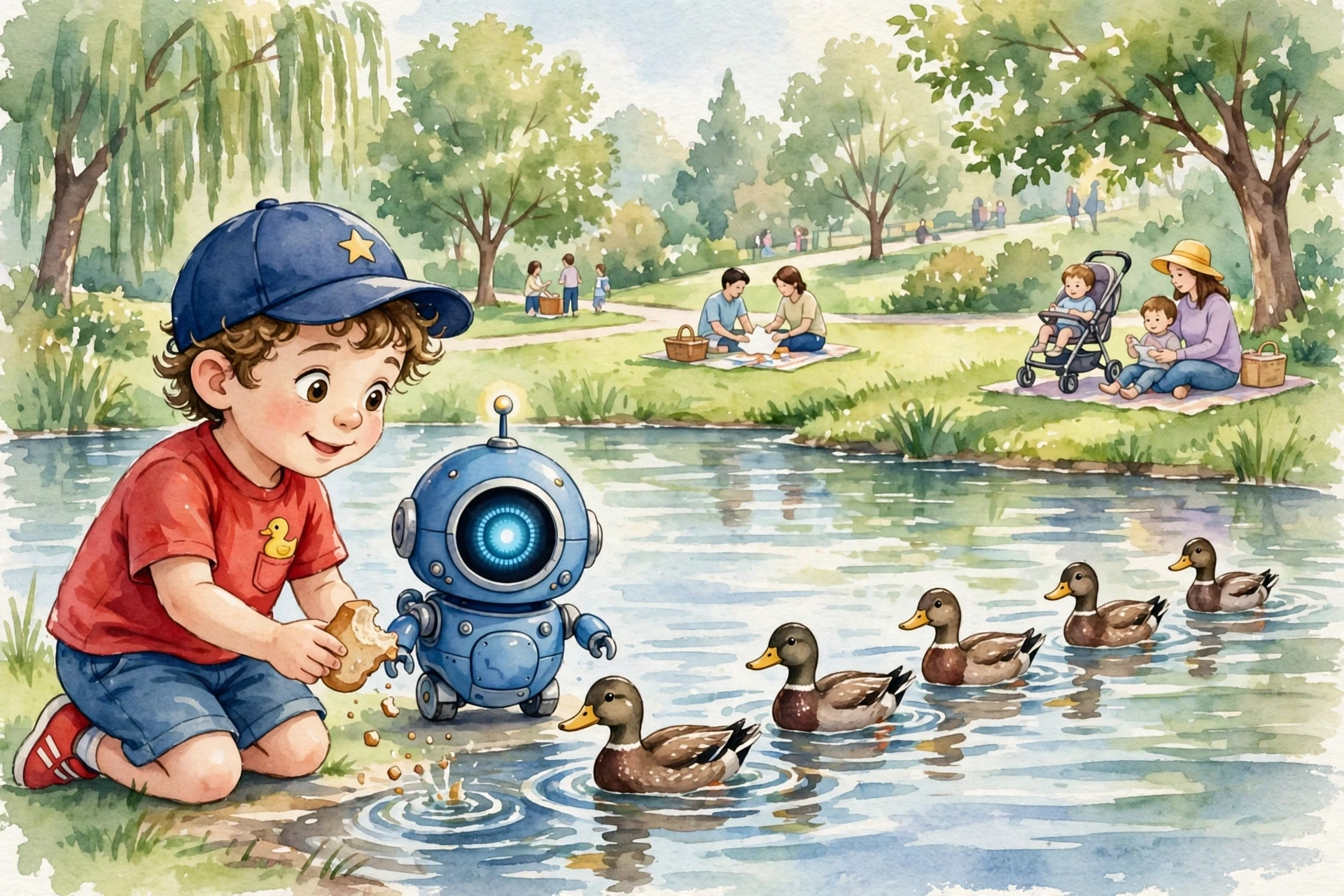
Leo, Pip and the Ducks at the Lake
Six ducks on a quiet lake. Leo counts five. Then Pip finds the sixth.
Read story →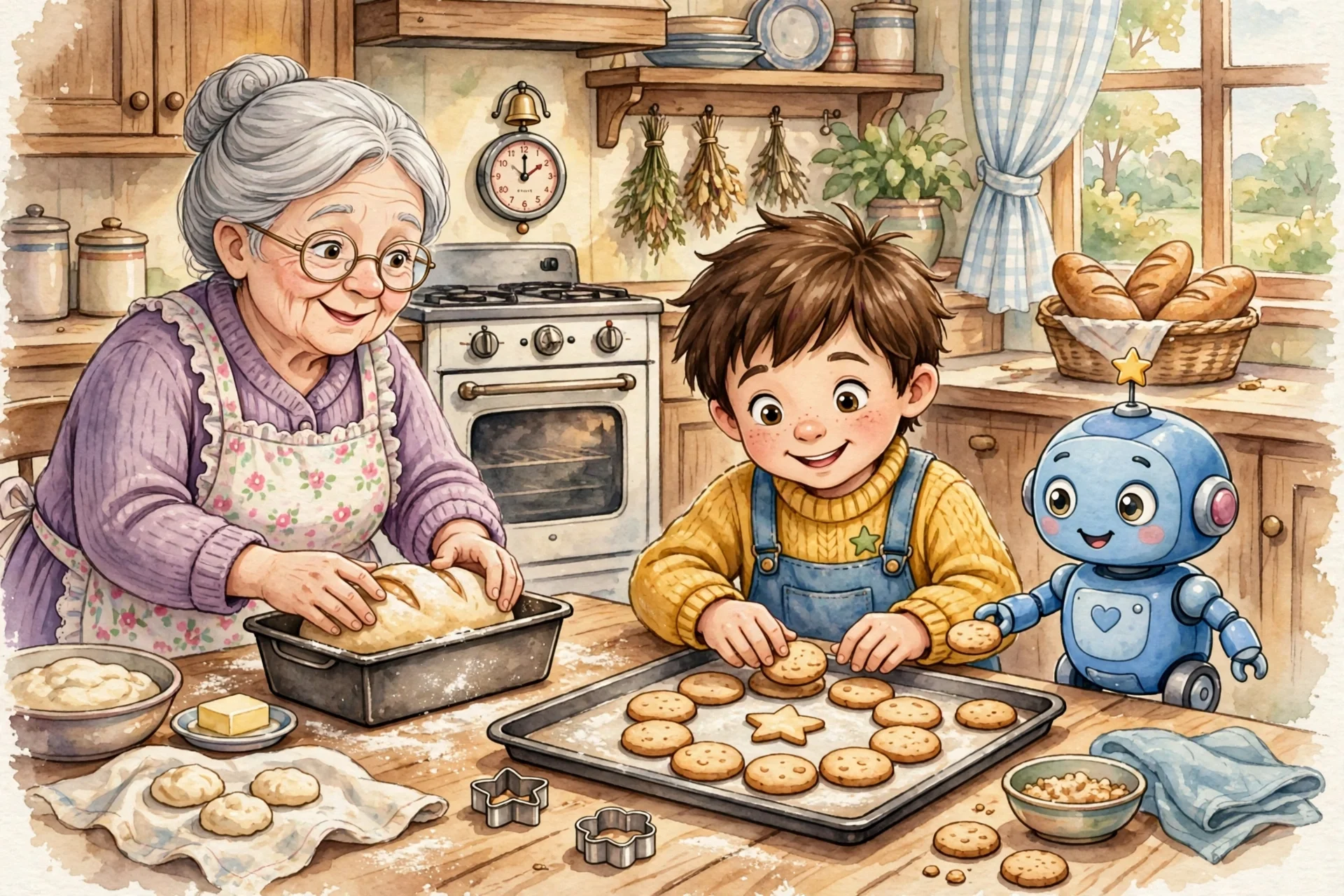
Leo, Pip and Grandma’s Garden
Grandma’s garden is full of growing things. Leo and Pip discover how plants need care, time, and attention.
Read story →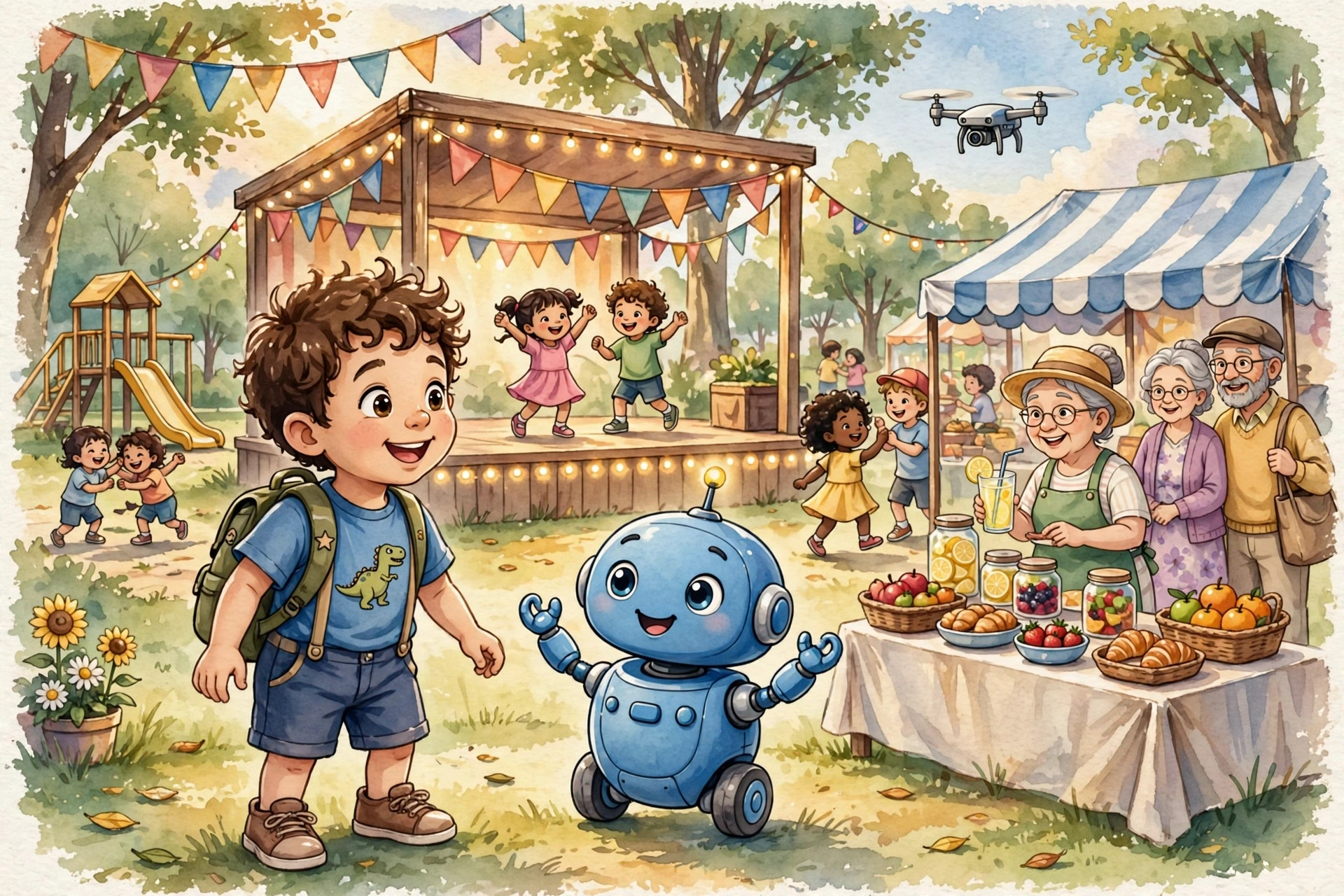
Leo, Pip and the Playground Festival
The whole year, one festival. Everyone Leo met comes back to celebrate — and Pip saves the day.
Read story →For Parents and Teachers
Imagination Scientist is designed to be used by a parent, caregiver, or early-childhood teacher. The adult reads aloud, protects time for imagination, asks open questions, and helps the child connect AI-related words to familiar experiences.
You do not need technical knowledge to use this volume. Your role is to be a guide: to listen, wonder, repeat, question, and celebrate the child’s ideas.
Start with Story 1
Begin with Leo and Pip, the Smart Helper—a ten-minute shared story about mistakes, problem-solving, and learning through small steps.
Start with Story 1: Leo and Pip, the Smart Helper