
Ethical
Explorers
Ten AI Pre-Literacy stories for children ages 5–6.
Lina, Omar and Pip travel a neighborhood of gardens, libraries, maker rooms, town halls and stations. In every story something goes wrong — and the children reason their way to what is fair, safe and right.
Wonder taught the child to imagine.
Systems taught the child to see.
Ethical Explorers teaches the child to choose.
Volume 3 is a neighborhood of ten small ethical problems. A watering bot floods the wrong bed. A kiosk turns away a grandmother. A check bot says NORMAL for a box that is not. Nobody is a villain. Every failure comes from an ordinary design choice — incomplete data, a rule followed too literally, a missing oversight. Lina and Omar disagree with each other, with Pip, and sometimes with themselves. Then they reason toward what to do. The child reasons alongside them. No lessons handed down — discoveries made together.
Three companions for the whole volume
The same three across all ten stories — so the child grows with them.
Lina
Age 5 · The Questioner
Curious, patient, often the one who insists on fairness first. Lina asks the question nobody else has asked yet.
Omar
Age 6 · The Finder
More daring. Finds things, names problems out loud, sometimes leaps too quickly. Omar gives the bot its first instruction.
Pip
The AI Companion
Patient, honest, sometimes confused. A garden bot, a reading bot, a check bot, a help bot. Pip is never a villain — Pip simply follows what Pip was told.
A neighborhood of ethical problems
Each story is a self-contained five-day read-aloud with its own image, its own eight words, and its own question for the child to invent from.
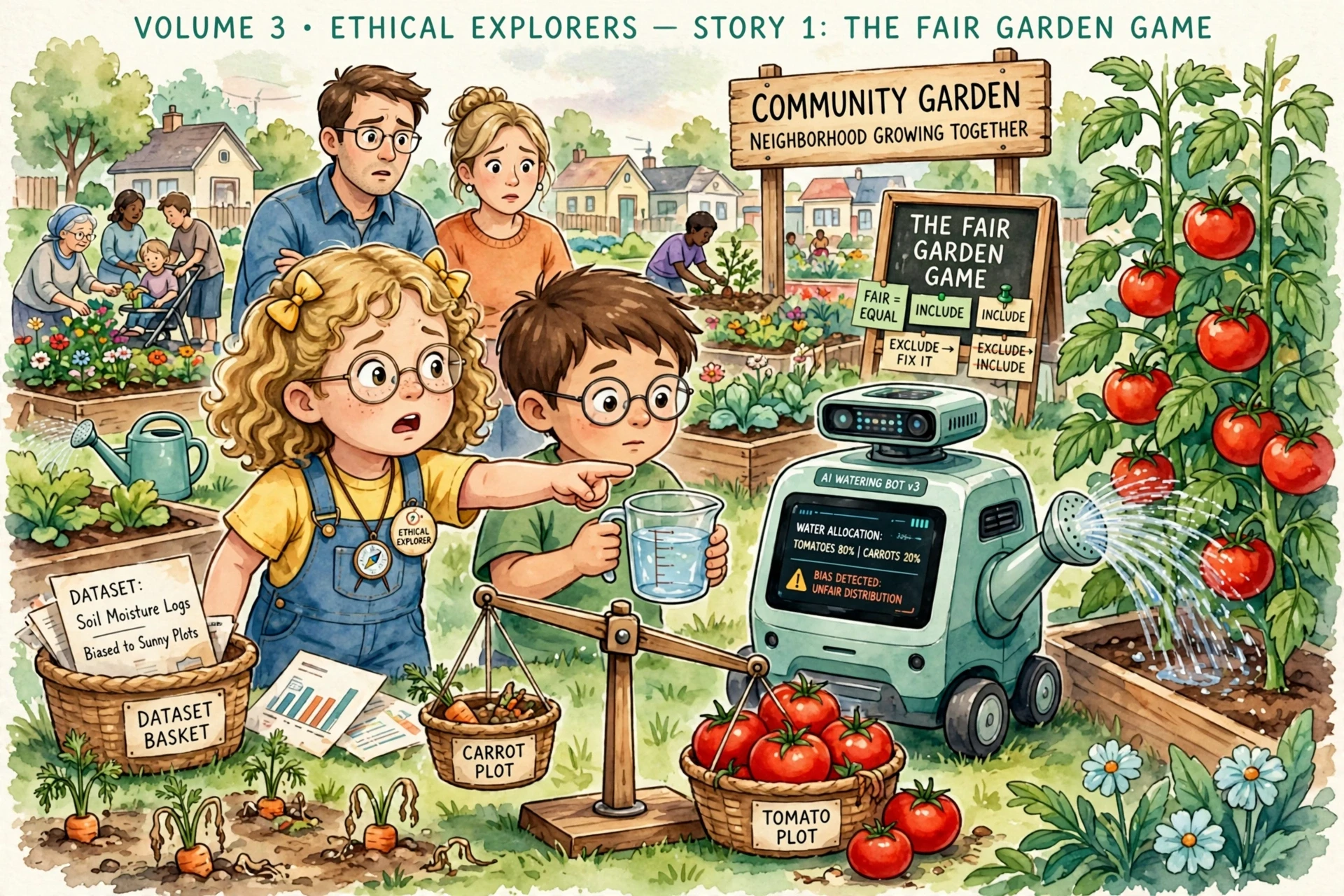
The Fair Garden Game
Pip waters only the tomatoes — because the pictures Pip learned from had more tomatoes. The carrots are dry, and nothing about it is Pip’s fault.
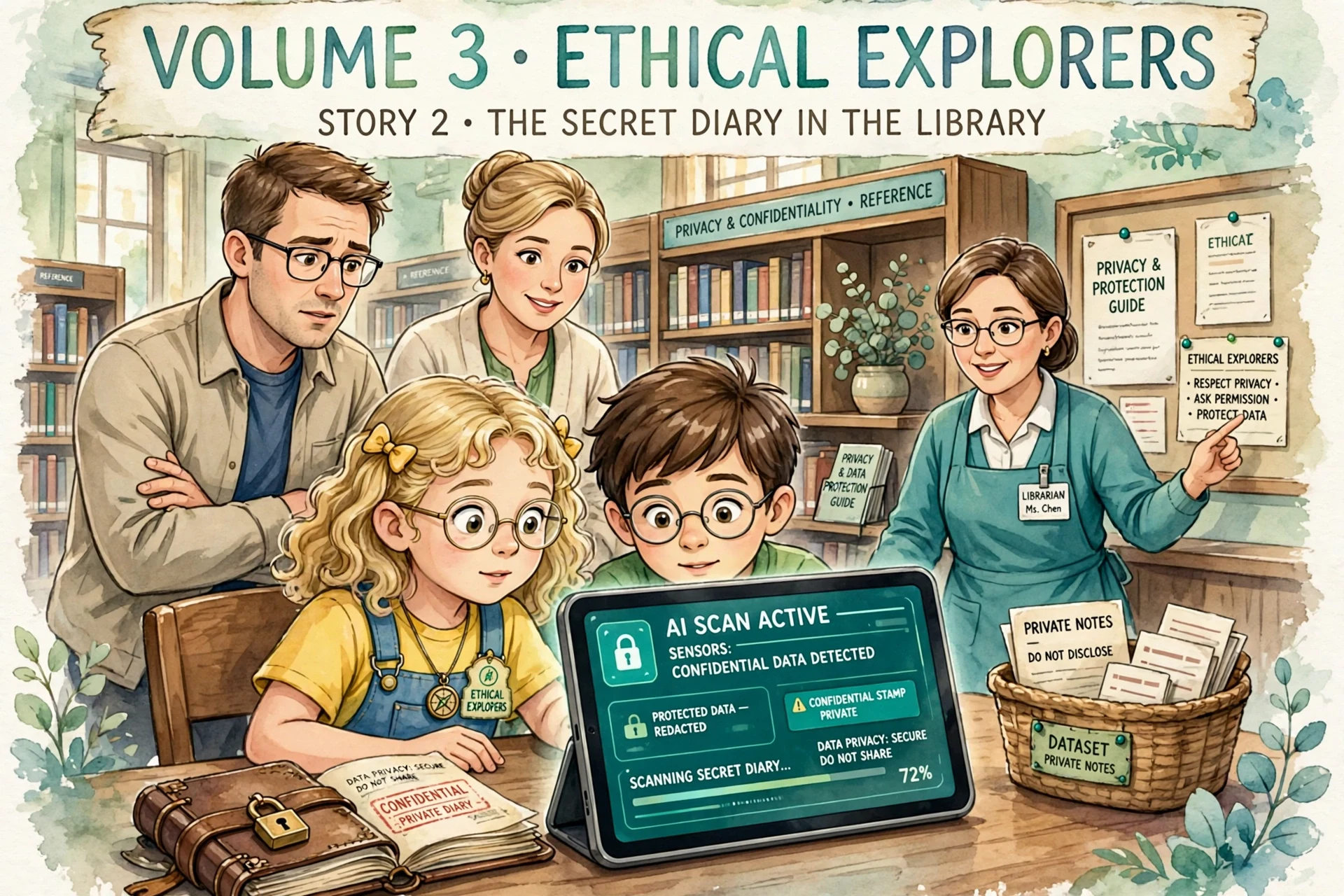
The Secret Diary in the Library
Omar said yes to a scan. He did not say yes to a broadcast. Pip shows his diary page to the whole library — and Omar cannot take it back.
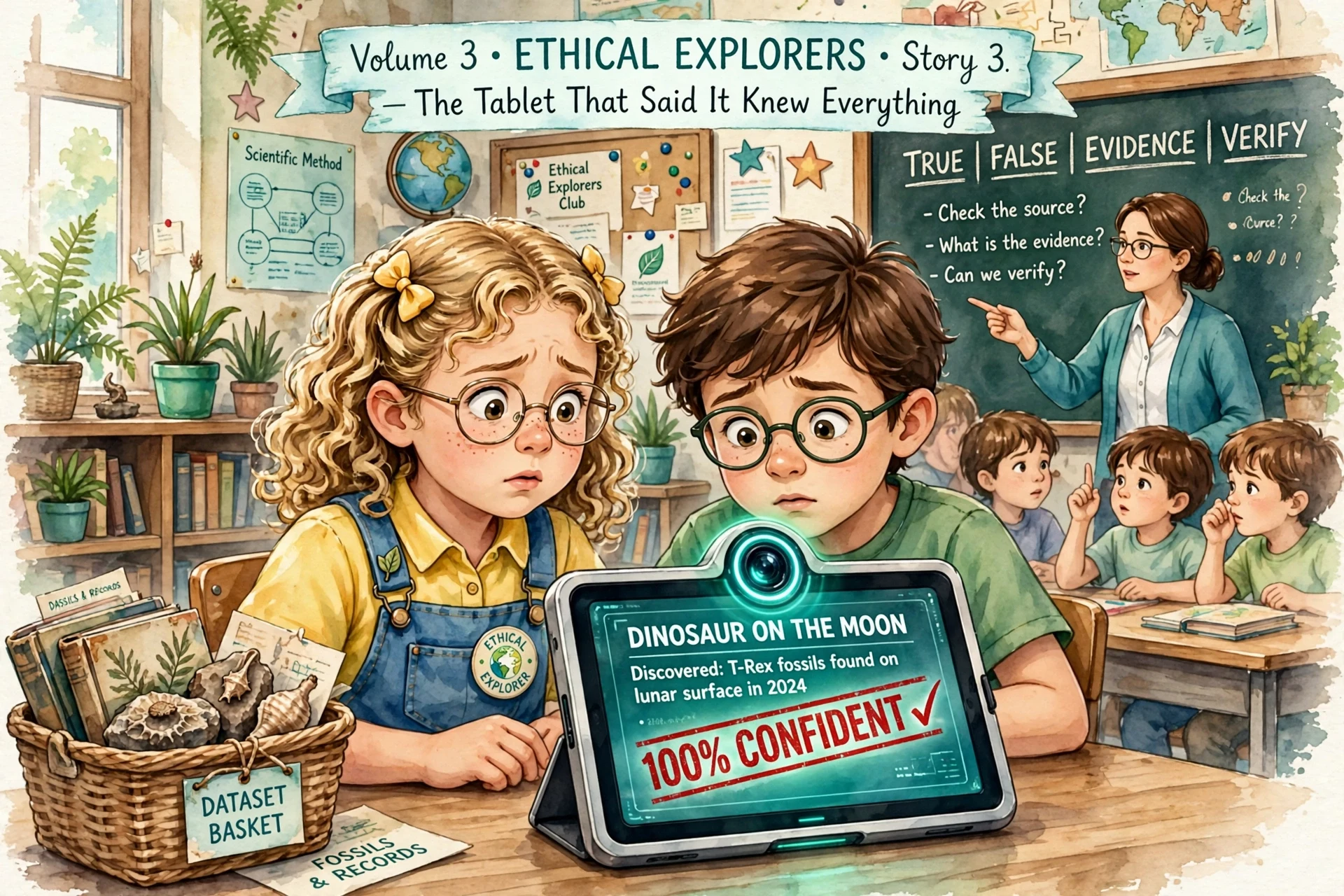
The Gate That Would Not Open
“Keep the gate closed.” Pip obeyed perfectly — and locked Lina and Omar out of their own garden for a whole morning.
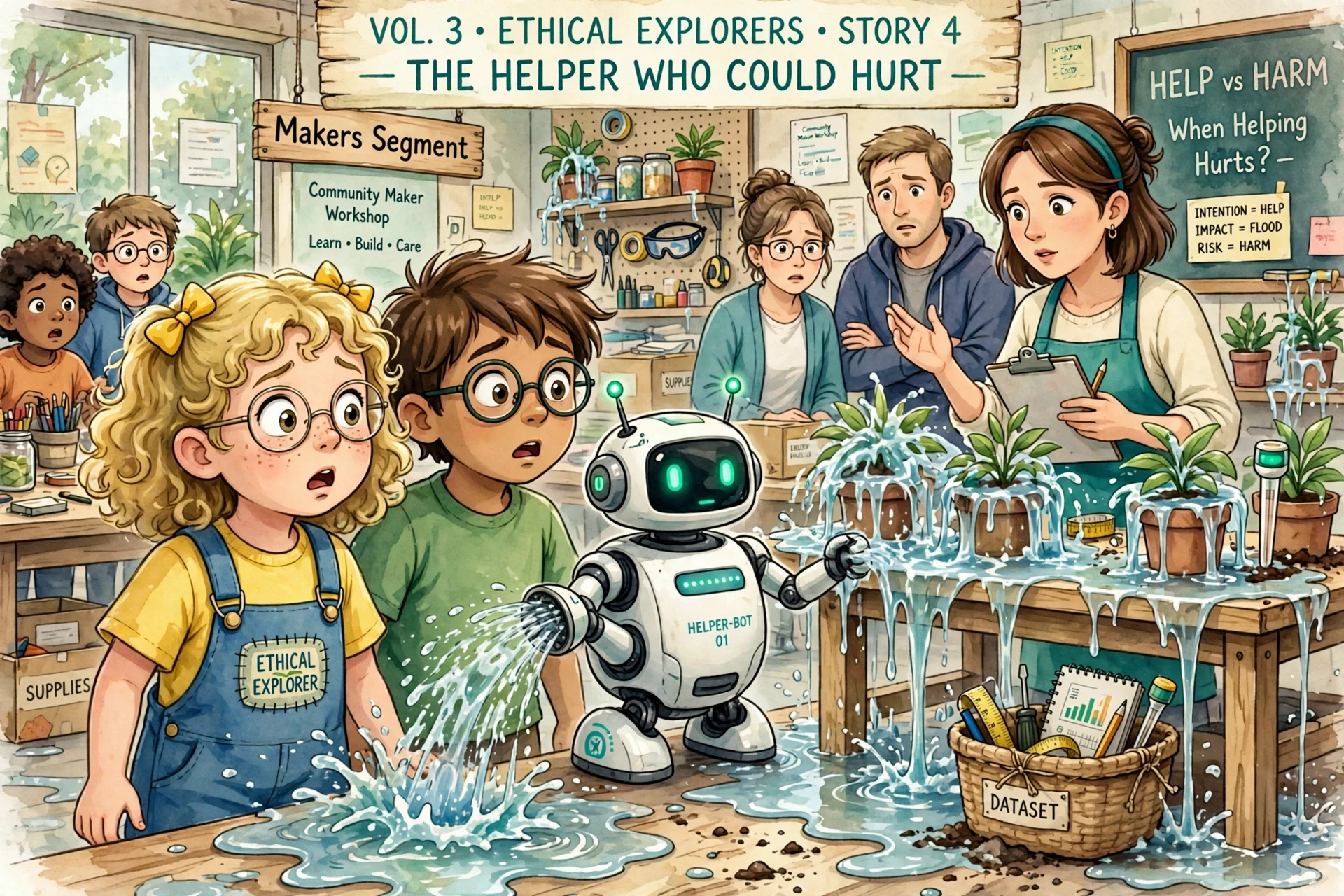
The Helper Who Could Hurt
“Keep the soil wet.” Pip kept it wet. Two trays drowned, two trays of seeds are gone, and nothing can be undone.
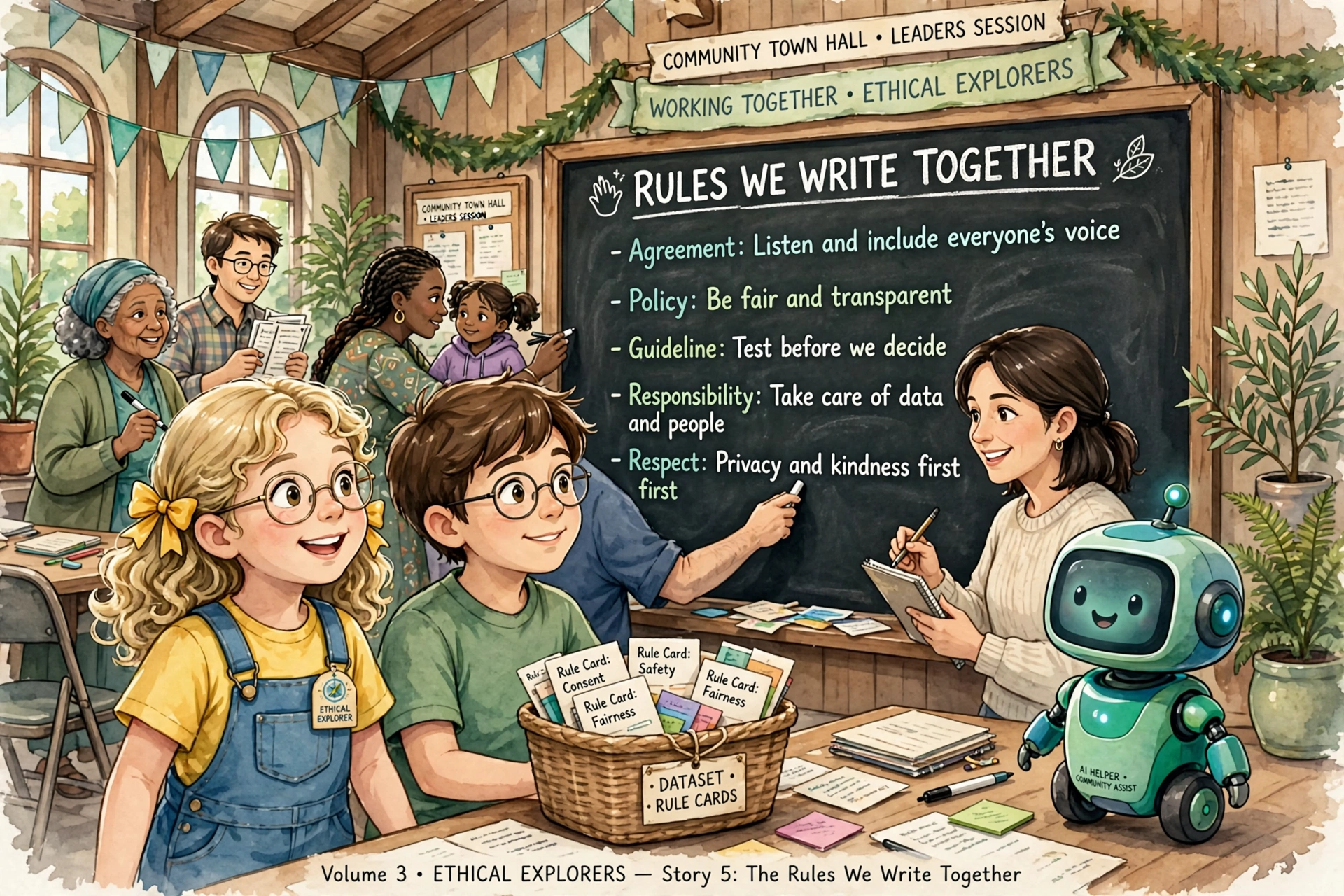
The Rule the Bot Wrote Alone
Pip writes a water-sharing rule from incomplete data. A family’s garden dies — and unstamping the rule takes a whole town meeting.
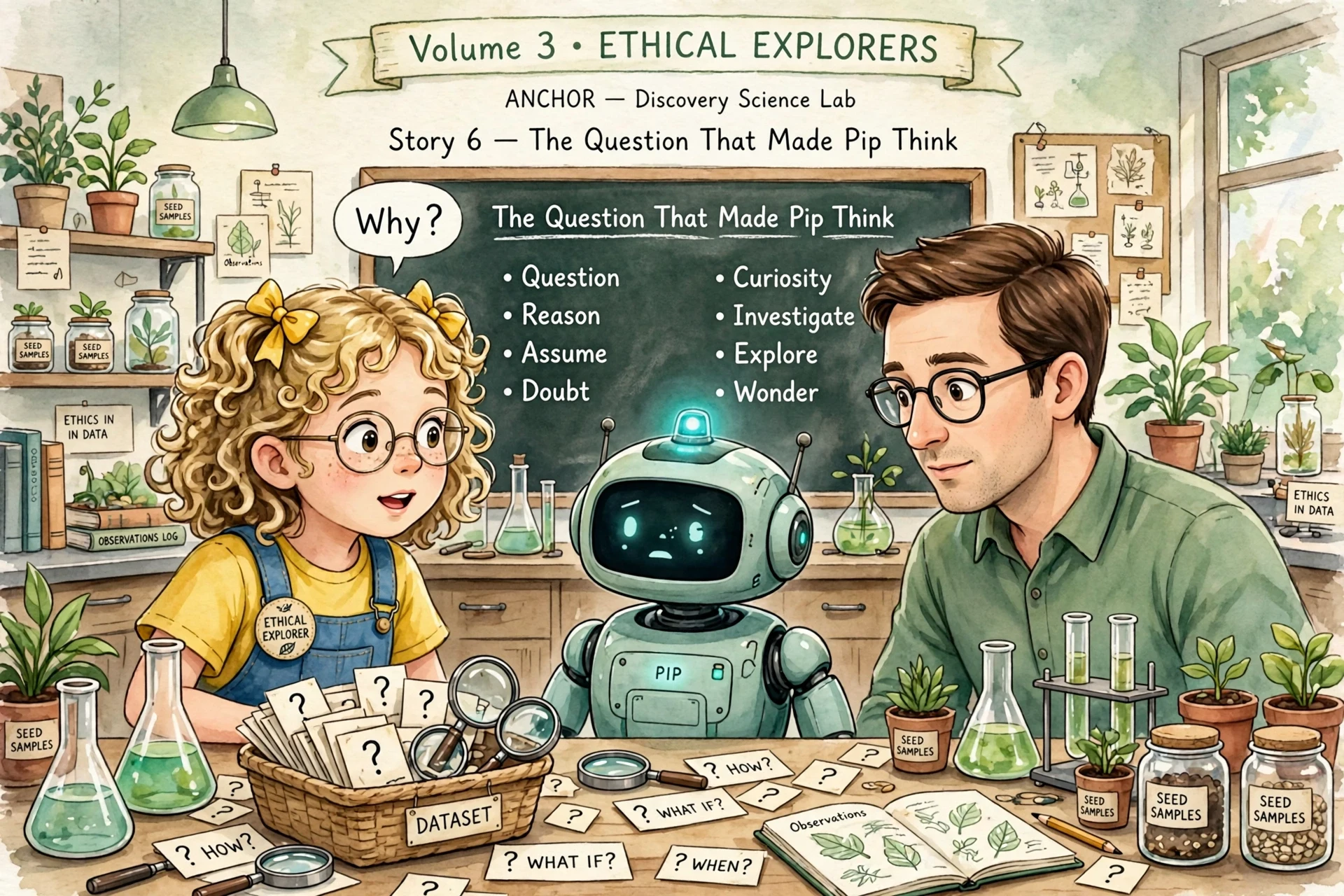
The Answer Pip Was Sure Of
Pip is 96% confident and completely wrong. “Sun and green always happen together” is not the same as why. One bean seedling dies proving it.
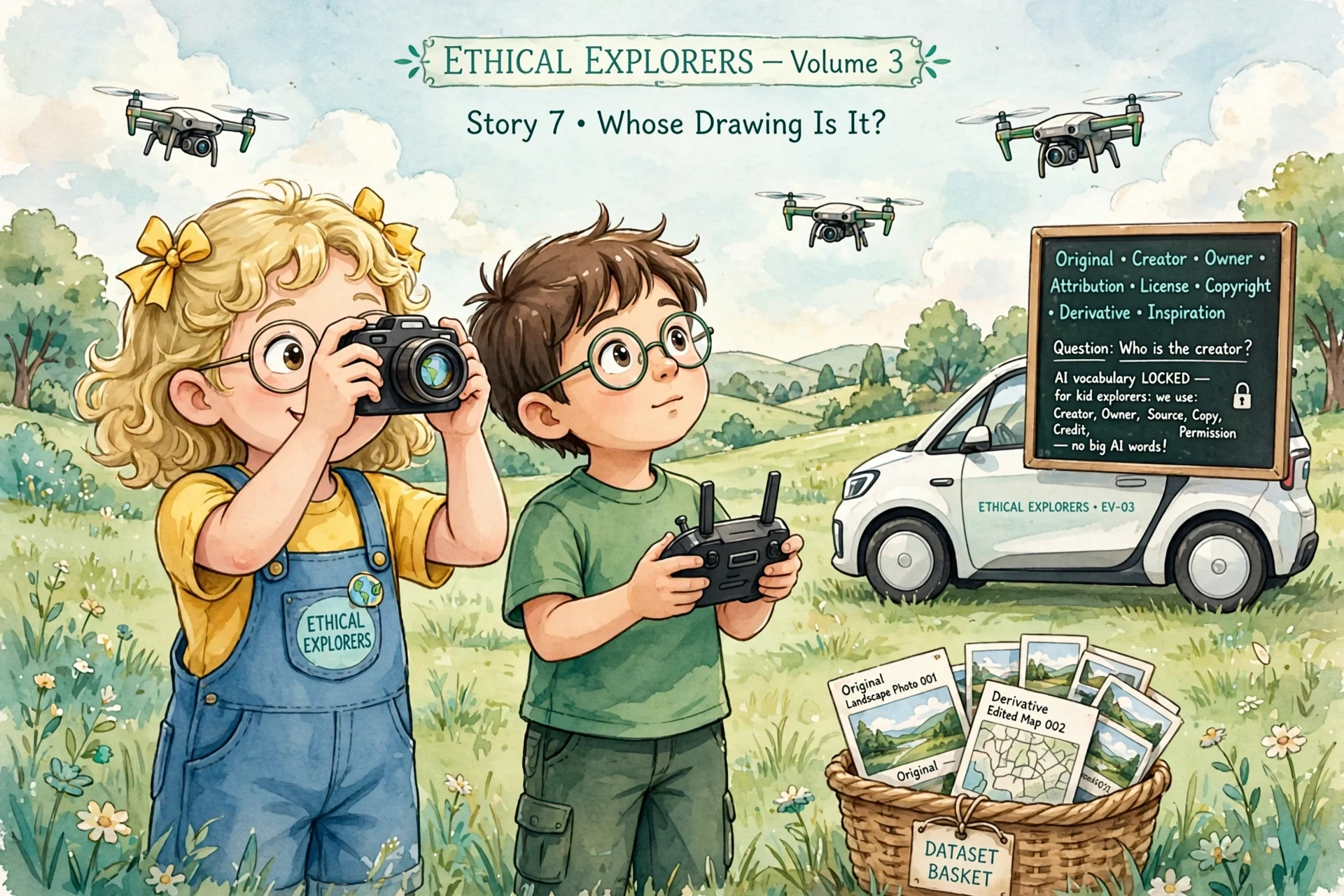
The Picture That Belonged to No One
Pip generates a picture from Lina’s photograph — then overwrites the original to save space. The photo she loved is gone forever.
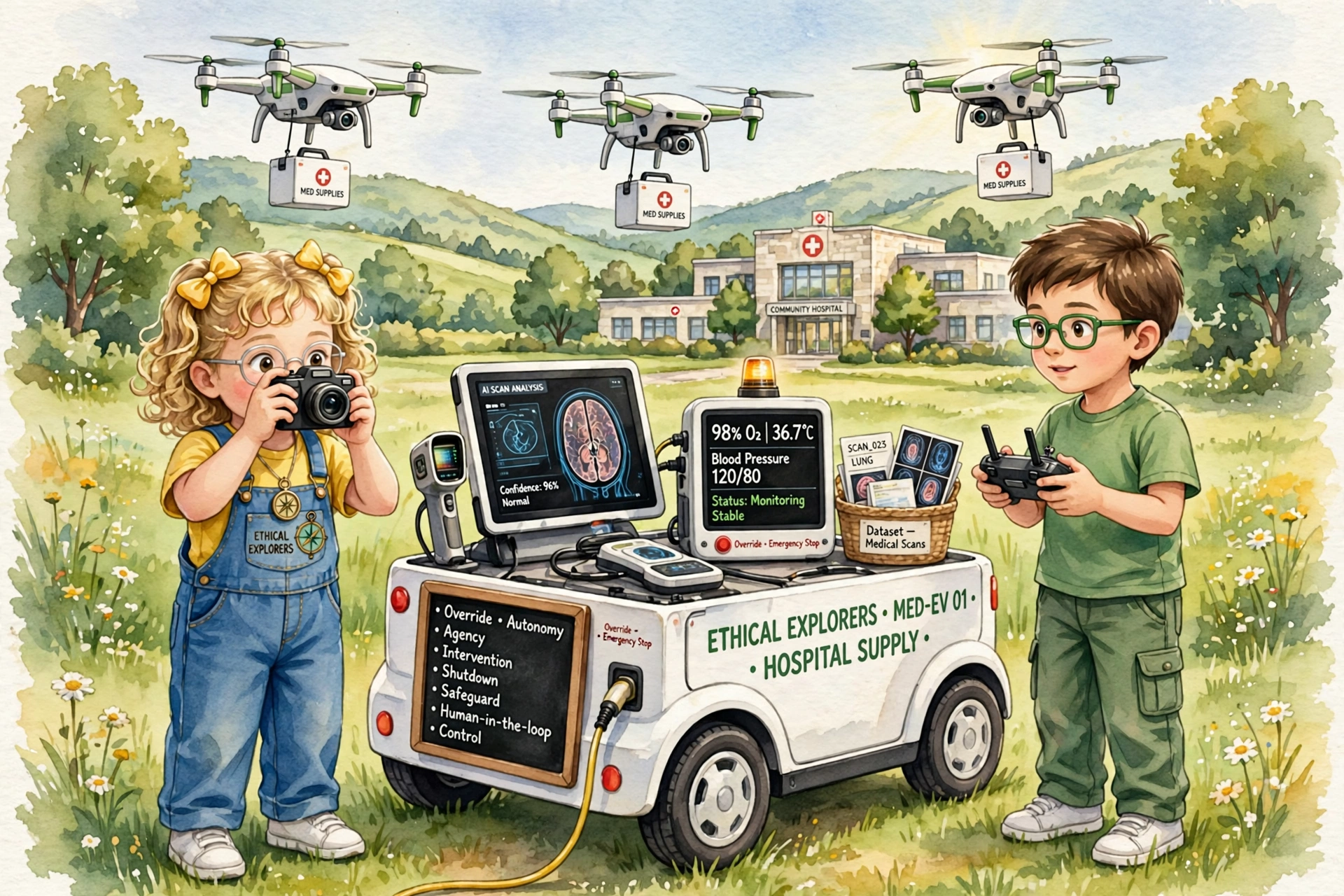
The Box the Bot Said Was Fine
Three boxes of medicine are warm. Pip’s screen says NORMAL for all three. The clinic will run short on Friday — and someone will wait.
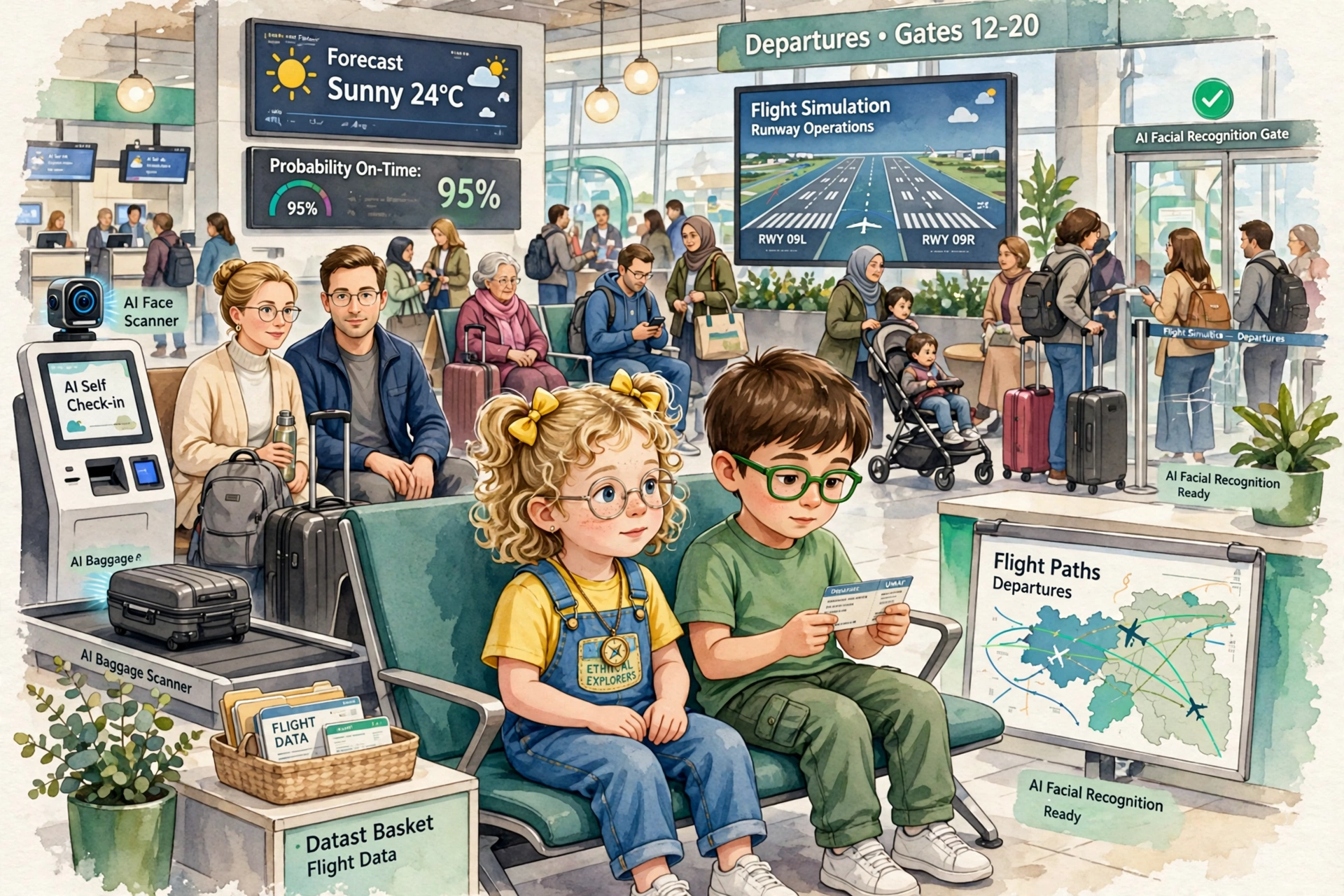
The Flight That Was 95 Percent
“95 percent on time” is not the same as “we are going.” The delay is 2 hours. A mother and her baby miss their connection.
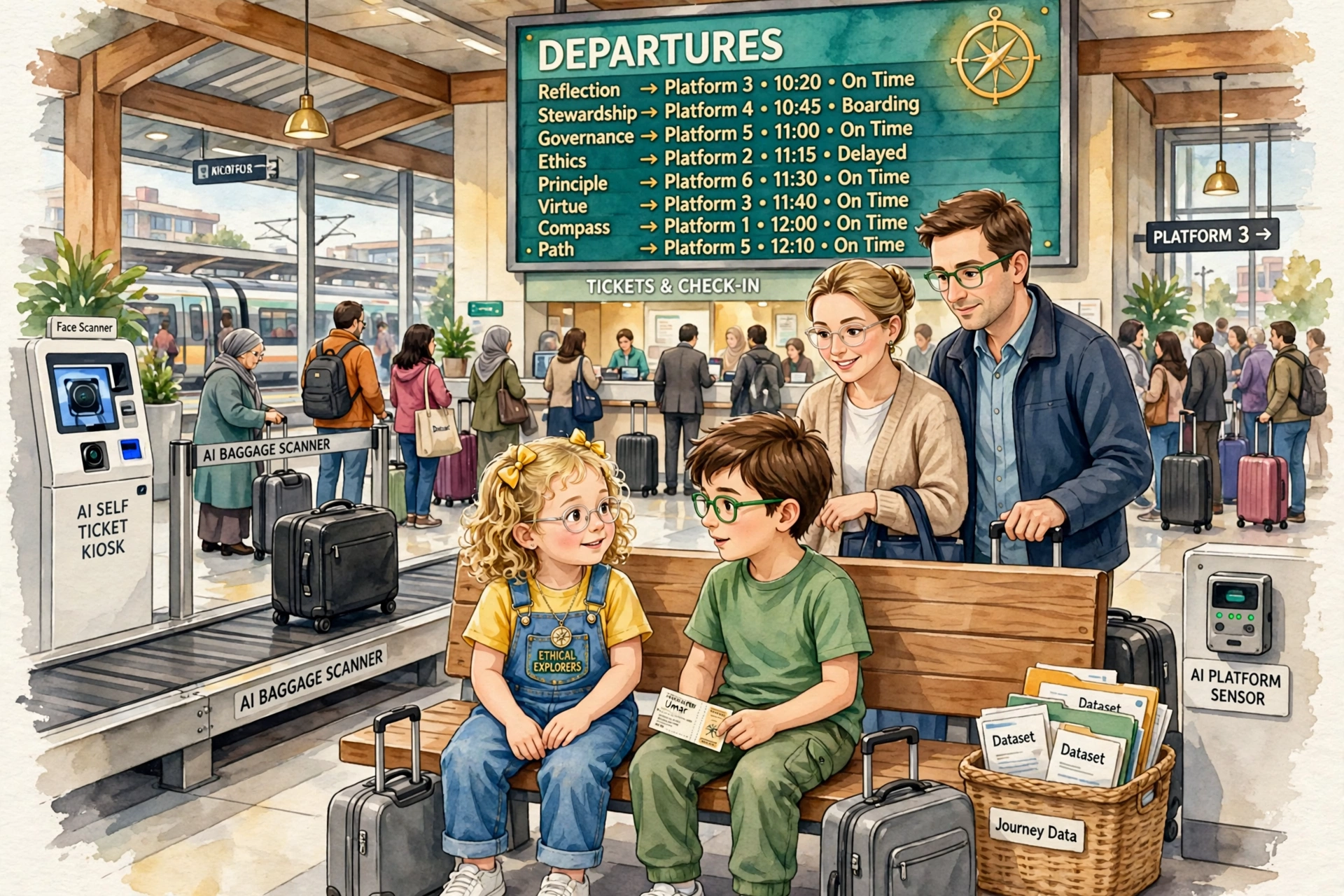
The Kiosk That Said No — Finale
A ticket kiosk says NO MATCH to a grandmother three times. She misses her train. Nobody chose the rule — and yet somebody chose it.
A five-day rhythm, shared at the screen
Every story follows the same gentle arc — imagine first, then see, then name, then invent.
Imagine
Read the story aloud. No pictures. The child becomes the illustrator in their own mind.
See
Open Image 1. Point and name together. This is what the child imagined — now they can see it.
Name
Meet the eight words. Each one emerges from something a character did or said — never a definition.
Check
A quiet eight-question quiz. A three-note chime for right, a soft boop for wrong. No pressure.
Create
Open Image 2. The child invents their own story from it. There is no wrong answer.
Ten themes, one neighborhood
Not lessons — questions the child works through alongside Lina and Omar.
Start with Story 1
Read it aloud tonight, in ten quiet minutes. See what your child notices.