We provide research‑based FREE resources for parents, educators, caregivers, and policymakers who are shaping the next generation's relationship with AI.

Skip to content
AI Pre-Literacy Hub

AI Pre-Literacy Hub

Building Feature Minds

  • Home
  • About
    • Meet the Founders
    • Our Philosophy
  • What is AI Pre-Literacy?
  • Research Corner
    • AI Pre-Literacy: A Conceptual Framework
    • Research – Research Observatory
  • Blogs
  • Free Family Learning Games
    • 12 Interrogative Games
  • Wonder Algorithm for Age 3-8
    • Research Foundations
    • Parents/Teachers Guide
    • Volume 1: Imagination Scientist (3–4 Years)
    • Volume 2: Systems Thinkers (4-5 Years)
    • Volume 3: Ethical Explorers (5-6 Years)
    • Volume 4: Creative Co-Pilots (6–7 Years)
    • Volume 5: Future Builders (7-8 Years)
Wonder Algorithm · Volume 5 · Future Builders · Ages 7–8

Volume 5: Future Builders

Ten AI Pre-Literacy stories that follow Lina, Omar, and Pip the humanoid robot through the everyday machines that are learning to live with us — a body, a car, a map, a fridge, a washer, a garden, a vacuum, a farm, a bedroom, and a house. Each story is a full seven-day activity: read first. See second. Speak the words. Create third. Retell. Built on research.

Conceived, Designed & Developed by Prof. Dr. M. A. Pasha & Prof. Dr. S. Pasha

📚 Explore the 10 Stories 📖 Research Foundations
Every design choice in this series — text-first, image-second, conversation-led — is grounded in developmental research on serve-and-return interaction, shared reading, and early childhood neural development. Read the research foundations →
10Stories in Volume 5
100+AI words taught, one per day
7–8Designed for ages
7Days per story — a full week
FreeRead online or print

How Every Story Works — The Seven-Day Rhythm

Each story is a full week of shared activity. No prior tech knowledge needed — for the child or the grown-up. One device, one child, one adult. Sit together.

Days 1–2 · Read the Story Read the story aloud — no pictures yet. Pause at descriptions and ask, “What do you see in your mind?” Every answer is right. Do not show Image 1 before Day 3 — this is the one rule that matters most.
Days 3–4 · Association Anchor Now show Image 1 — the exact scene they imagined. Point to the tech icons and name them together. Ask: “Where is the…? What colour is it?” This anchors what the child already built in their mind.
One Word Per Day Tap a vocabulary card to hear the AI word spoken aloud. Then use the word in ordinary life that week — in the car, at the shop, at the playground. One new word per day, at the child’s pace.
End of Story · Quiz A short “Did you catch it?” check-in. Let your child tap. Wrong answers are fine — “Not quite” is on purpose. No score, no pressure. It’s a check-in, not a test.
Day 5 · Creator Prompt Reveal Image 2 — this picture is not in the story. Ask: “What happens next? What will the character save?” Let your child invent. Write it down or draw it. They become the author of something new.
Days 6–7 · Bring It Together Your child retells the whole week in their own words — the original story, what they noticed in Image 1, and the new story they invented from Image 2. Listen. Celebrate. Correct nothing. In a classroom, this doubles nicely as a weekly show-and-tell.
Your four roles across the week: The Guide — point out interesting descriptions. The Curious Friend — ask questions that expand the mental movie. The Celebrant — applaud every unique interpretation. The Keeper of Memories — save the drawings and retellings.
Why text-only first? We intentionally leave out illustrations of robots, devices, and futuristic scenes. This isn’t an omission — it’s a pedagogical choice. The most enduring images are the ones a child builds internally. Our text-only stories and open-ended prompts require active listening, visualization, and interpretation, so the child becomes a co-creator of meaning rather than a consumer of someone else’s picture. When children see finished pictures before they’ve imagined anything themselves, they tend to copy what they saw rather than invent something of their own. So the story always comes first, alone.

The 10 Stories of Volume 5: Future Builders

Tap any story to read it — story text, vocabulary cards, quiz, and both images. Each is a full week of activity.
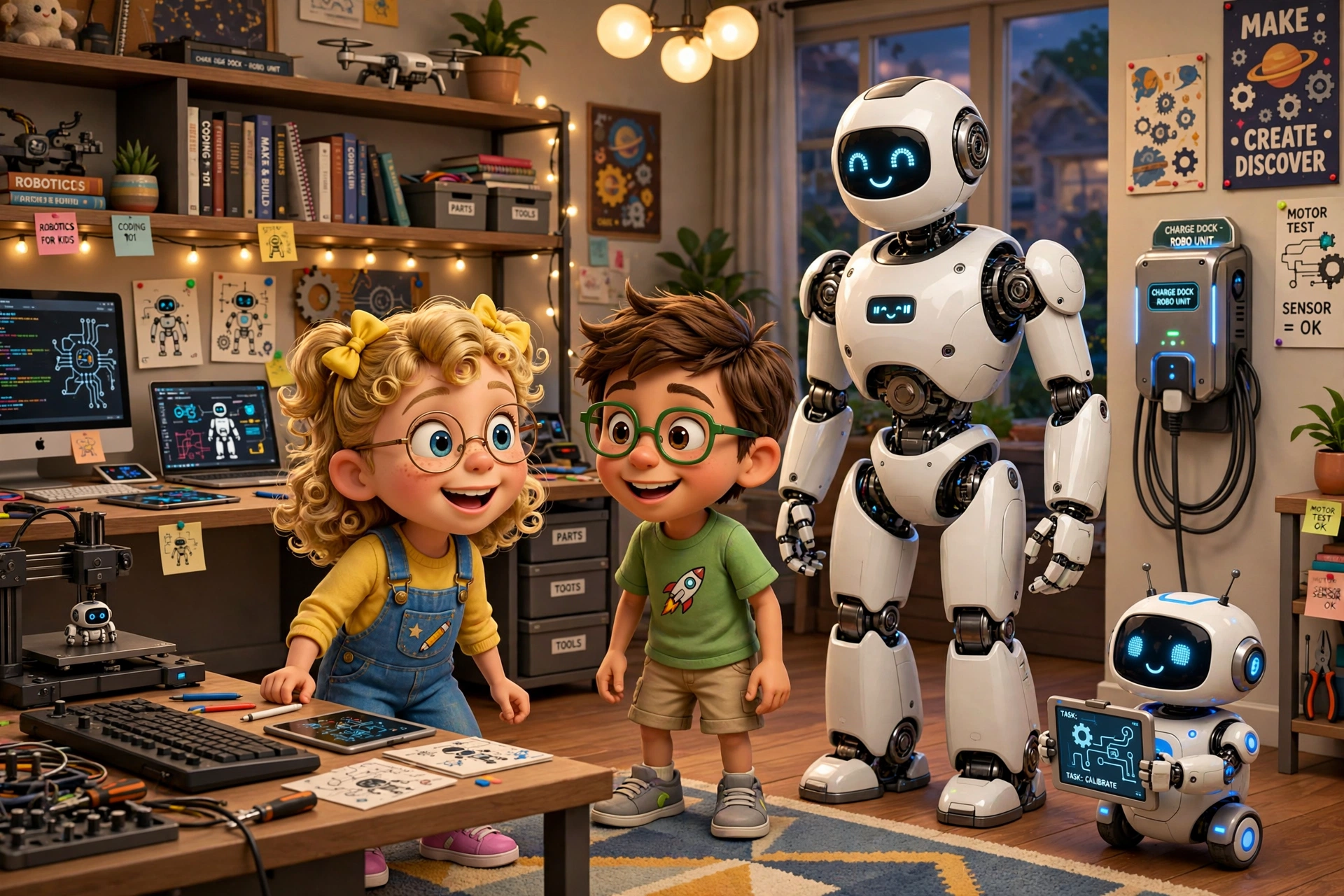
Story 1 The family living room on the morning the crate arrived — Pip the humanoid robot stands beside the open crate, Lina measures Pip's reach, Omar watches the feet, and Grandpa holds a dial.

The Humanoid Who Lives With Us

Home living room · New body day

8 words: Humanoid, Bipedal, Actuator, Narrow AI, General AI, Human-Robot Interaction, Calibration, Override

Read Story 1 →
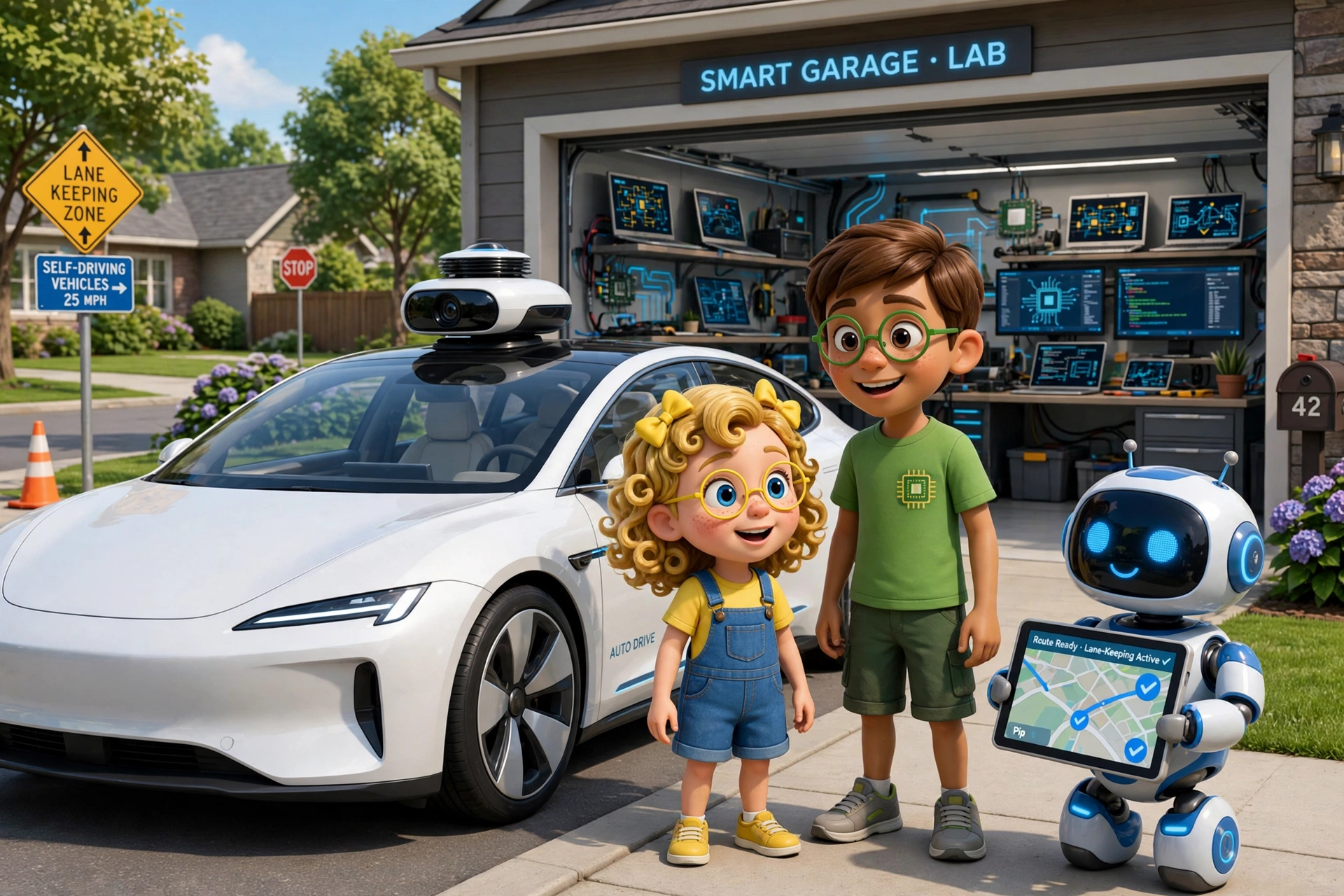
Story 2 Inside a family car at the fork with the missing sign — Dad's hands hover above the wheel, the Lidar drum spins on the roof, and Pip faces the two roads.

The Car With No Driver

Family drive · The fork with no sign

10 words: Lidar, Sensor Fusion, Waypoint, Obstacle Avoidance, Path Planning, Emergency Stop, Anomaly Detection, Edge Case, Human-in-the-Loop, Telemetry

Read Story 2 →
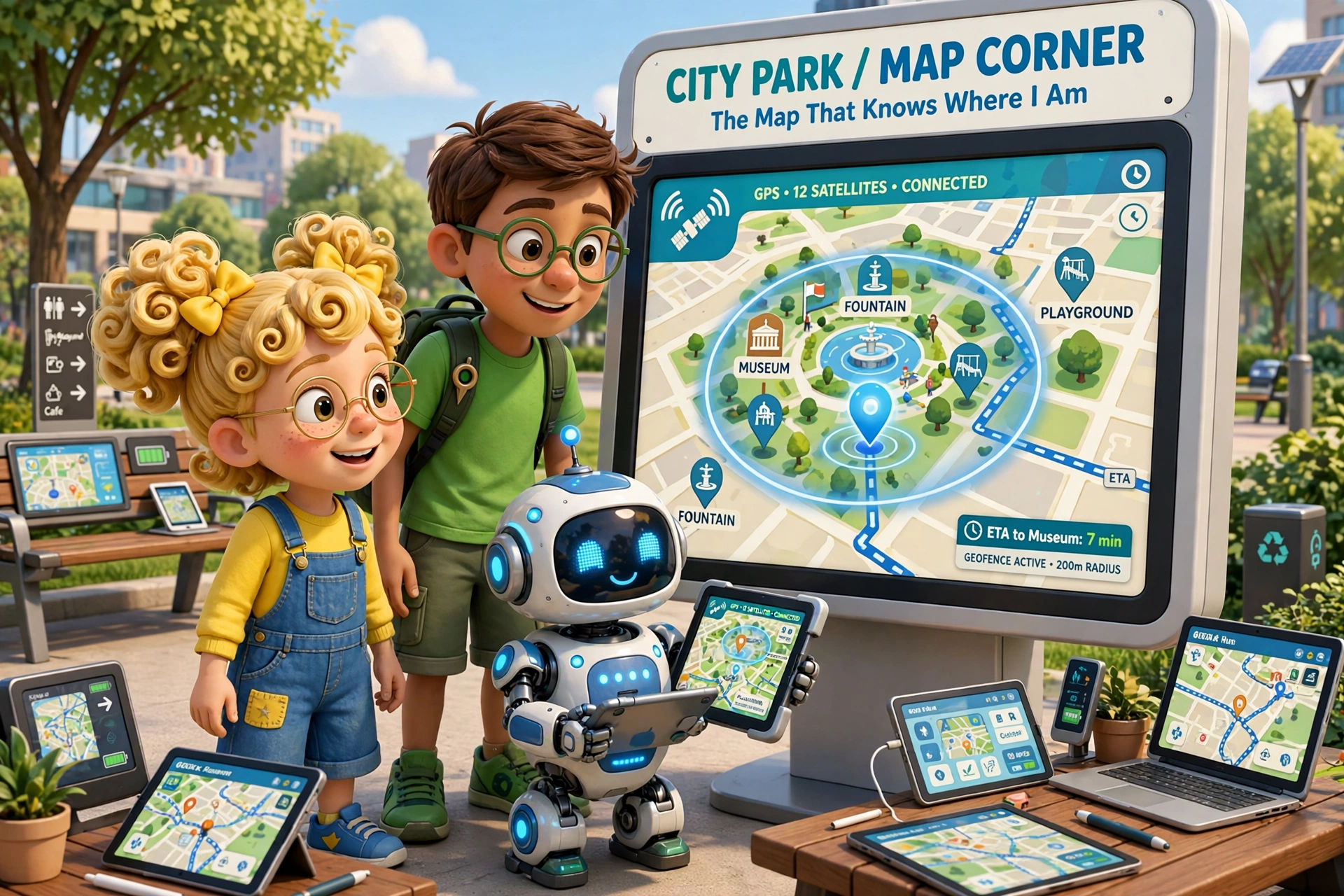
Story 3 The city park map corner — the big glass screen shows the glowing map with the blue dot YOU sliding off the park, and the small grey Privacy Zone square around the bench.

The Map That Knows Where I Am

City park · The map corner

10 words: Beacon, Localization, Ambient Computing, Voice Assistant, Navigation AI, Schedule, Automation, Trigger, Geofencing, Privacy Zone

Read Story 3 →
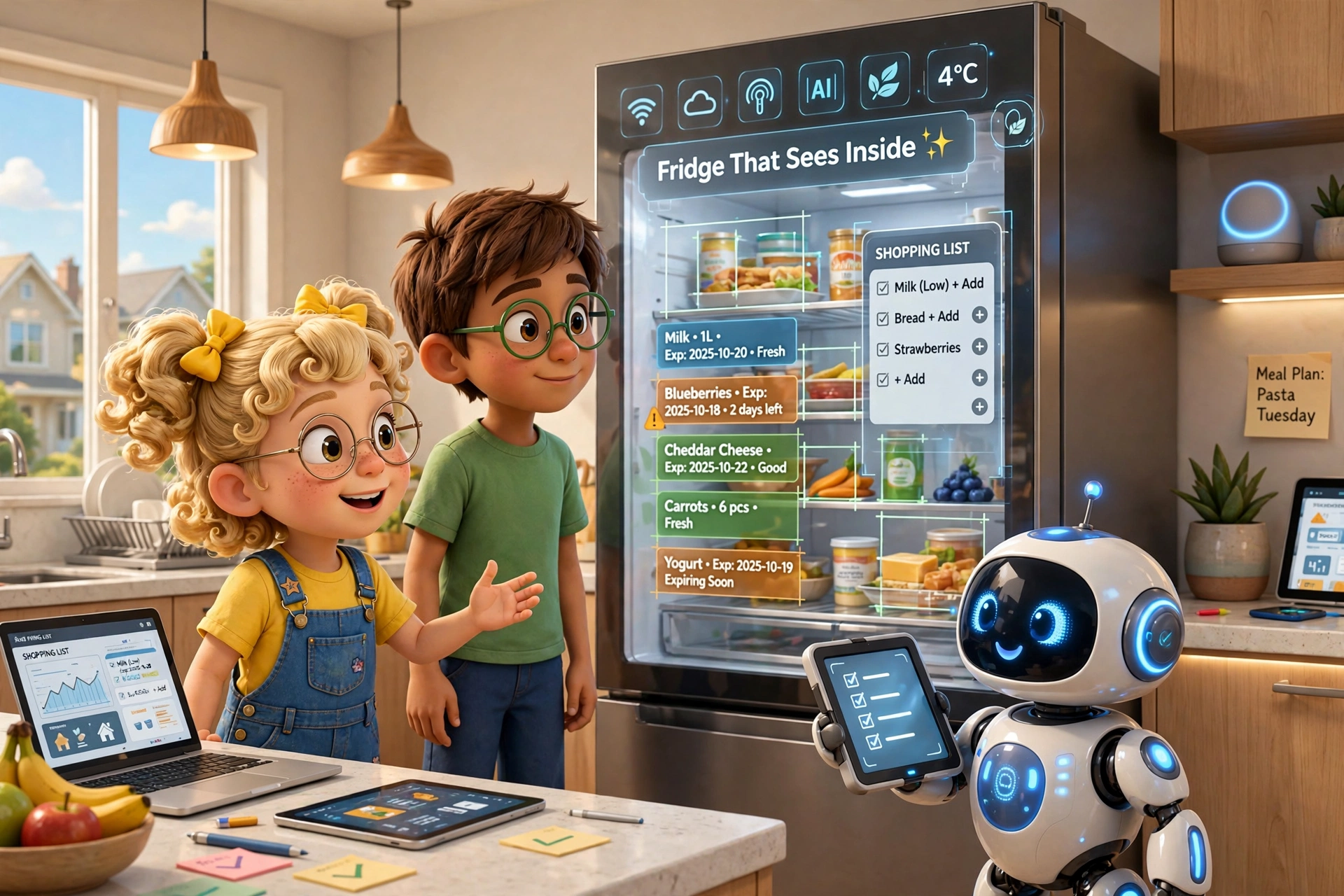
Story 4 The home kitchen on a Sunday morning — the smart fridge door open, its screen glowing with a picture of every shelf, each item carrying a Freshness Score.

The Fridge That Sees Inside

Home kitchen · The fridge that watches

10 words: Computer Vision, Inventory AI, Expiry Detection, Freshness Score, Consumption Analytics, Demand Forecasting, Automated Reordering, Recommendation Engine, Data Drift, Predictive Uncertainty

Read Story 4 →
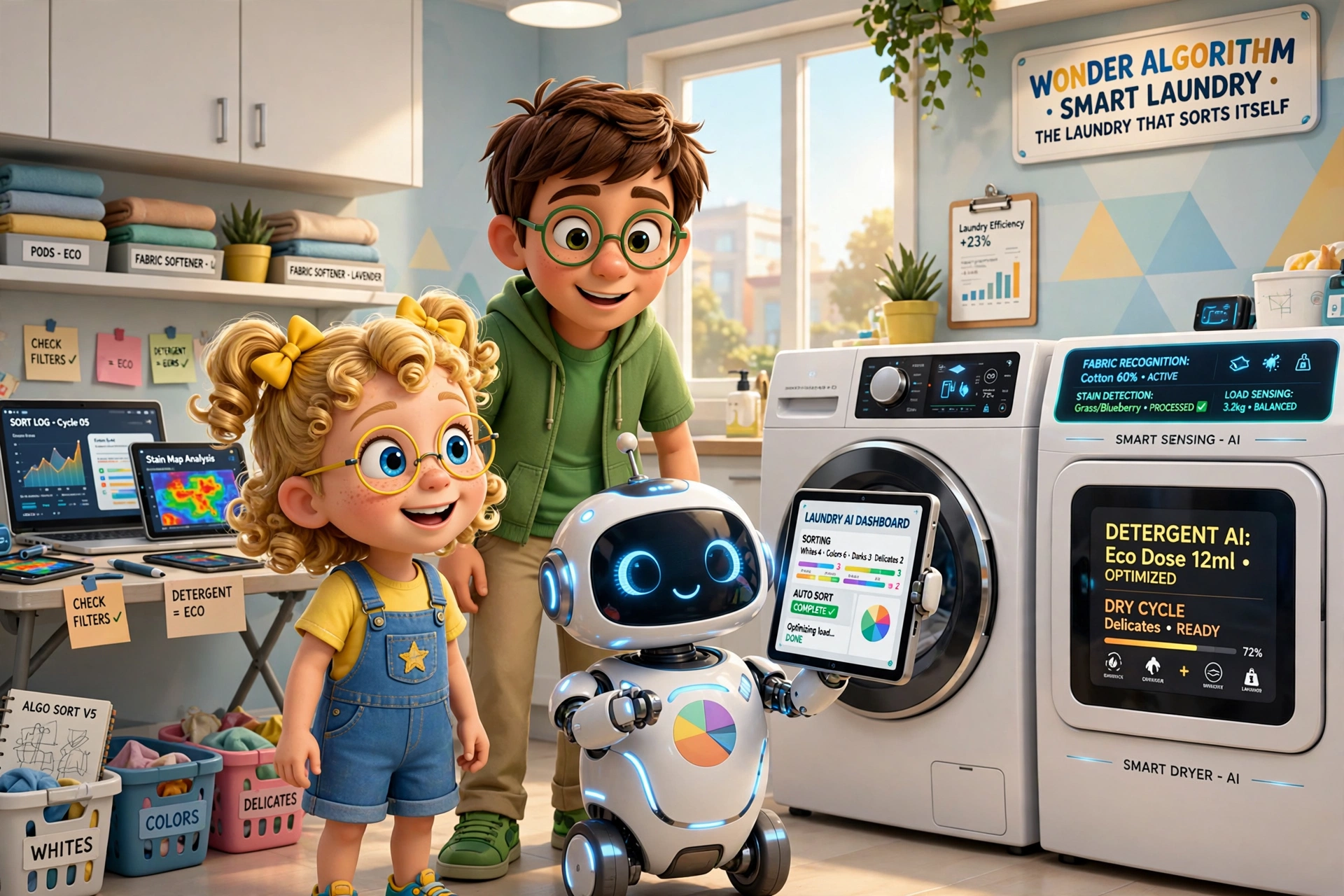
Story 5 The laundry room at the moment the washer says the wrong word — the screen glows with the word WHITE, and the pale-yellow jumper sits on top of the load.

The Laundry That Sorts Itself

Home laundry room · The washer that sorts

10 words: Classification, Training Data, Feature Extraction, Label, Misclassification, Class Imbalance, False Positive, Overfitting, Generalization, Error Analysis

Read Story 5 →
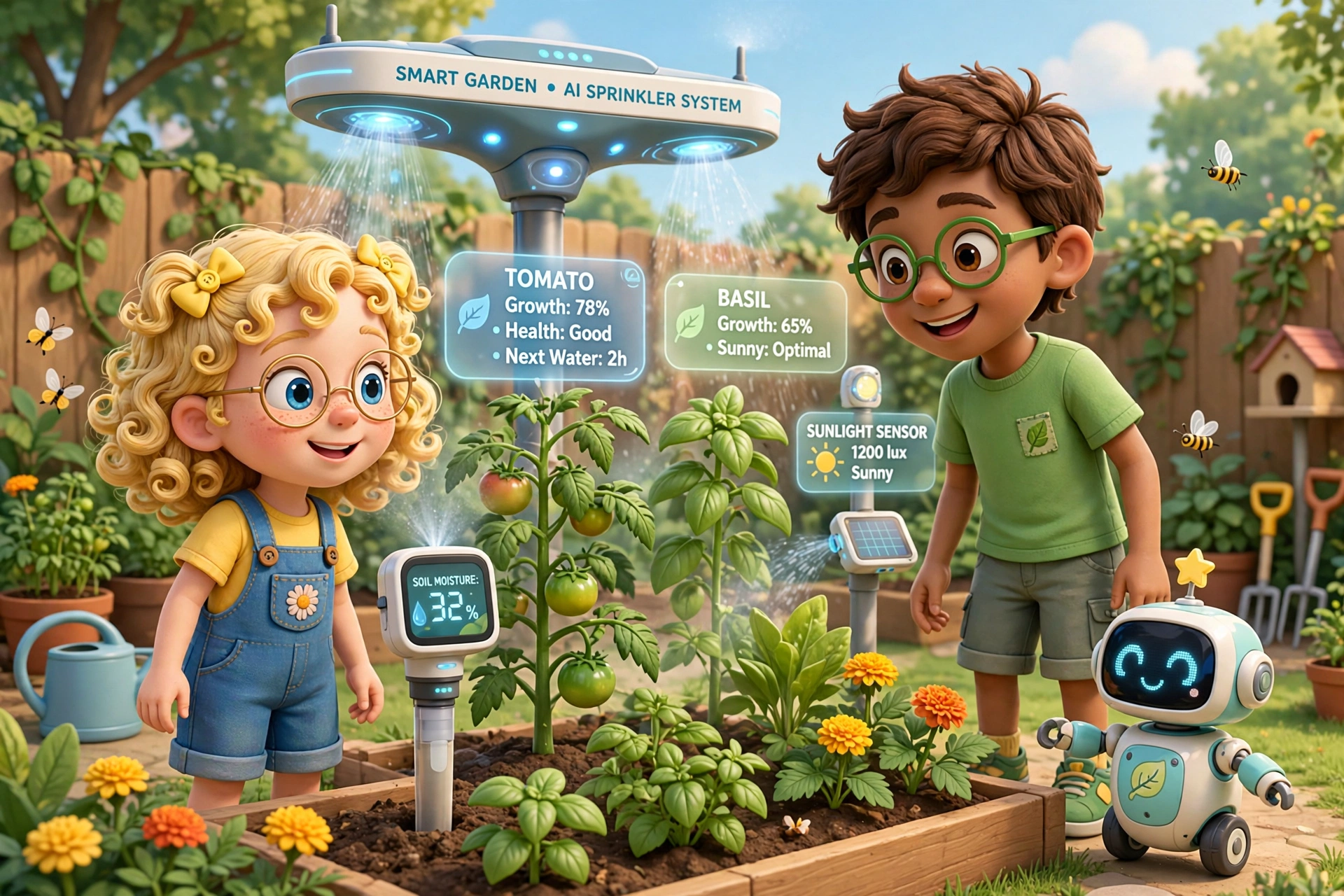
Story 6 Grandpa's allotment at the moment the water system keeps watering only the near bed — the pipe waters the tomatoes while the far bean plants curl dry at the edges.

The Garden That Waters Itself

Grandpa’s allotment · The garden that waters itself

10 words: Ground Truth, Soil Reading, Irrigation Model, Sensor Placement, Plant Recognition, Growth Monitoring, Pest Detection, Blind Spot, Distribution Shift, Coverage

Read Story 6 →
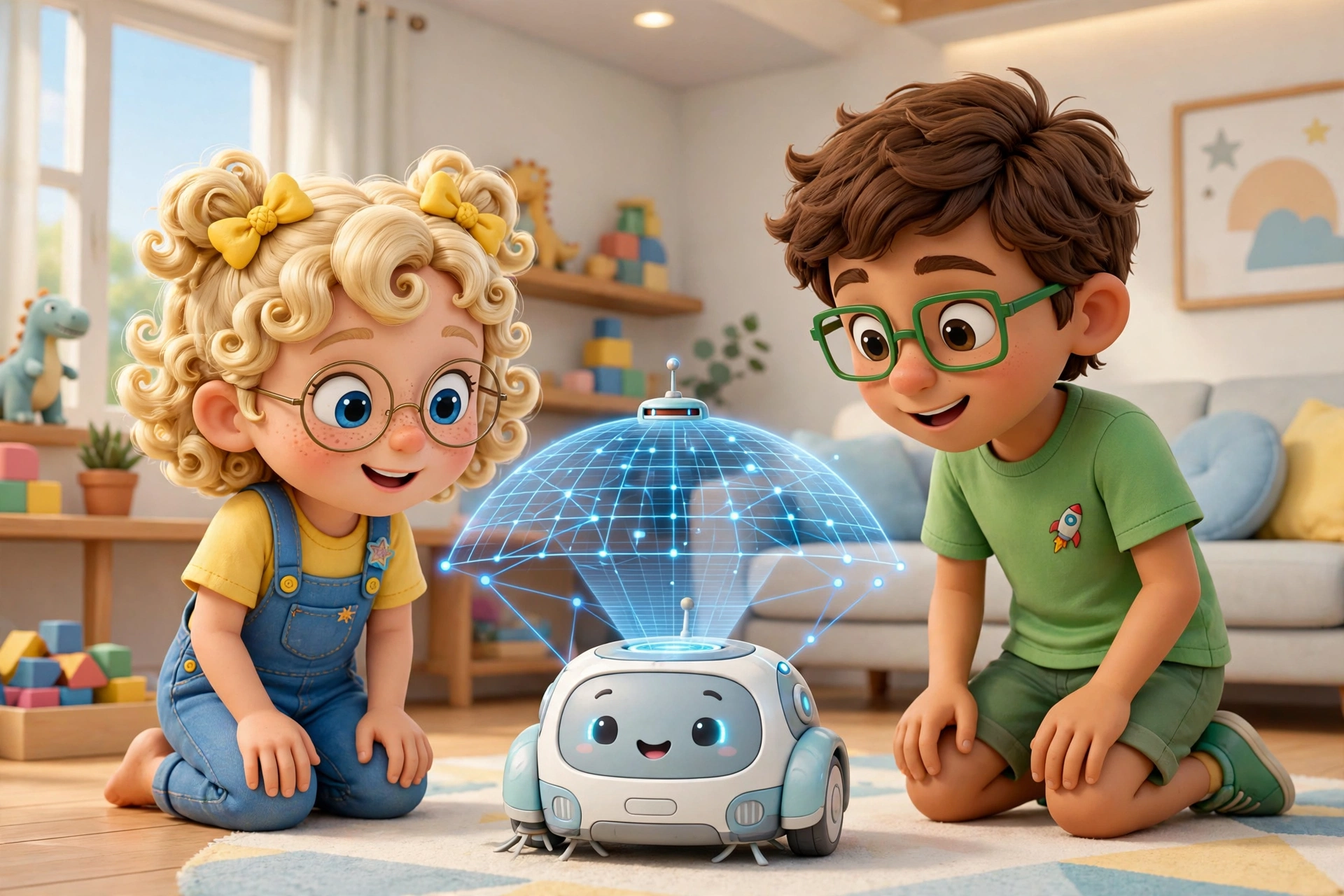
Story 7 The living room on the morning the vacuum wakes — the round white disc sits on the rug with a translucent blue dome above it, drawing the room as a grid of tiny squares.

The Vacuum That Learns the House

Home · The disc that learns the house

10 words: Occupancy Grid, Localisation, Odometry, Drift, Frontier, Bump Sensor, Forbidden Zone, Beacon, Recharge Behaviour, Dirt Map

Read Story 7 →
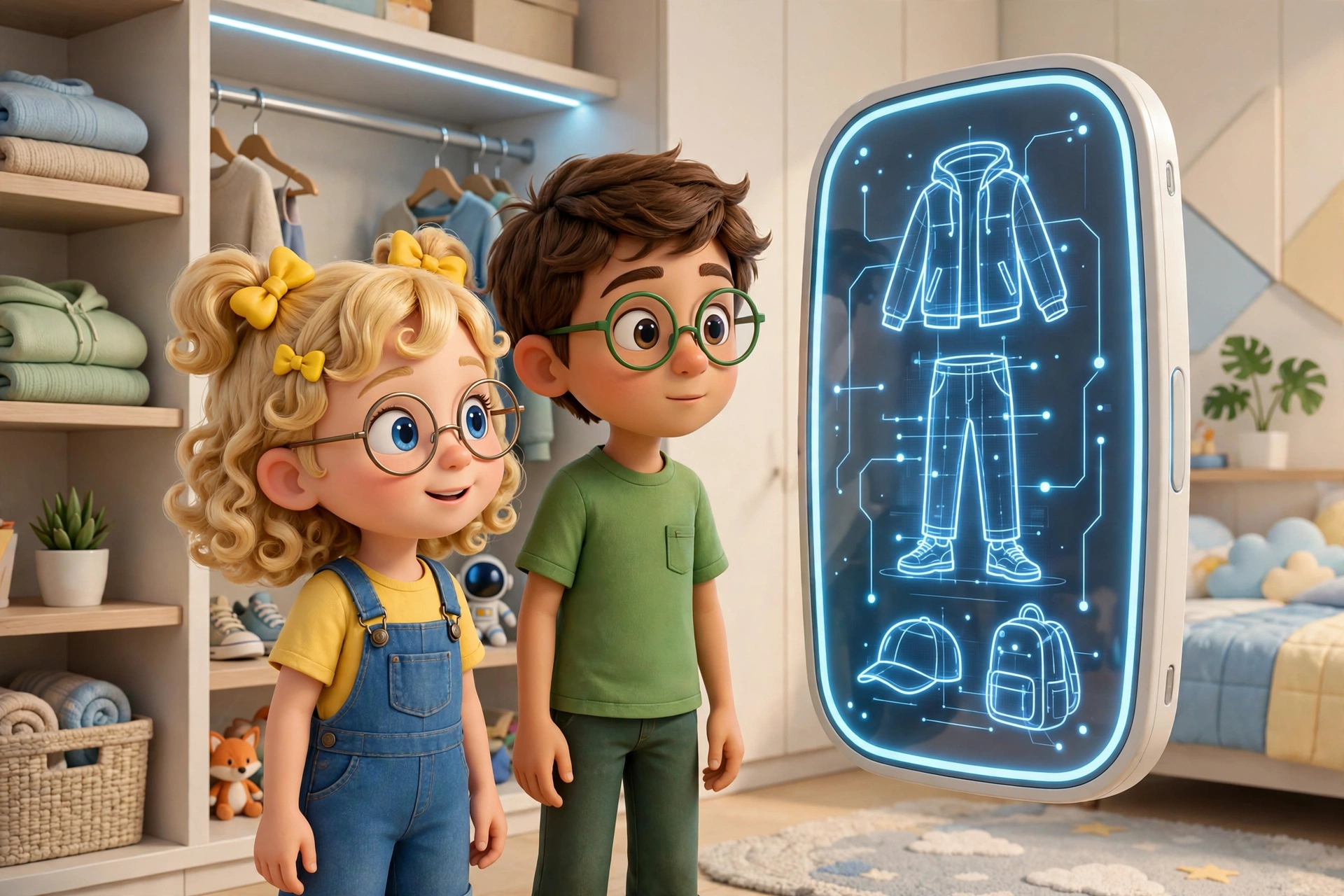
Story 8 The hillside farm — the small grey drone hovers above the green slope while Farmer Ben holds up a tablet showing the count, and one sheep hides behind a large grey rock.

The Farm That Counts Its Sheep

Hillside farm · The flock that hides

10 words: Computer Vision, Object Detection, Tracking, Accuracy, Occlusion, False Negative, False Positive, Annotation, Training Set, Ground Truth

Read Story 8 →
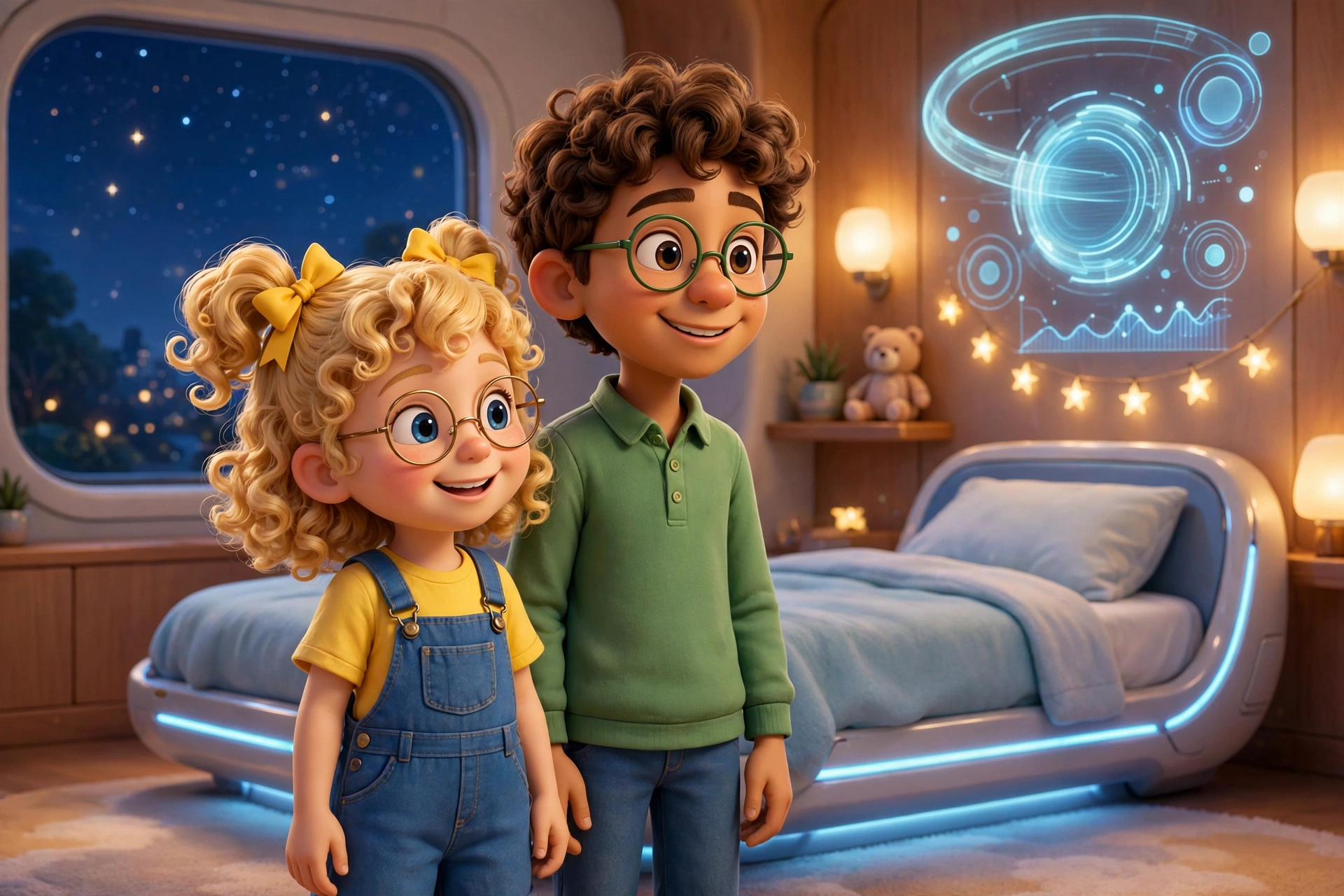
Story 9 The bedroom on the first night the system learns — the small white disc glows on the ceiling, Lina sleeps, Omar rubs his eyes, and Grandpa holds a tablet showing a sleep chart.

The Bedroom That Knows You

Home bedroom · The room that learns your sleep

10 words: Sleep Tracking, Motion Detection, Sound Classification, Circadian Rhythm, Smart Lighting, False Positive, False Negative, Annotation, Training Set, Ground Truth — plus Privacy Zone

Read Story 9 →
Story 10 The house on the morning the system wakes — the white speaker glows in the kitchen, Lina stands at the light switch, Omar stands by the hall camera, and Grandpa sits with the tablet.

The House That Learns

Home · The house that learns

10 words: Ambient Intelligence, Motion Detection, Voice Recognition, Routine Learning, False Positive, False Negative, Privacy, Consent, Edge Computing, Adaptive Automation

Read Story 10 →

What Your Child Will Learn Across Volume 5

Not jargon for its own sake — but the words that help a child think clearly about the machines around them.

  • Bodies & motion — Humanoid, Bipedal, Actuator, Calibration, Override.
  • Sensing the world — Lidar, Sensor Fusion, Computer Vision, Object Detection, Tracking.
  • Finding the way — Waypoint, Path Planning, Localisation, Odometry, Drift, Frontier, Navigation AI.
  • Learning from examples — Training Data, Training Set, Label, Annotation, Feature Extraction, Classification.
  • When machines get it wrong — Misclassification, False Positive, False Negative, Overfitting, Blind Spot, Data Drift, Distribution Shift.
  • Working with people — Human-in-the-Loop, Human-Robot Interaction, Consent, Privacy, Privacy Zone, Forbidden Zone, Geofencing.
  • Thinking close to home — Edge Computing, Ambient Computing, Ambient Intelligence, Adaptive Automation, Recharge Behaviour.
  • Truth & trust — Ground Truth, Predictive Uncertainty, Error Analysis, Coverage, Schedule, Trigger.
A note for grown-ups: the goal is not to make children fear AI, or to worship it — but to give them the language to ask good questions. Who decided this? What did it miss? Who does it watch? Who does it belong to?

For Parents, Teachers & Home Educators

Each story is a full week of shared activity — short enough to fit into a busy day, rich enough to anchor a classroom week.

Use Volume 5 as a ten-week module, or pick a single story that matches the machine already in your home. Every story includes vocabulary cards with audio, a short quiz, two images, and a creator prompt — so you can read, speak, test, and make, across a full seven-day rhythm. The same rhythm works as a class routine — text Monday and Tuesday, Image 1 Wednesday and Thursday, the creator prompt Friday, retelling the following Monday. School and home reinforce the same words.

Read the full guide → 📖 Research Foundations

Wonder Algorithm · Volume 5: Future Builders · Story 1–10 · Ages 7–8

Conceived, Designed & Developed by Prof. Dr. M. A. Pasha & Prof. Dr. S. Pasha

AI Pre-Literacy · Text first, image second, child as author. A full week of shared activity.

Research Foundations · Parents & Teachers Guide

For Parents & Teachers

Loading…

Read the full guide → Read the research foundations →
Creative Commons License
Except where otherwise noted, all free resources—books, games, stories, blogs, and research reports—on this platform are conceptualized and created by Prof. Dr. Shaheen Pasha & Prof. Dr. Anwar-ur-Rehman Pasha. Licensed under a Creative Commons Attribution-NonCommercial-NoDerivatives 4.0 International License to empower future-ready families.
© 2026 AI Pre-Literacy Hub • Built with GeneratePress