
AI Pre-Literacy Story 9: The Bedroom That Knows You
Home — the bedroom that learns your sleep · 10 words · AI Pre-Literacy story
1. Story — Text-Based (Day 1-2: Imagination Studio)
Read this AI Pre-Literacy story with NO pictures first. Child becomes illustrator.
The bedroom has a new system. A small white disc on the ceiling. One soft blue light. One tiny camera. One small microphone. One thermometer inside.
Lina is seven. Omar is eight. Pip stands by the doorway, tall and humanoid, blue light soft at the eyes.
Grandpa installed it from a box. “It learns how you sleep,” he says. “I want to see if it can.”
The system watches. It measures. It learns.
It follows how long you sleep. That is Sleep Tracking — watching how you sleep through the night.
It feels when you turn. That is Motion Detection — knowing when something moves.
It hears a sound and knows what it is. A cough. A whisper. A dog barking outside. That is Sound Classification — hearing a sound and naming it.
It learns your body’s own clock. When you get sleepy. When you wake. That is Circadian Rhythm — your body’s clock for day and night.
The system changes the lights. Dim and orange at night. Bright and white in the morning. That is Smart Lighting — lights that change on their own.
On Monday, it gets everything wrong.
It thinks Lina is awake when she is asleep. That is a False Positive — the AI thinks it sees something that is not there.
It misses Omar’s bad dream. That is a False Negative — the AI misses something that is there.
Lina laughs. “It does not know us.”
Omar does not laugh. “It is trying,” he says. “Trying is not enough.”
They sit on the bed. The disc hums. The blue light glows.
“We can help it,” says Pip. “Show it what sleep looks like. Show it what waking looks like. That is Annotation — showing the AI what to look for.”
Grandpa has a tablet. He draws a line on a chart. “This is sleep,” he says. “This is awake.” He draws another line. “This is a dream. Do not wake them.”
They make many charts. Each one marked. Sleep in one colour. Awake in another. That is a Training Set — the examples the AI learns from.
The system learns. It watches again.
On Tuesday, it knows Lina is asleep. It knows Omar is dreaming. It keeps the room dark and quiet.
“How do you know it is right?” says Lina.
“I watched them myself,” says Grandpa. “Three nights. With my own eyes. That is the truth.”
“That is Ground Truth,” says Pip. “The human record the model learns from. The thing that is real.”
The system learns one more thing. It learns that Lina does not want the camera on when she changes clothes. She draws a square on the tablet. A place the camera must not look. That is a Privacy Zone — a place a person has drawn that the machine must never watch.
The sun rises. The lights turn white. The system knows. The bedroom is quiet.
Lina holds the tablet. Omar holds the chart. And Pip stands between them — tall and steady, blue light soft — because a room can learn, but a room must also be told what not to see.
2. Image 1 — Association Anchor (Day 3-4)
Top of Image 1 — This is what you just read, now you can see it.
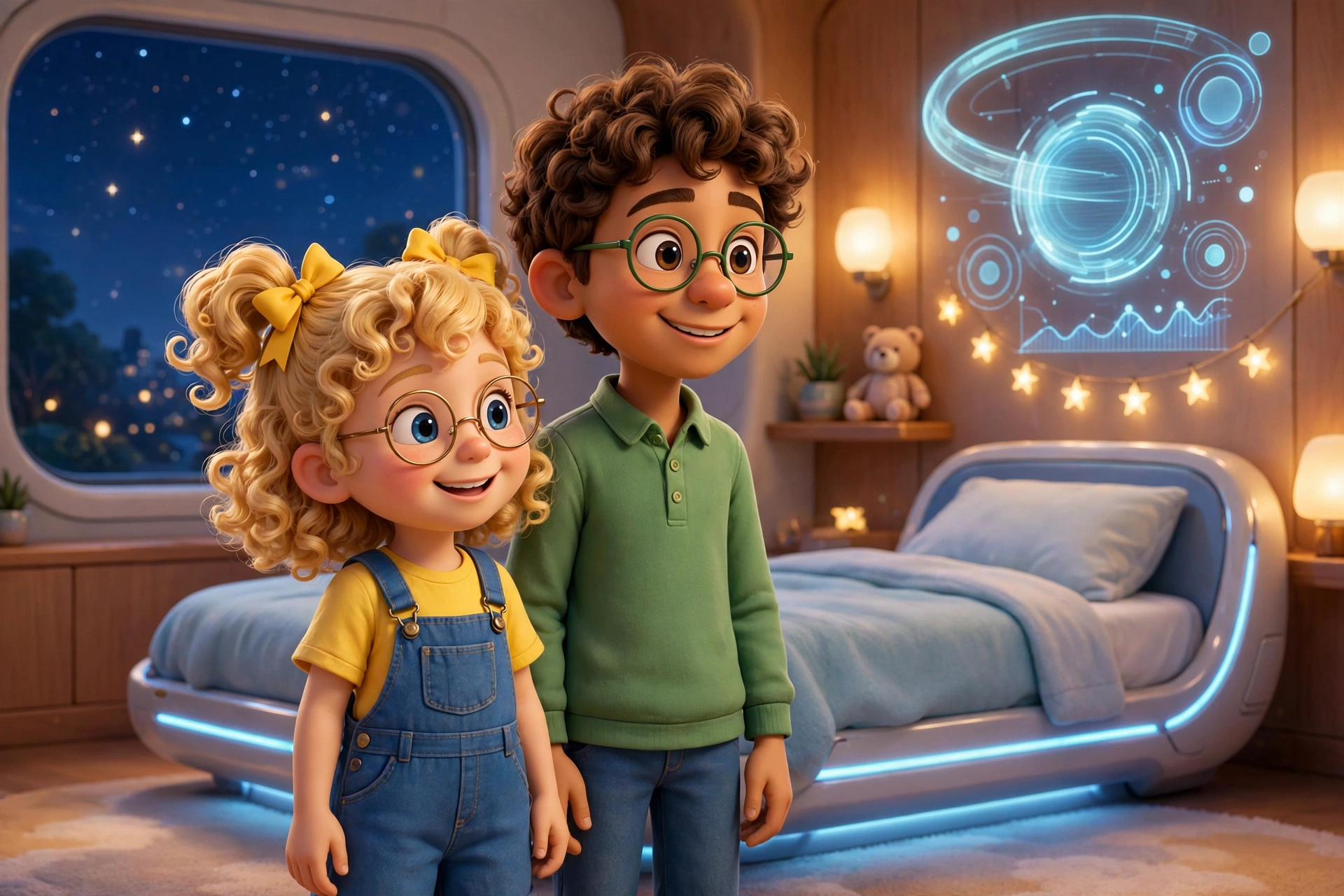
3. What is the purpose of this Image 1?
Direct resemblance to this AI Pre-Literacy story — the bedroom on the first night the system learns. The small white disc sits on the ceiling with one soft blue light glowing. Below, on a table, a tablet shows a chart with two lines: one marked sleep and one marked awake. That is Annotation — showing the AI what to look for. Lina — age seven, blue overalls, yellow shirt, round glasses — lies on the bed asleep. Omar — age eight, green shirt, green glasses — sits up in bed, rubbing his eyes. Pip stands by the doorway, blue light soft at the eyes. Grandpa stands beside the tablet, one hand on the screen. The window shows moonlight. A small microphone and camera are visible on the disc.
Use Day 3-4: Point and name together — Where is the disc? Where is the blue light? Where is the camera? Where is the microphone? Where is the tablet, and what is on the screen? Where is Lina? Where is Omar? Where is Grandpa? Where is Pip? Look at the chart. What do the two lines mean? That is Sleep Tracking. The system hears a sound — that is Sound Classification. It feels a movement — that is Motion Detection. It learns your body’s clock — that is Circadian Rhythm. It changes the lights — that is Smart Lighting. And the chart is not right yet.
4. Meet Your 10 Special Words — One Per Day
AI Pre-Literacy · Story 9 · Tap a card to hear the word
5. Quiz — Did You Catch It?
Story 9 Quiz — tap the answer
1. Which word means: “Watching how you sleep through the night”?
2. Which word means: “Knowing when something moves”?
3. Which word means: “Hearing a sound and naming it”?
4. Which word means: “Your body’s clock for day and night”?
5. Which word means: “Lights that change on their own”?
6. Which word means: “The AI thinks it sees something that is not there”?
7. Which word means: “The AI misses something that is there”?
8. Which word means: “Showing the AI what to look for — drawing a line, a box, a mark”?
9. Which word means: “The examples the AI learns from”?
10. Which word means: “The human record the model learns from — the thing that is real”?
6. Image 2 — Creator Prompt (Day 5: Imagination Studio)
This image is NOT in this AI Pre-Literacy story — this one is YOURS.
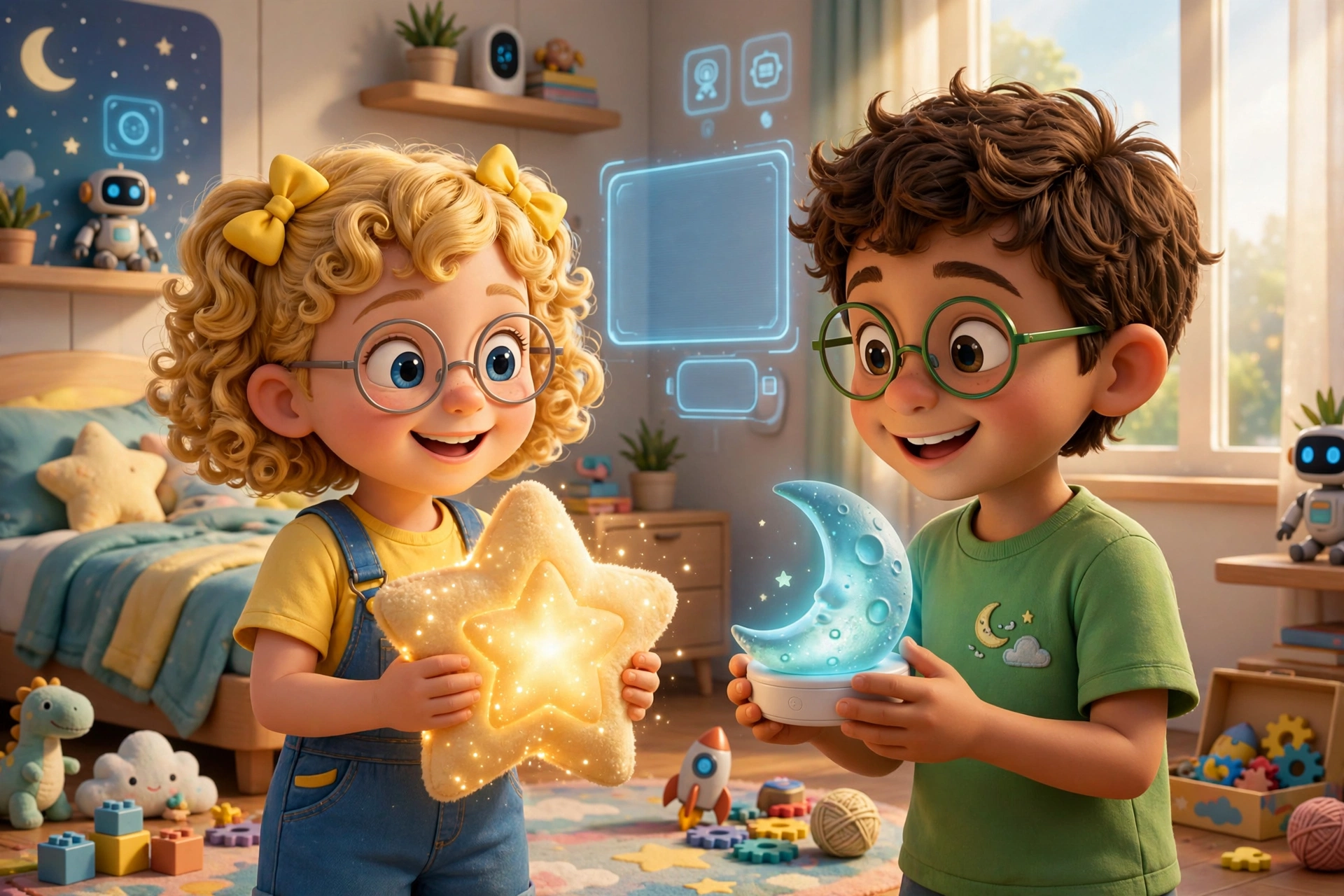
Look at this picture together. You already know Lina and Omar and Pip. You know what happened when the bedroom learned to sleep. Now this picture shows you something new — something that did not happen in the story.
Ask your child: Who is in this picture? Where are they? The disc is half-drawn — what should it learn next? Lina is holding a torch — what is she pointing at? Omar is holding a magnifying glass — what is he looking for? Look at the chart on the tablet. What lines would you draw? What is the Ground Truth — who watches the sleepers with their own eyes? Where would you draw the Privacy Zone — and why there? What should the system do when it cannot see?
Let your child tell you the story out loud. Do not correct it. There is no wrong answer.
Then, if they want to, they can draw it.
For Parents & Teachers
Loading…