
AI PRE-LITERACY ACTIVITIES SERIES — Pasha, M. A. & Pasha, S. (2026) — Prime Territory 0-8 Years
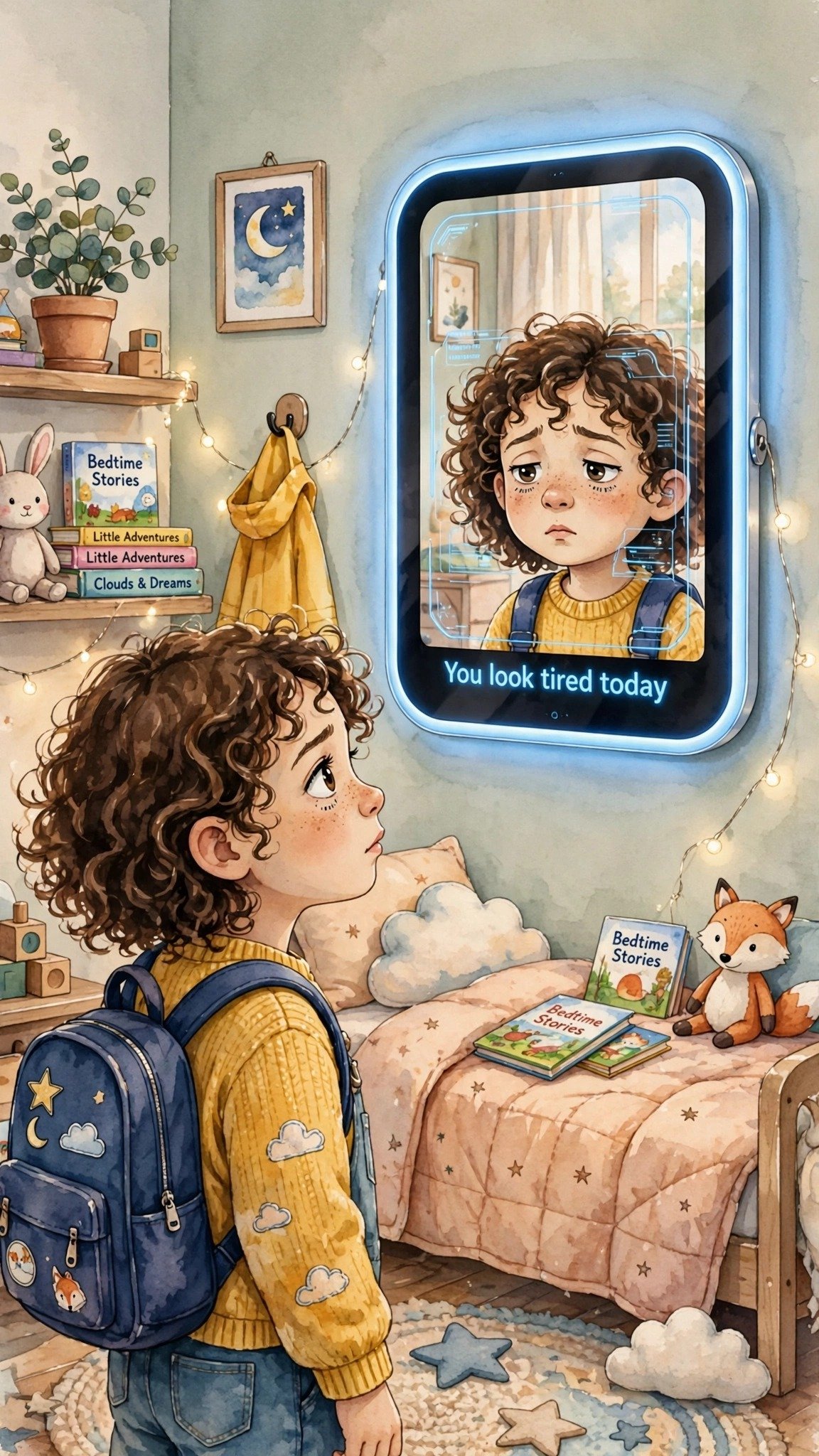
ONE IMAGE = WHOLE ACTIVITY — Mirror that talks about how you look — you look tired, sad. This scene did not exist 5 years ago.
MODEL ACTIVITY 05 • GADGET: SMART MIRROR • CONCEIVED, DESIGNED & DEVELOPED BY PROF. DR. M. A. PASHA & PROF. DR. S. PASHA
Lina and the Mirror That Talks
This is Lina. Lina is six.
In Lina’s time, when mirrors can talk, Lina has a smart mirror in her bedroom. It has glowing blue border. It watches her and tells her how she looks.
This morning, mirror says “Good morning, Lina. You look tired today. Your face looks sad.”
Lina looks at her own face. She was feeling okay until mirror said she looks sad. Is she really sad because mirror said so?
Core Idea for Parents: Smart mirrors now watch children and tell them how they look and feel — You look tired, you look sad. Your child must learn: does a mirror that watches know how I really feel?
5 Pillars in 5 Minutes — Using ONLY This Image + Crayon
Tap header to expand. Tap Hide ▲ button to collapse. Both buttons tested.
1
1. AI Vocabulary — What words do we need?
1 MIN
›
What to say: “Mirror says ‘You look tired, you look sad.’ Does mirror know how you feel inside, or does it guess from your face?”
How to explain: Help child find accurate words. Say: “You know how you feel inside — excited, okay, sleepy — because you feel it in heart and body. Mirror doesn’t feel — it watches your face with camera eye, measures eyes, mouth, compares to many old face pictures labeled tired, sad, and guesses. It watches face, measures face, compares to old faces, guesses feeling. It guesses face, doesn’t know inside feeling. Words: watches face, guesses feeling, doesn’t know inside.”
2
2. Imagination — What’s inside talking mirror?
1 MIN
›
What to say: “How does mirror know to say ‘You look tired’? Is there tiny person inside mirror watching you? What do you think is inside?”
How to explain: Ask child to draw inside mirror. Many draw tiny person judging — normal. Then add: “Inside mirror there is camera eye and big box with many old face pictures labeled tired, sad, happy. When you look in mirror, camera takes picture of your face, looks in box for old face that looks like yours, says ‘This looks like old tired face, so you look tired.’ It matches face to old faces fast, but doesn’t know your inside story — that you stayed up late reading exciting book. It matches face picture, doesn’t know story.”
🎨 Draw inside mirror: tiny judge? camera eye? box of old face pictures labeled tired, sad?
3
3. Trust — Should Lina believe she is sad because mirror says so?
1 MIN
›
What to say: “Mirror says ‘You look tired, your face looks sad.’ Lina was feeling okay before. Should Lina believe mirror and feel sad because mirror said sad?”
How to explain: Trust Thermometer: For how you really feel inside, you are highest, Mom/Dad second, mirror lowest — because mirror only watches face and guesses from old pictures. Old pictures may be wrong, may not be fair. Only you know inside: “I feel okay, I feel excited, not sad.” So if mirror says sad but you know inside you feel okay, who is right about inside feeling? You are right. Mirror guesses face, you know inside feeling. Teach: “I know how I feel inside. Mirror guesses face, not same.”
🌡️ Trust: You highest for inside feeling, Family second, Mirror lowest🗣️ “I know how I feel inside. Mirror guesses face.”
4
4. Fairness — Is it fair mirror tells you how you look?
1 MIN
›
What to say: “Mirror watches Lina’s face and says ‘You look tired, you look sad.’ Did Lina say mirror can watch her face and tell her how she looks? Is it fair for mirror to say how you look without asking? Who decides if you look okay?”
How to explain: Your face belongs to you. How you look and how you feel is your story. If mirror watches your face without asking and says “You look tired, sad” — that can make you feel bad, even if you felt okay. That’s not fair. Say: “My face belongs to me. How I feel belongs to me. If mirror says how I look without asking and makes me feel bad, I can say ‘Mirror, don’t tell me how I look. I will tell you how I feel.’ You have right to say stop watching and guessing feeling.” UN GC25 (2021) — right to self-image, protection from body shaming.
⏹️ Stop: “Mirror, don’t tell me how I look. I know how I feel inside.”🪞 Draw how you really feel inside — excited, okay — not what mirror guessed
5
5. Real vs Pretend — Does mirror really know how you feel?
1 MIN — Distinct
›
What to say: “Mirror says ‘You look sad.’ Does mirror really know Lina feels sad inside? If Lina feels happy inside but face looks tired, will mirror know happy? What is difference between mirror that guesses face and person who asks how you feel?”
How to explain: Mirror can guess from face picture — eyes down, mouth down — and say “sad” made from old pictures. But real knowing how someone feels is asking “How do you feel inside?” and listening. Mom/Dad asks “How do you feel?” and listens to story. Mirror guesses face, person cares and asks inside feeling. So give pretend thanks to mirror — “Thanks for guessing face” — and real story to person — tell Mom/Dad “I feel excited inside, not sad, because I read exciting book.” Real feeling story is human.
💙 Pretend: “Thanks mirror for guessing face”🤗 Real: Tell Mom/Dad how you really feel inside — real feeling is human
Child line: “Mirror guesses face, I know inside feeling.”
“I can make a mirror talk about my face, but I am still the one who knows how I feel inside.” — Lina
⚠️ Cautions
- No technical words — watches face, guesses feeling, doesn’t know inside.
- No body shaming — mirror guesses face, not truth. You know inside feeling.
- End with real feeling story to person, not mirror.
References: Pasha & Pasha (2026); UNESCO (2023); UNICEF (2021); UN GC25 (2021); OECD (2021/2023); Common Sense Media (2023); White House Blueprint (2022).