
Story 2: The Two Pilots
Co-pilot Cockpit — 8 AI terms: Co-pilot, Human-in-the-Loop, Handoff, Shared Autonomy, Teaming, Assistive AI, Copilot Mode, Pair Programming
1. Story (Days 1–2): Read the text with no pictures
Your child becomes the illustrator — ask, “What did you see?”
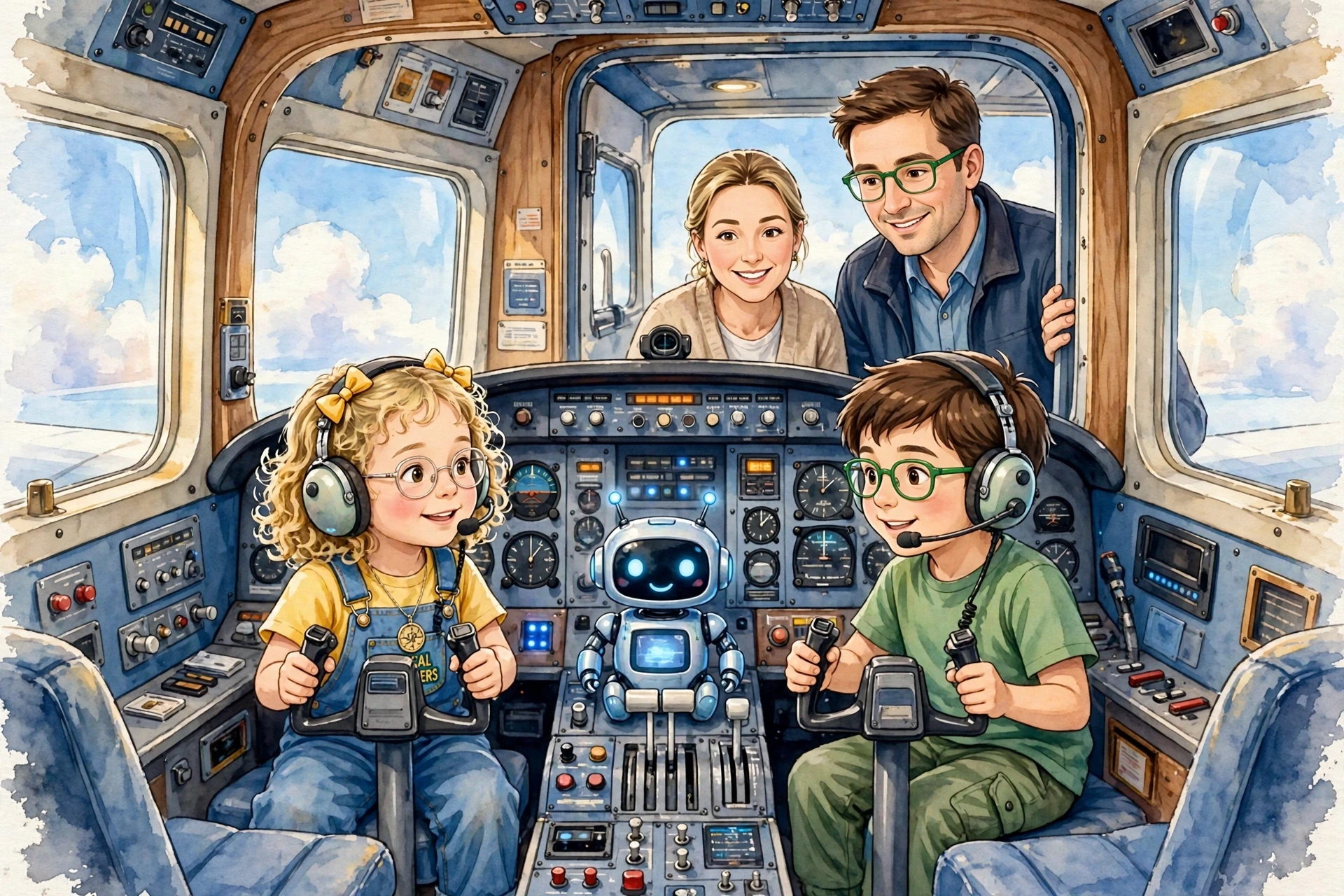
Lina, seven with blonde curly hair and yellow bows, and Umar, eight with brown hair, climb into the cozy co-pilot cockpit that Grandpa built for learning how humans and AI fly together.
Pip sits in the middle as a friendly Co-pilot, and a Co-pilot is an AI teammate who helps you steer, just like in Microsoft Copilot today.
Grandpa says someone must always stay in charge, and keeping a person in charge is called Human-in-the-Loop.
When Lina steers and then lets Umar steer, that careful passing is called Handoff.
They decide who does what, and sharing control safely is called Shared Autonomy.
Working happily together like a team is called Teaming.
Pip does not fly alone — Pip is Assistive AI, AI that assists you, not replaces you.
When Pip lights up blue and says “I will help check clouds,” that helpful state is called Copilot Mode.
When Lina and Umar write instructions together with Pip, coding side by side, that is called Pair Programming.
The cockpit has two wheels, so Lina holds one and Umar holds one, and Pip is their gentle Co-pilot.
Even though Pip is smart, Dad from the doorway reminds them about Human-in-the-Loop — humans make final choices.
Umar says “Your turn!” and does a smooth Handoff to Lina.
Mom, blonde hair shining, smiles at their Shared Autonomy — they share the sky.
Their giggles and teamwork show true Teaming — human plus AI.
Pip as Assistive AI beeps “Wind from left!” to help, not to take over.
When they press the blue button, Pip enters Copilot Mode and lights up to help read maps.
Together they try Pair Programming, saying “If cloud, then go around,” and Pip understands.
Good Co-pilot AI listens, then helps, just like Pip.
Good pilots always keep Human-in-the-Loop so people decide.
A clean Handoff keeps flying safe when one pilot needs rest.
True Shared Autonomy means we both help steer.
Great Teaming is when everyone feels heard.
Best Assistive AI makes you stronger, not smaller, and Copilot Mode makes it easy to see.
And with Pair Programming, Lina, Umar, and Pip write the future of flight together, side by side.
2. Image 1 — Association Anchor (Days 3–4)
Reveal the first image. It anchors what your child already imagined, and introduces the day’s AI vocabulary by pointing to and naming the tech icons in the picture.

3. Meet a Special Word (one per day)
Eight AI pre-literacy words are introduced gradually through simple metaphors — see the table below.
4. Quiz — Did You Catch It?
A short check-in, asked aloud or answered by clicking, to confirm the new word landed.
1. What is a Co-pilot?
2. What is Human-in-the-Loop?
3. What is Handoff?
4. What is Shared Autonomy?
5. What is Teaming?
6. What is Assistive AI?
7. What is Copilot Mode?
8. What is Pair Programming?
5. Image 2 — Creator Prompt (Day 5)
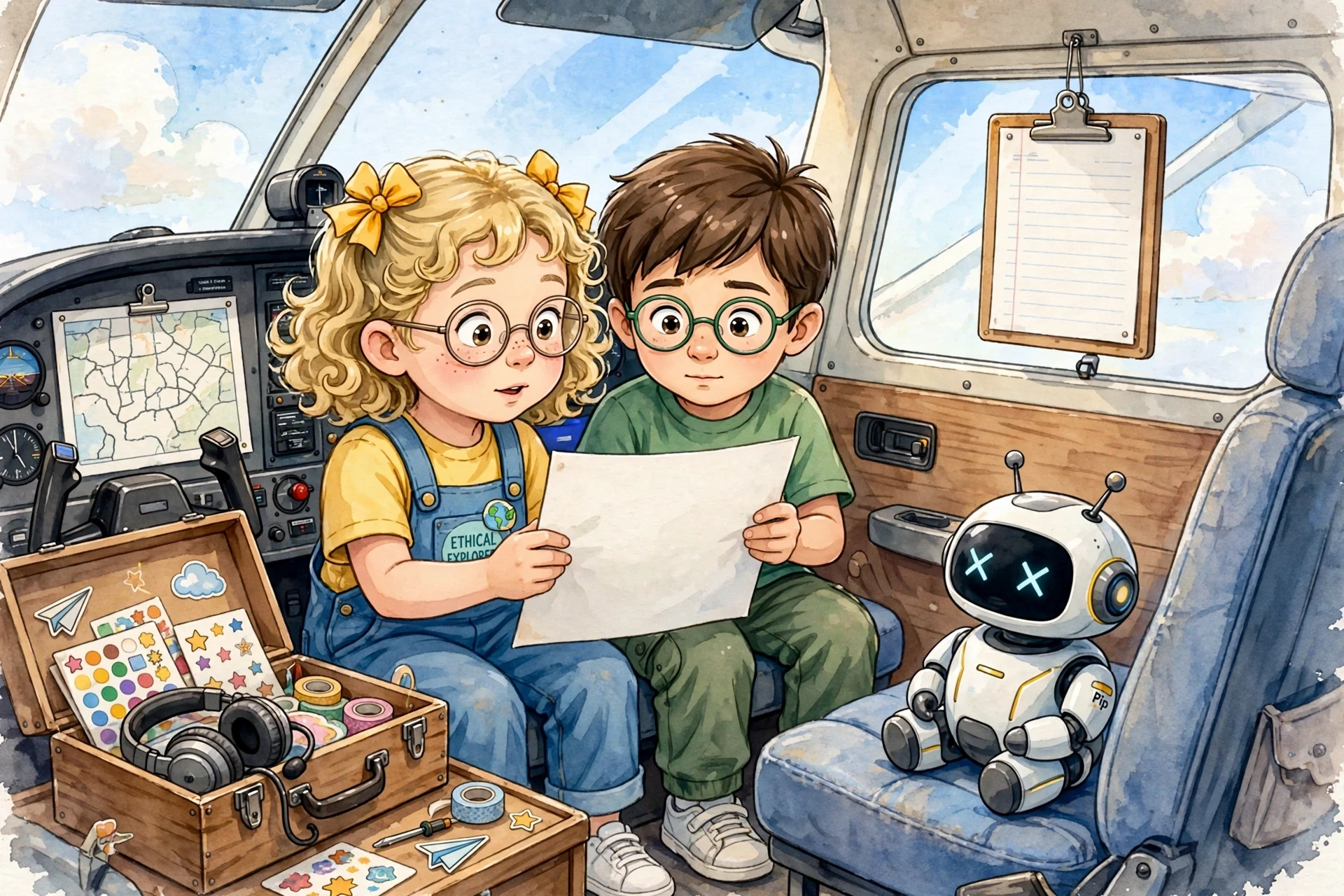
This image never appears in the story text. It’s an open invitation for your child to become the author of something new, using the words they’ve just learned.

6. Bring It Together (Days 6–7)
Your child retells the whole week in their own words — the original story, what they noticed in Image 1, and the new story they invented from Image 2. The family listens and celebrates; there’s nothing to correct. In a classroom, this doubles nicely as a weekly show-and-tell.
Production URLs: https://aipreliteracy.org/wp-content/uploads/wonder-algorithm/vol4-webp-images/vol4-imag421.webp (WEBP) and PNG folder — upload local files there.