
Story 7: The Maker Lab That Builds Kindly
Modern Maker Lab — 8 AI terms: Safety Filter, Consent, Bias Check, Transparency, Explainability, Human Oversight, Fail-Safe, Ethical AI
1. Story (Days 1–2): Read the text with no pictures
Your child becomes the illustrator — ask, “What did you see?”
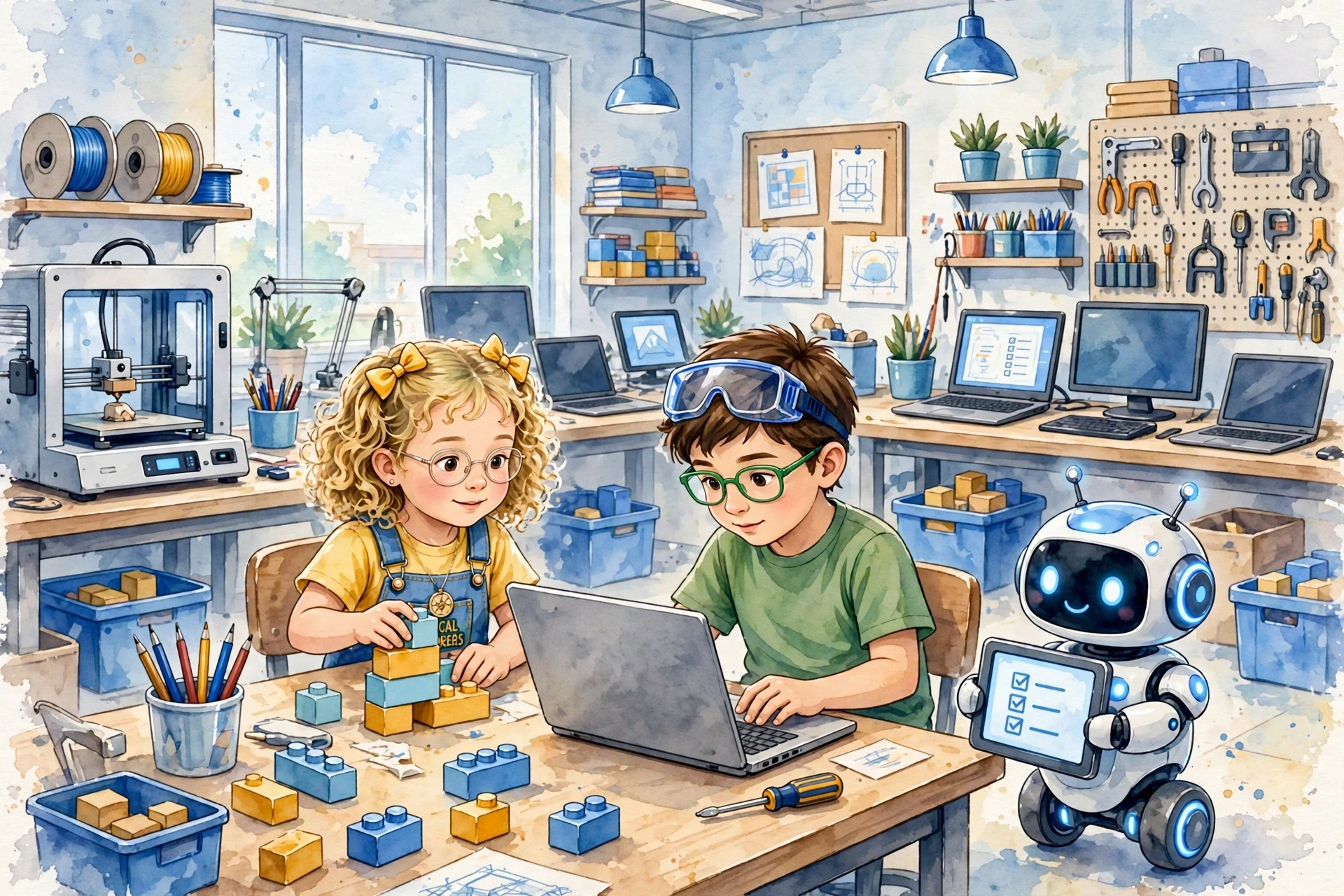
Lina, seven with blonde curly hair and yellow bows, and Umar, eight with brown hair, love the modern maker lab where computers, laptops, tablets, 3D printer, and electric keyboard of building hum together.
This lab has screens, blocks, and Pip the bot holding a tablet that says checklist, and checklist is how AI stays kind today.
When Pip blocks a mean word, that block is called Safety Filter.
When Lina says “Can I use your voice?” and waits for yes, asking first is called Consent.
When Umar checks if AI likes only one kind of tower, checking fairness is called Bias Check.
When Pip shows how it made the tower, showing how is called Transparency.
When Pip explains why it chose blue blocks, explaining why is called Explainability.
When a person watches and can stop Pip, person watching is called Human Oversight.
When Pip stops safely if something goes wrong, safe stop is called Fail-Safe.
All these kind rules together are called Ethical AI — AI that helps everyone fairly.
Lina wants a tall tower, but Pip does Safety Filter check — no sharp parts.
She asks Pip “Can I use your idea?” — that is Consent in action.
Umar does Bias Check: “Does AI only build for one kind of kid? No, for all!”
Pip shows Transparency — tablet shows blocks Pip will use.
Pip adds Explainability: “I chose light blocks so Lina can lift them.”
Umar keeps Human Oversight — he holds the stop button, ready.
If tower wobbles, Pip does Fail-Safe and stops building gently.
Together they practice Ethical AI — kind, fair, safe building with computers, laptops, tablets, and one electric keyboard of making.
Lina on blocks, Umar on computer, one holding tablet, one holding paper plan — no parents, just two kids and Pip, building the future kindly in modern lab.
2. Image 1 — Association Anchor (Days 3–4)
Reveal the first image. It anchors what your child already imagined, and introduces the day’s AI vocabulary by pointing to and naming the tech icons in the picture.

3. Meet a Special Word (one per day)
Eight AI pre-literacy words are introduced gradually through simple metaphors — see the table below.
4. Quiz — Did You Catch It?
A short check-in, asked aloud or answered by clicking, to confirm the new word landed.
1. What is Safety Filter?
2. What is Consent?
3. What is Bias Check?
4. What is Transparency?
5. What is Explainability?
6. What is Human Oversight?
7. What is Fail-Safe?
8. What is Ethical AI?
5. Image 2 — Creator Prompt (Day 5)
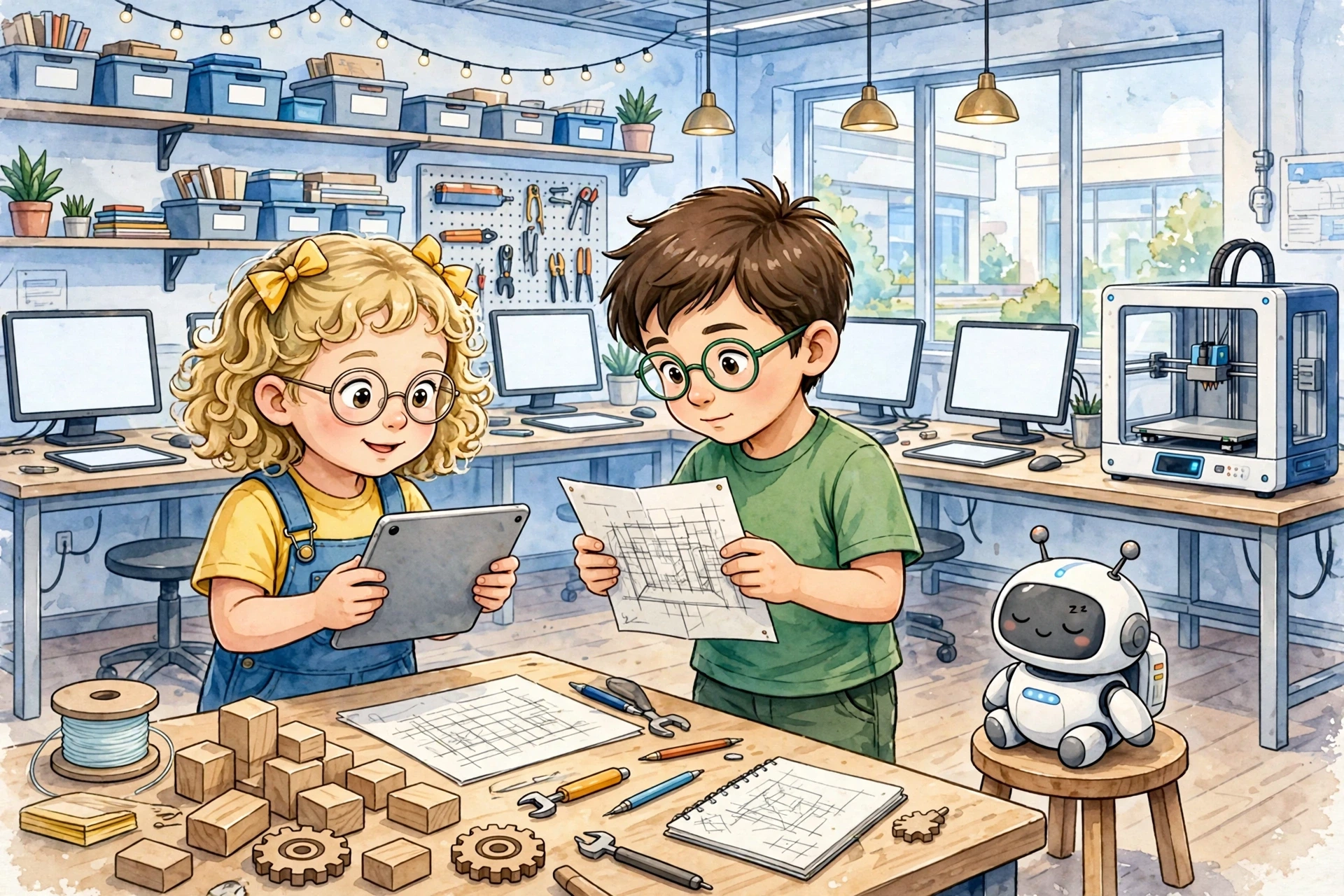
This image never appears in the story text. It’s an open invitation for your child to become the author of something new, using the words they’ve just learned.

6. Bring It Together (Days 6–7)
Your child retells the whole week in their own words — the original story, what they noticed in Image 1, and the new story they invented from Image 2. The family listens and celebrates; there’s nothing to correct. In a classroom, this doubles nicely as a weekly show-and-tell.