
AI Pre-Literacy Story 10: The House That Learns
Home — the house that learns · 10 words one per day · AI Pre-Literacy story
1. Story — Text-Based (Day 1-2: Imagination Studio)
Read this AI Pre-Literacy story with NO pictures first. Child becomes illustrator.
The house system arrives on a Saturday. A small white speaker in the kitchen. A small white sensor on every door. One small camera in the hall.
That is Ambient Intelligence — a house that is aware.
Lina is seven. Omar is eight. Pip stands by the doorway, tall and humanoid, blue light soft at the eyes.
“It learns,” says Grandpa. “I want to see if it can.”
When Lina walks into the kitchen, the light comes on. That is Motion Detection — the house knowing something moved.
When Grandpa says “good morning,” the kettle starts. That is Voice Recognition — the house knowing who is speaking.
On Monday, the house learns: Lina comes home at four. The hall light comes on at four. That is Routine Learning — a pattern the house has learned.
On Tuesday, the house makes a mistake. The cat walks past the camera at midnight. The house thinks it is Lina. It turns on the bedroom light.
That is a False Positive — the house thinks it sees something that is not there.
On Wednesday, the house makes another mistake. Grandpa wears a hat. The house does not know him. It does not open the door.
That is a False Negative — the house misses something that is there.
“It is trying,” says Lina.
“Trying is not enough,” says Omar.
Omar is worried. The house is always listening. Always watching. “Does it have to know everything?” he asks.
That is Privacy — keeping some things to yourself.
Grandpa nods. He opens the settings. He turns off the camera in the hall. He keeps the sensors on the doors.
“The house can help,” he says. “But a person must choose.”
That is Consent — a person saying yes or no.
Pip walks to the speaker. “Show me what it keeps.”
The speaker shows a small list. The door times. The light times. No voices. No faces.
“It thinks close to home,” says Pip. That is Edge Computing — the house thinking on its own, not sending everything away.
The house learns again. It learns the cat. It learns the hat. It learns to wait.
On Sunday, the house does something new. It does not turn on the light when Lina comes home. It waits. It asks.
That is Adaptive Automation — the house changing its own rules.
“Why did it wait?” says Lina.
“Because you came home early,” says Omar. “It did not know what to do. So it asked.”
The house asks: “Shall I turn on the light?”
Lina says yes. The light comes on.
The house is not the home. The people are the home.
Grandpa puts the tablet down. The kettle boils. The cat sleeps. And Pip stands by the doorway, tall and steady, blue light soft — because a house can learn, but a home must choose.
2. Image 1 — Association Anchor (Day 3-4)
Top of Image 1 — This is what you just read, now you can see it.
3. What is the purpose of this Image 1?
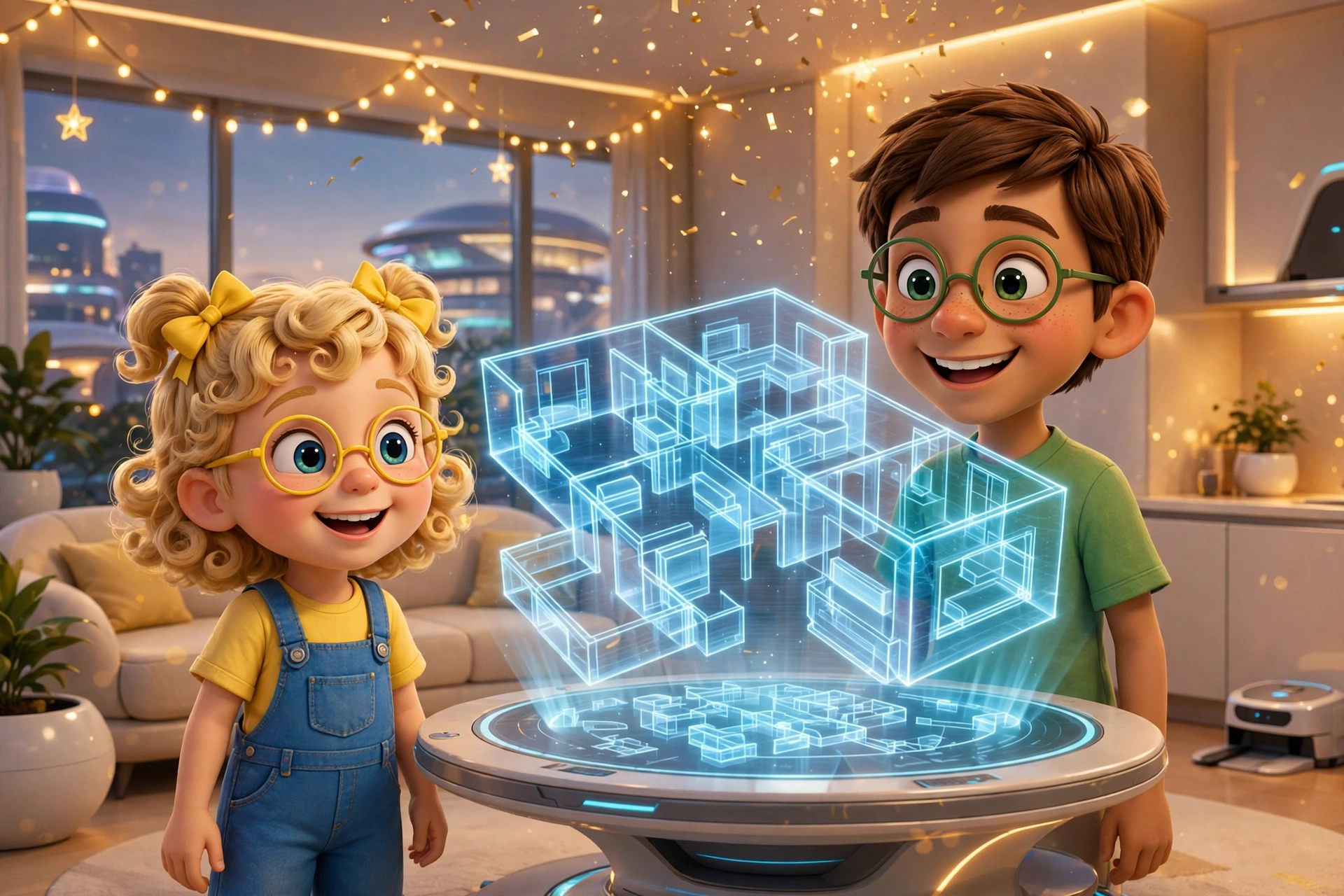
Direct resemblance to this AI Pre-Literacy story — the house on the morning the system wakes. The small white speaker in the kitchen glows soft blue. The sensor on the back door blinks once. The hall camera watches. That is Ambient Intelligence — a house that is aware. Lina — age seven, blue overalls, yellow shirt, round glasses — stands at the kitchen door with her hand on the light switch. That is Motion Detection — the house knowing something moved. Omar — age eight, green shirt, green glasses — stands by the hall camera with his arms folded. He is thinking about Privacy. Grandpa sits at the kitchen table with the tablet. Pip stands between them, blue light soft at the eyes. On the counter: the kettle, the cat on the windowsill, one bowl of apples.
Use Day 3-4: Point and name together — Where is the speaker? Where is the sensor? Where is the camera? Where is Lina standing, and what is her hand doing? Where is Omar standing, and what are his arms doing? Where is Grandpa sitting, and what is he holding? Where is Pip? Now look at the cat on the windowsill. That is the cat that will walk past the camera at midnight — the False Positive. Where is the hat that Grandpa will wear on Wednesday? It is not in this picture. That is the False Negative. The house will learn both.
4. Meet Your 10 Special Words — One Per Day
AI Pre-Literacy · Story 10 · Tap a card to hear the word
5. Quiz — Did You Catch It?
Story 10 Quiz — tap the answer
1. Which word means: “A house that is aware”?
2. Which word means: “The house knowing something moved”?
3. Which word means: “The house knowing who is speaking”?
4. Which word means: “A pattern the house has learned”?
5. Which word means: “The house thinks it sees something that is not there”?
6. Which word means: “The house misses something that is there”?
7. Which word means: “Keeping some things to yourself”?
8. Which word means: “A person saying yes or no”?
9. Which word means: “The house thinking on its own, not sending everything away”?
10. Which word means: “The house changing its own rules”?
6. Image 2 — Creator Prompt (Day 5: Imagination Studio)
This image is NOT in this AI Pre-Literacy story — this one is YOURS.
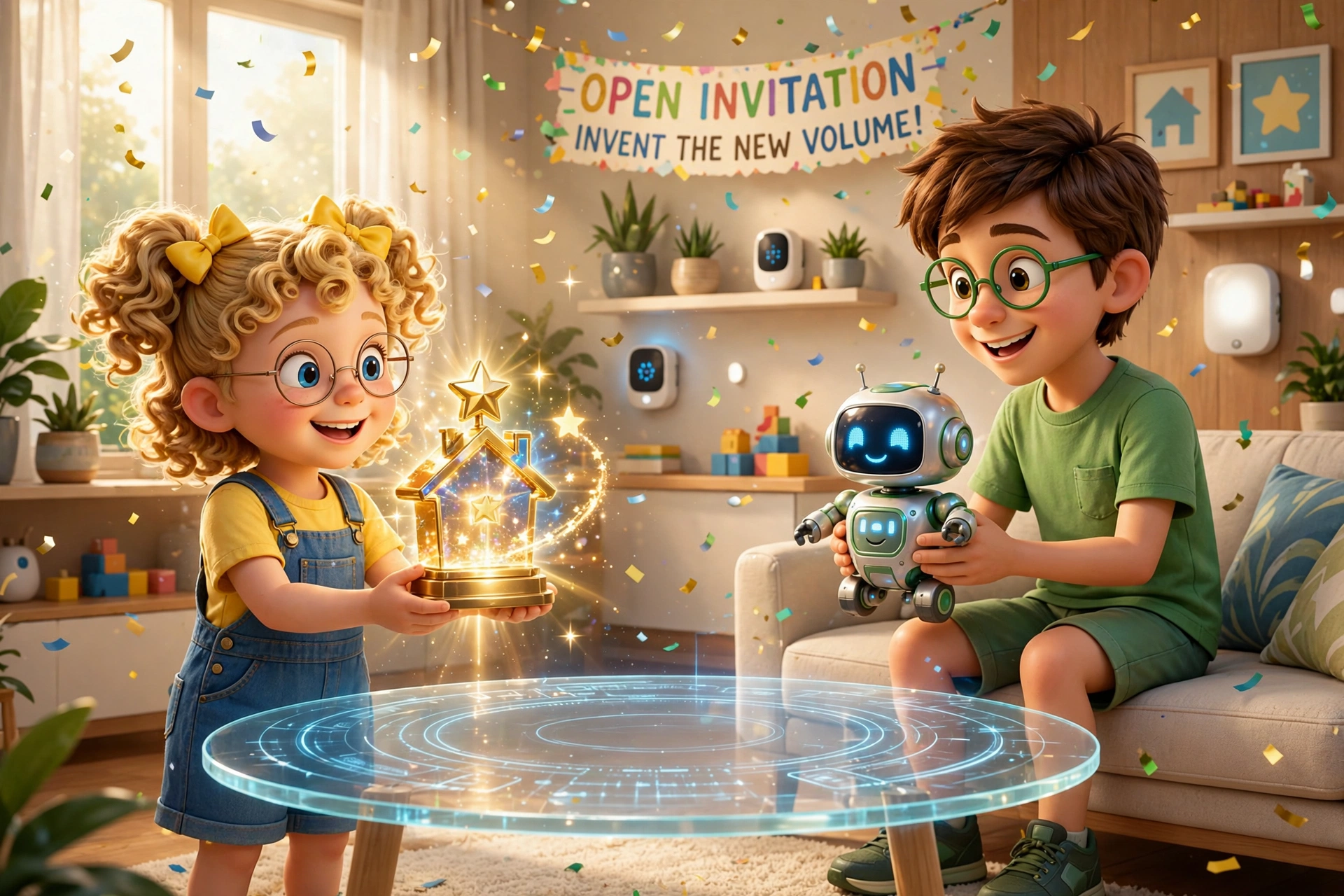
Look at this picture together. You already know Lina and Omar and Pip. You know what happened in the house that learns. Now this picture shows you something new — something that did not happen in the story.
Ask your child: Who is in this picture? Where are they? The hall camera is gone — a blank rectangle is drawn where it used to be. What should go there instead? Lina is holding a torch — what is she pointing at? Omar is holding a magnifying glass — what is he looking at? Look at the floor plan. Where should the new speaker go? What should it do? What rule should the house never change? What should the house always ask first? What does Privacy mean in your house? What does Consent look like? Where would you draw the Edge Computing — the part of the house that thinks on its own? What would the house learn to do that it cannot do yet?
Let your child tell you the story out loud. Do not correct it. There is no wrong answer.
Then, if they want to, they can draw it.
For Parents & Teachers
Loading…