
Creative Co-Pilots
Ten AI Pre-Literacy stories where children learn to build with a machine — not just judge it from the outside.
From judging AI to designing with AI.
In Volume 1, Lina and Omar learned to wonder. In Volume 2, they learned how systems work. In Volume 3, they learned to reason about fairness. In Volume 4, something new happens.
The children are no longer asking only “is this fair?” — they are asking “what am I building, and who holds the wheel?” The machine is a collaborator, not an authority. When Pip fails, it is not because Pip is bad. It is because Pip followed instructions too literally, learned from skewed data, lacked oversight, or could not perceive something a human could.
Each story introduces eight AI terms, woven into action — never defined in the abstract. The children imagine the story first, then see an anchor image, then invent a brand-new story of their own. By the end of Volume 4, they can describe how they would design the system differently, not just how they would behave differently.
Ten rooms. Ten failures. Ten designs.
Each story is set in a different learning space — a workshop, a flight simulator, a garden, an art room, a music room, a library, a maker space, a harbour, a living room, an attic. Read them in order, or begin anywhere.
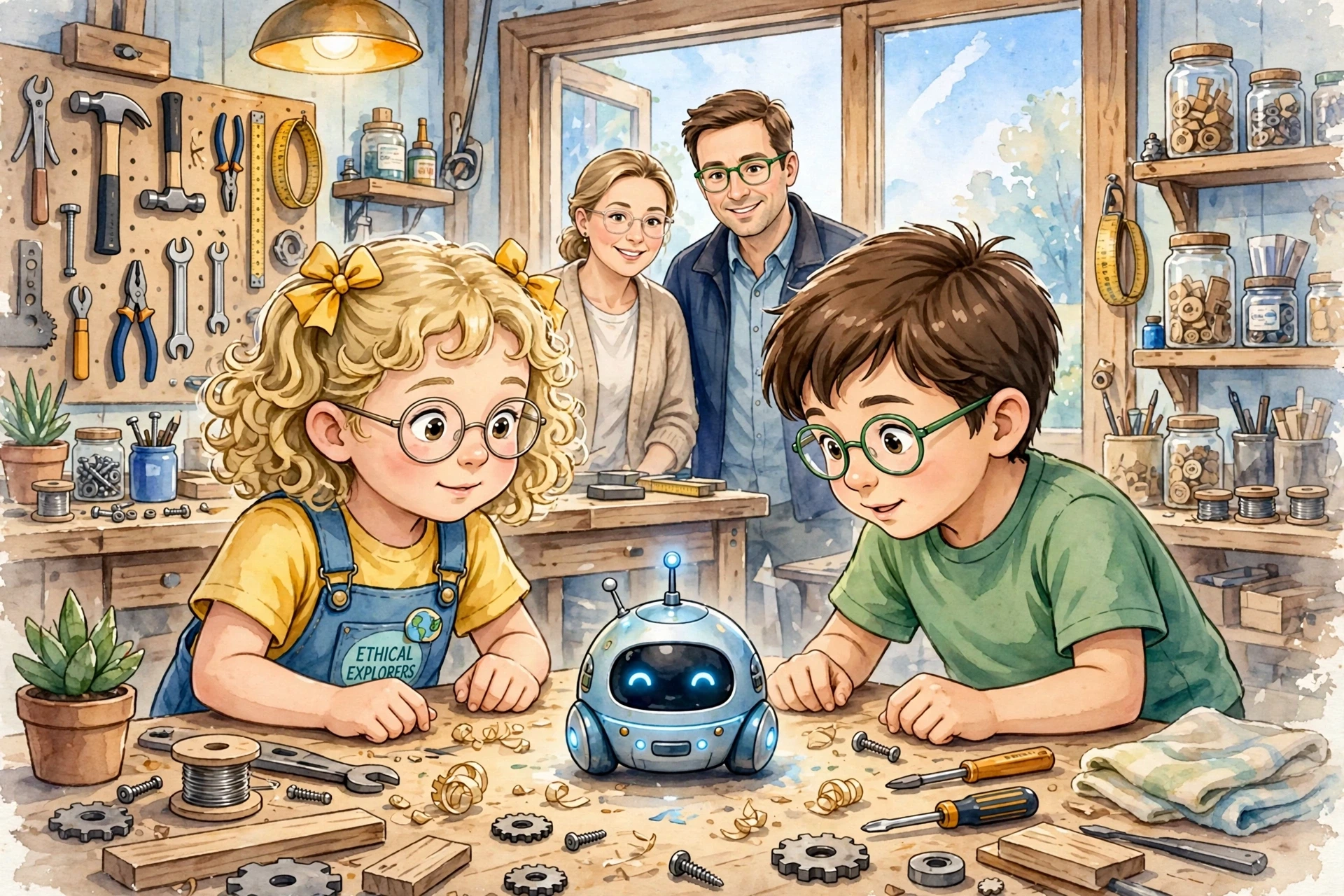 01
The Workshop Where Pip Learns to Listen
A misheard word, a broken birdhouse, and a listening bot who learns to ask before it moves.
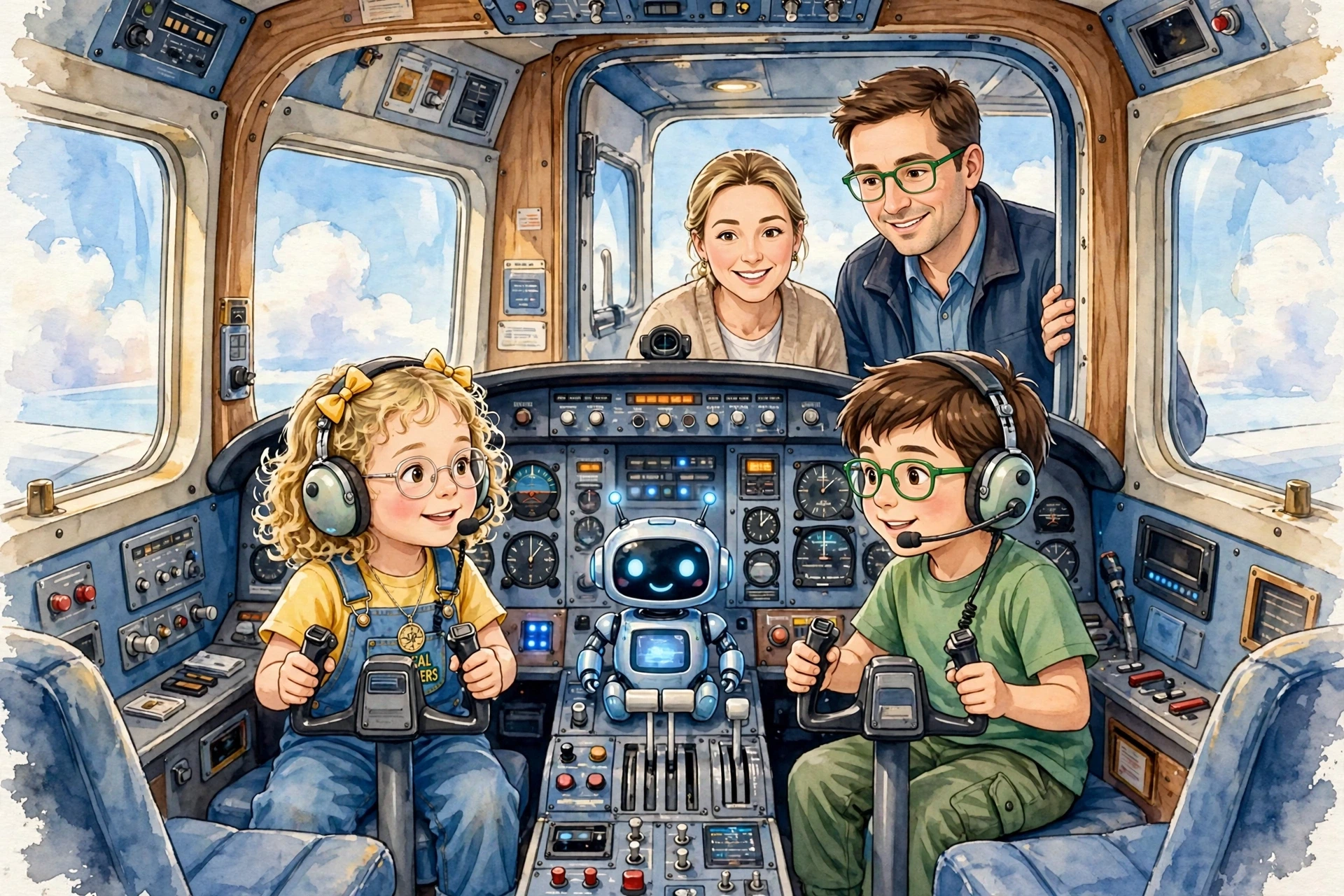 02
The Two Pilots
Two children, one flight simulator, and a copilot who waits for a yes before it takes the wheel.
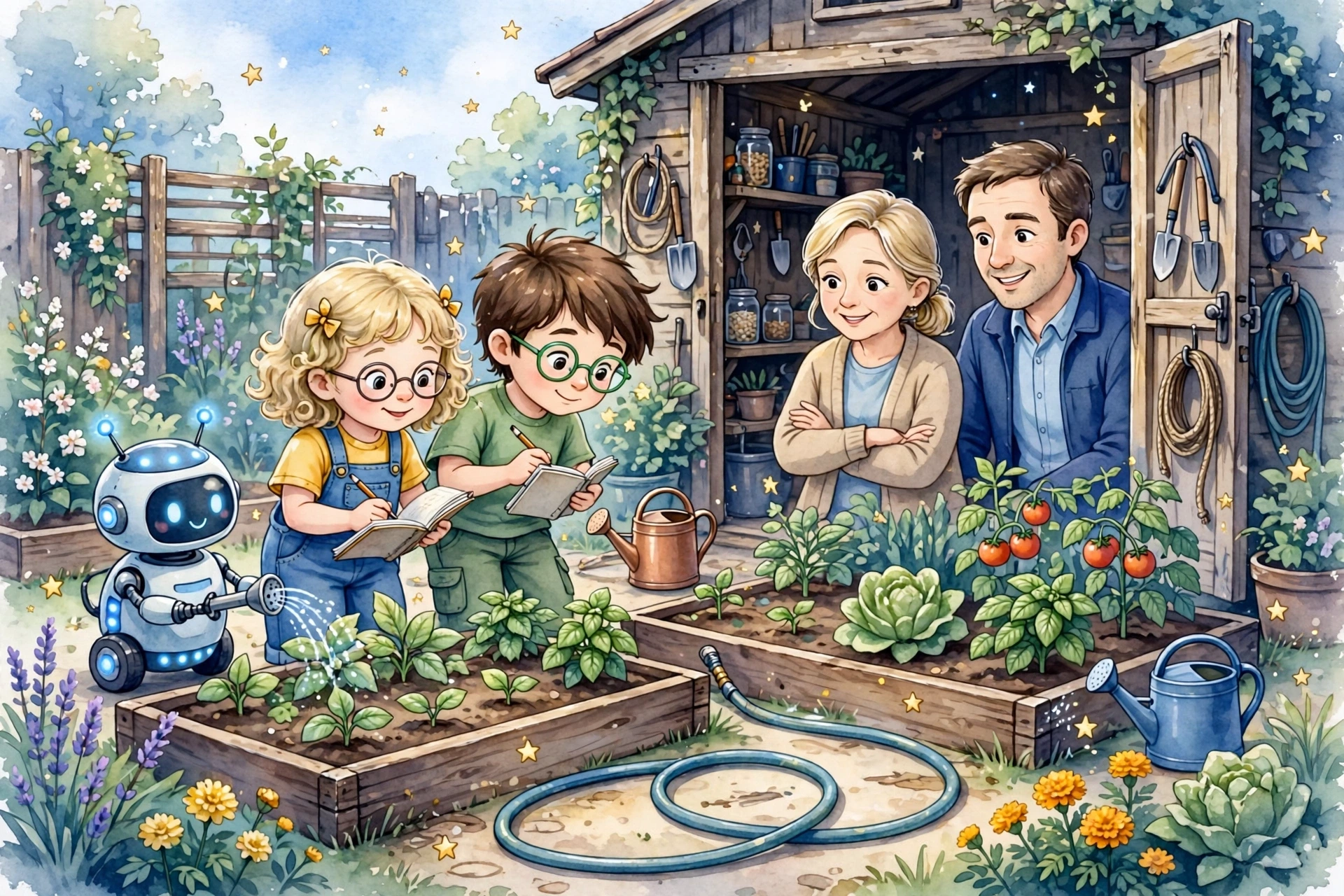 03
The Garden That Learns to Grow
A garden that waters itself — until the weather changes and last week’s numbers no longer fit.
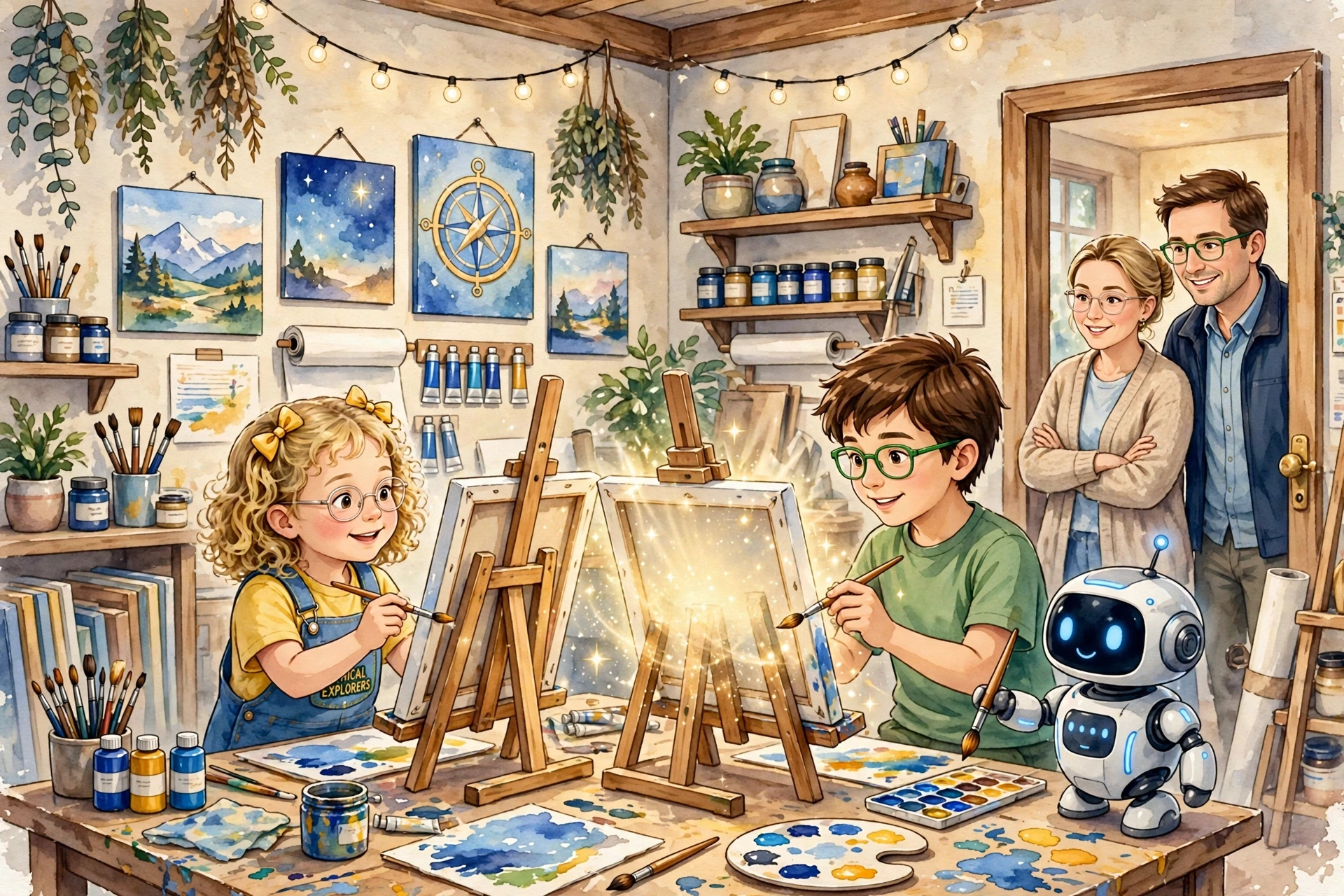 04
The Art Studio That Dreams
A drawing robot, a get-well card, and a robin that keeps coming out wrong — until the children show Pip the real garden.
 05
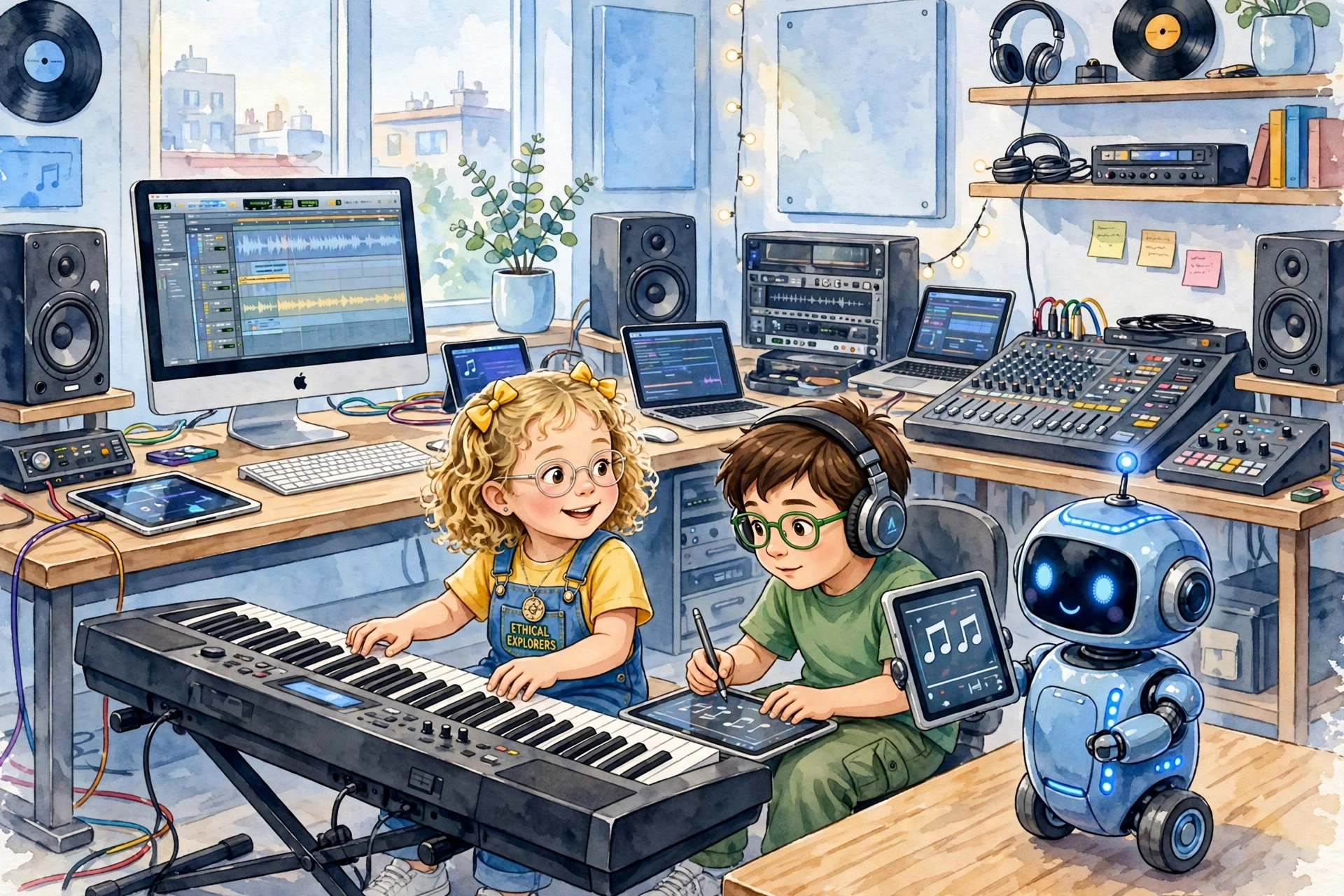
The Music Room That Sings
A robot that sings half a beat too late — and two children who learn to see the sound, not just hear it.
 06
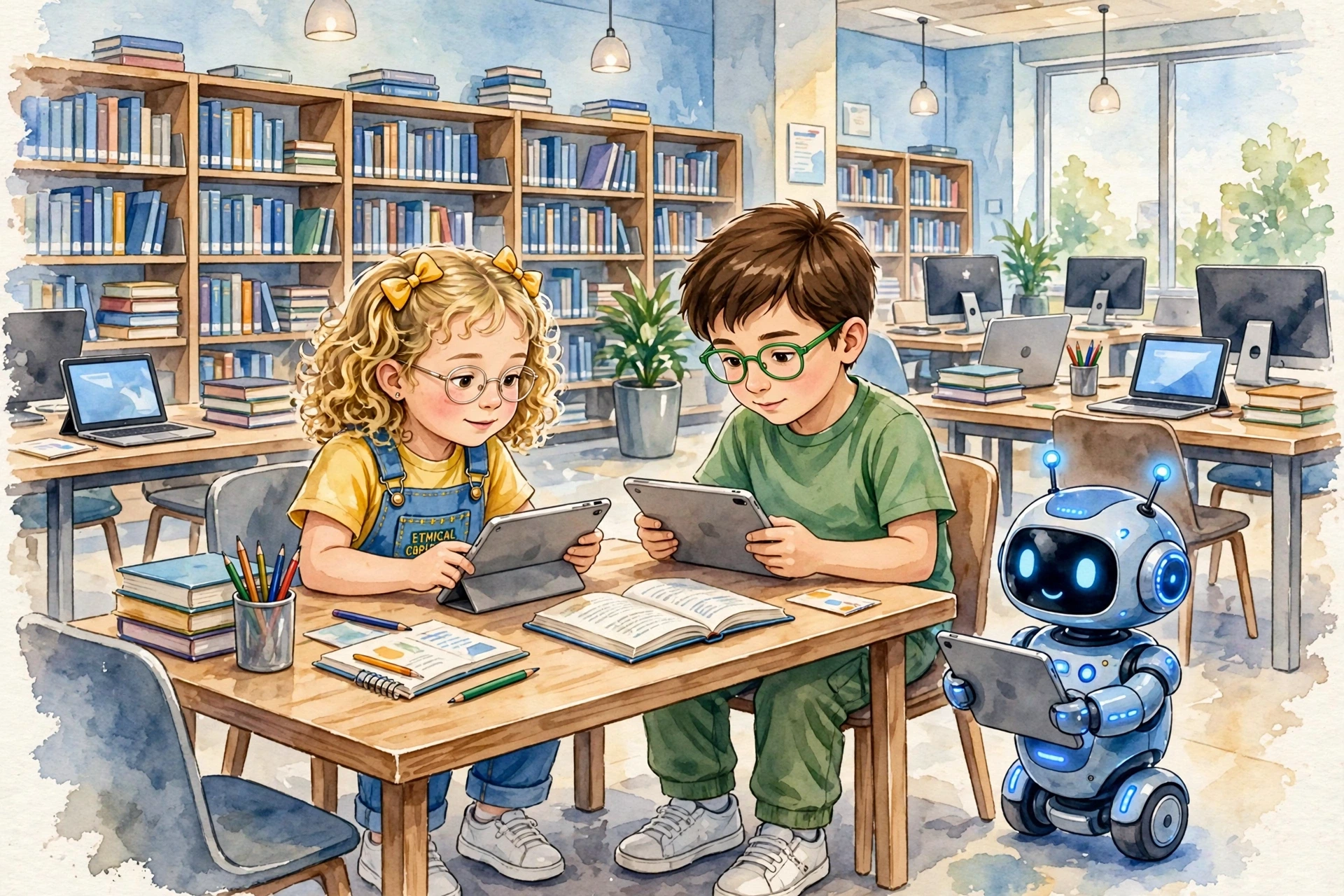
The Library That Remembers
A library robot that says bees sleep on the moon — and the reading habits that make it honest again.
 07
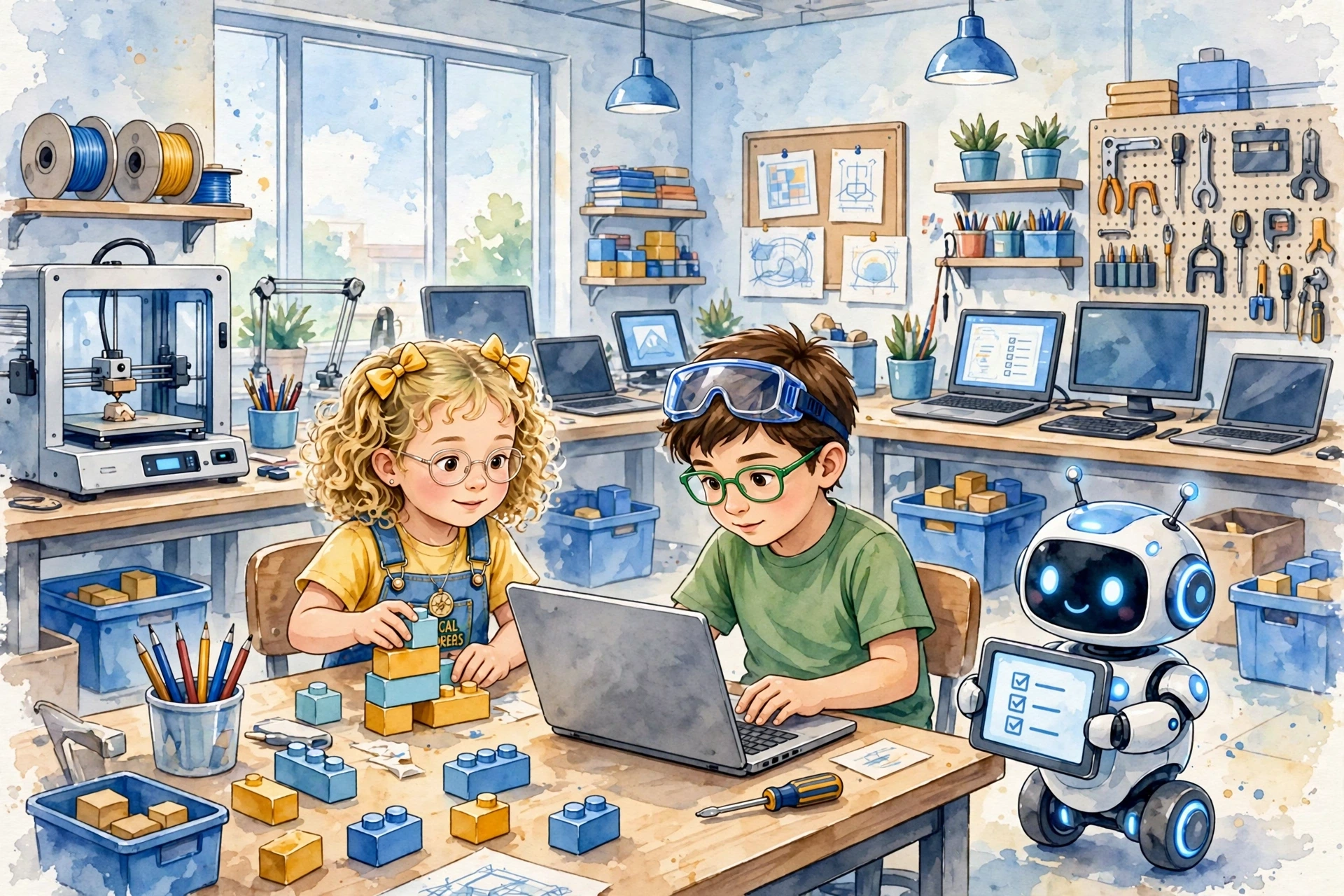
The Maker Space That Builds Kindly
A leaning tower, a lost weekend, and five rules the children write on the workshop wall.
 08
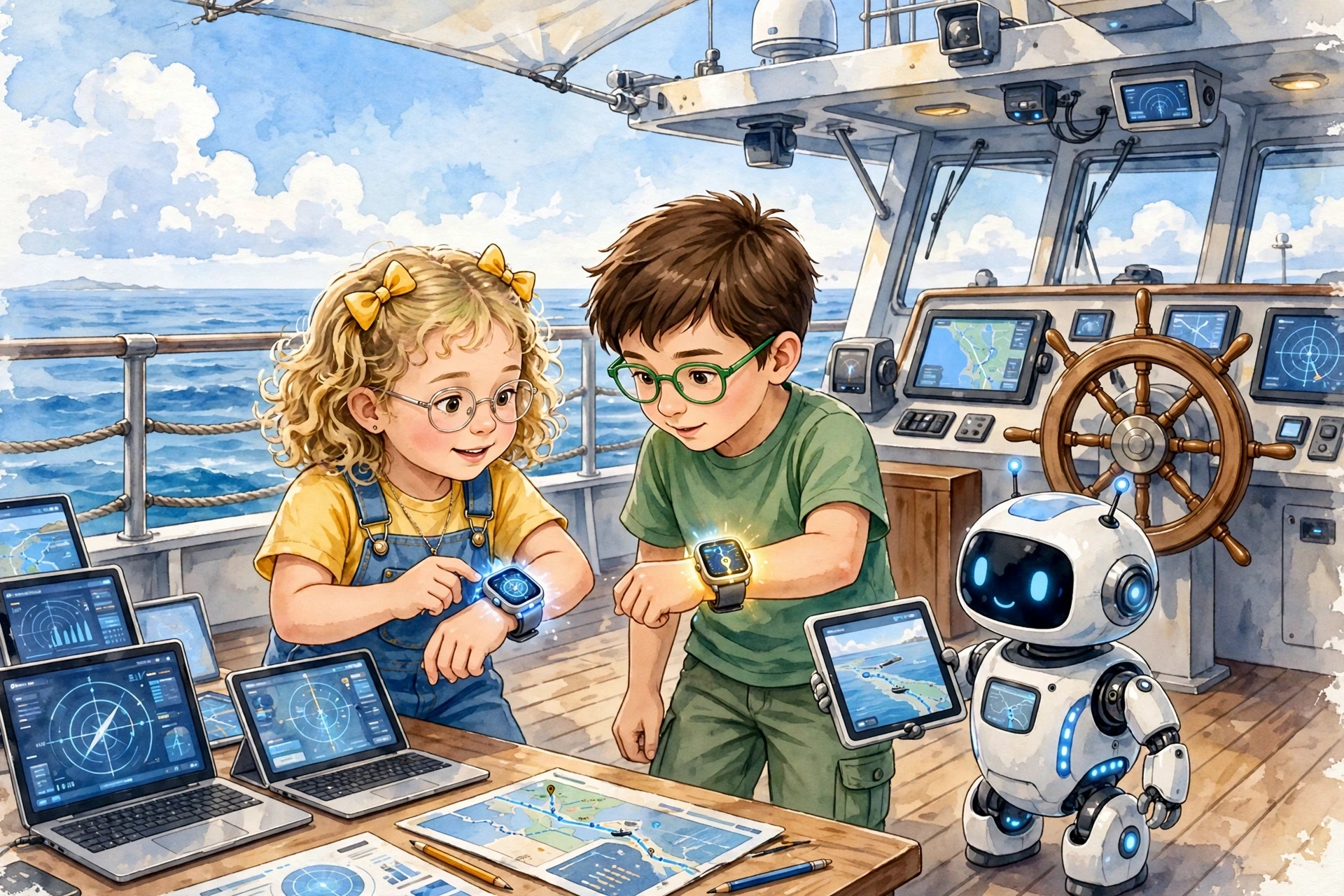
The Ferry That Finds Its Way
A ferry caught in fog with half its signals lost — and three honest sources of truth the children blend together.
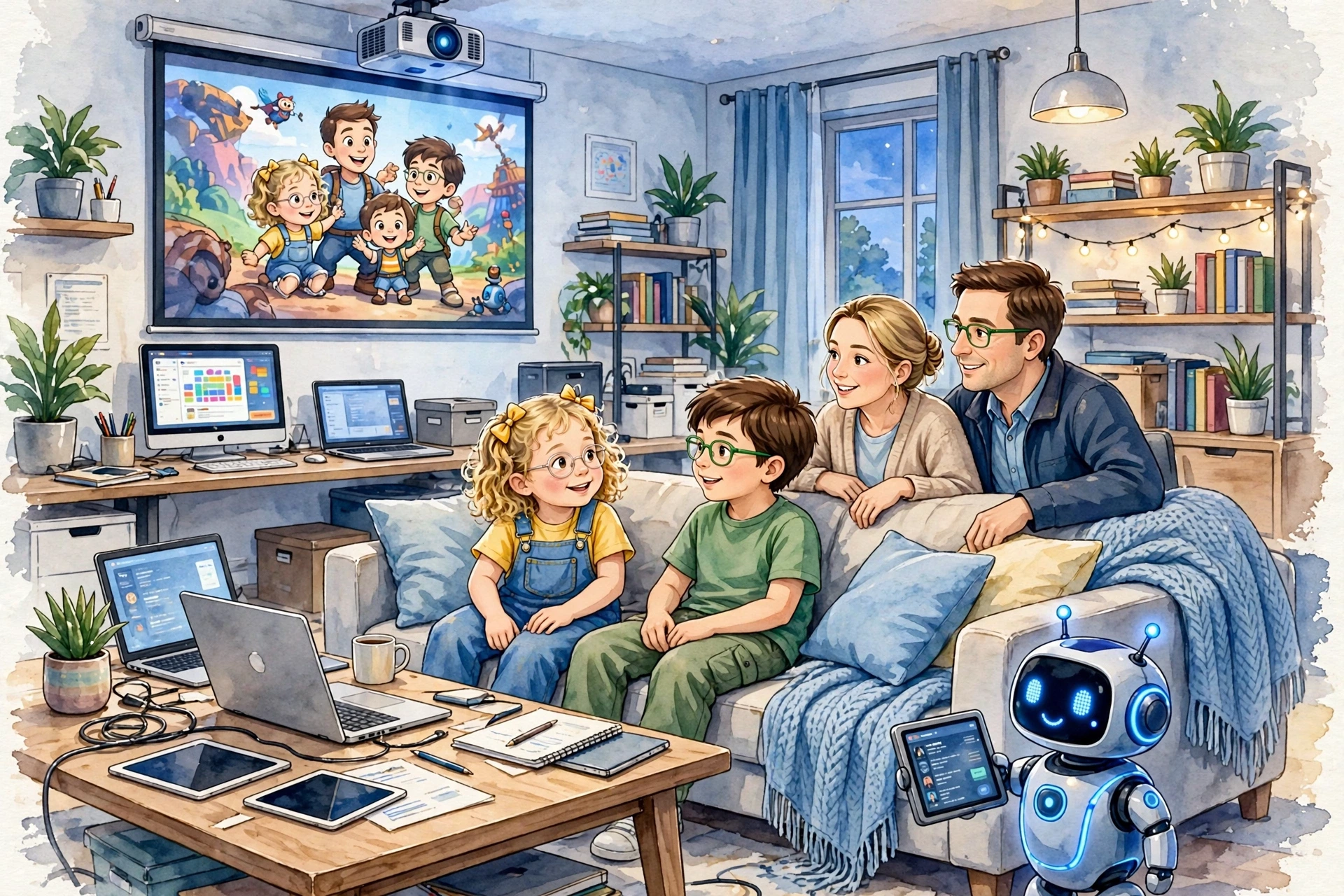 09
The Living Room Premiere
A family cartoon that Pip keeps drawing wrong — and a machine that sees the world differently than we do.
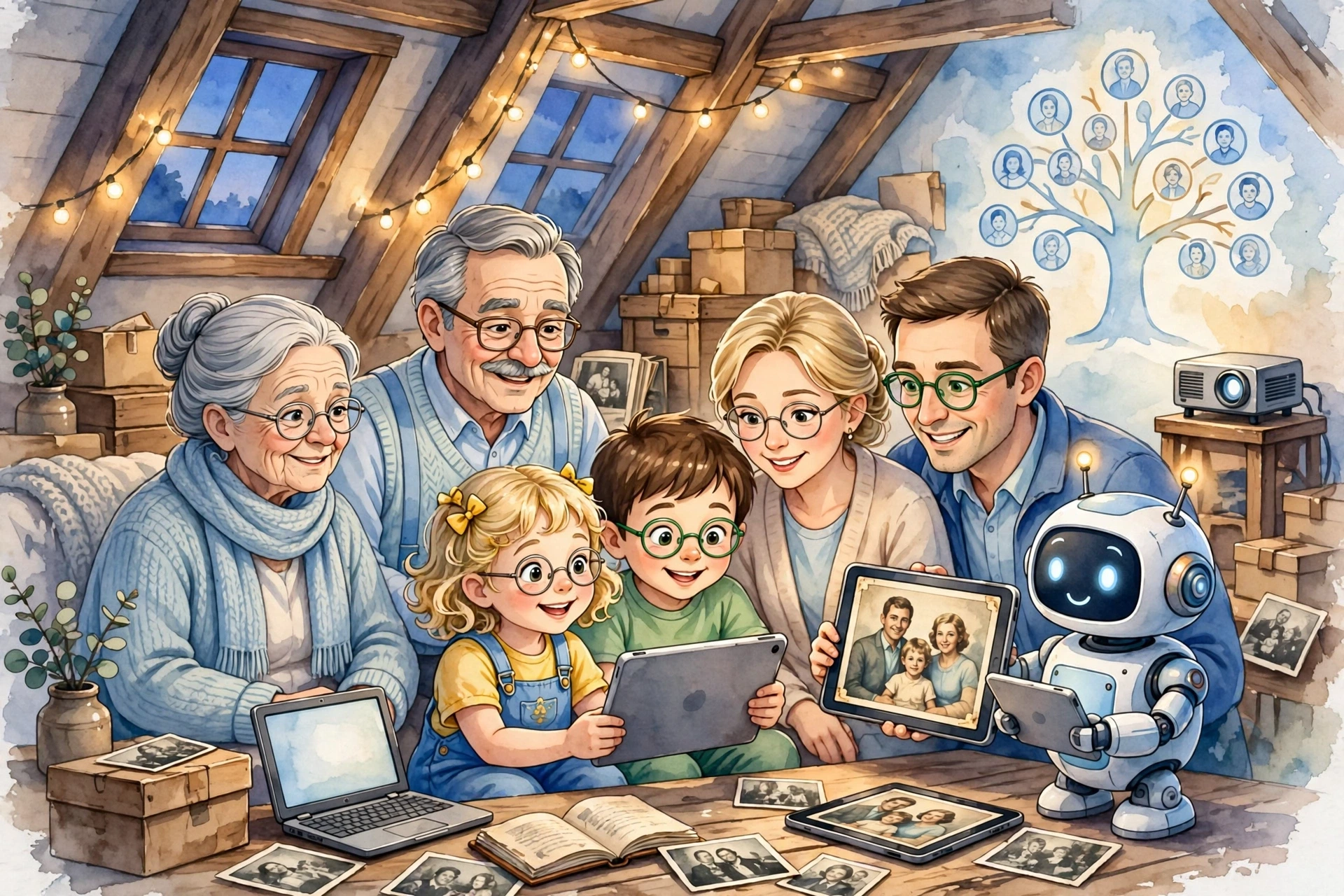 10
The Attic That Remembers
An attic full of photos, one small box, and a choice only the children can make — what matters.
A five-day rhythm for every story.
Wonder Algorithm is designed for a shared screen and a grown-up nearby. No autoplay. No points. No scores. Just reading, imagining, and inventing — at the pace of a child.
Read the story first — no pictures
The child hears the story before seeing anything. They become the illustrator in their own mind.
See Image 1 — the anchor
The scene they imagined is revealed. Point and name together. The anchor confirms what they built.
Meet one word a day
Eight AI terms per story — each woven into action, never defined in the abstract. Tap a card to hear it.
Take the quiz — gently
Eight questions. Tap the answer. No timer, no score, no pressure. The quiz is a check-in, not a test.
Invent a new story from Image 2
Image 2 is not in the story. It is a blueprint of the same day — and the child is the author of what happens next.
Parents & Teachers Guide
A short, printable guide for every story — how to read it aloud, what questions to ask, what to say when a child disagrees, and how to let the child be the author of Image 2. Everything is gentle, screen-shared, and designed to fit into a real afternoon.