AI Pre-Literacy Begins with the Human Child—not the Technology
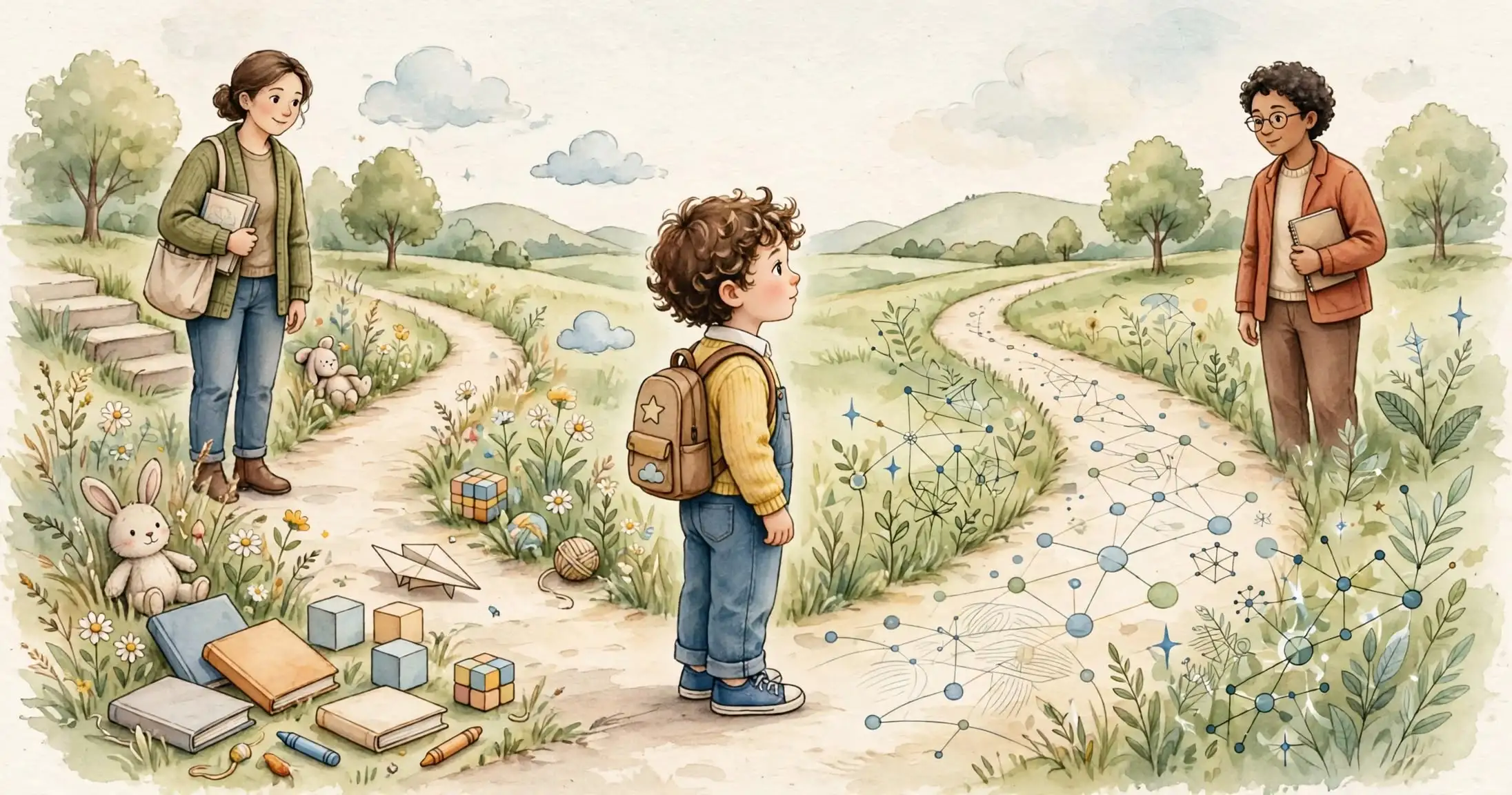
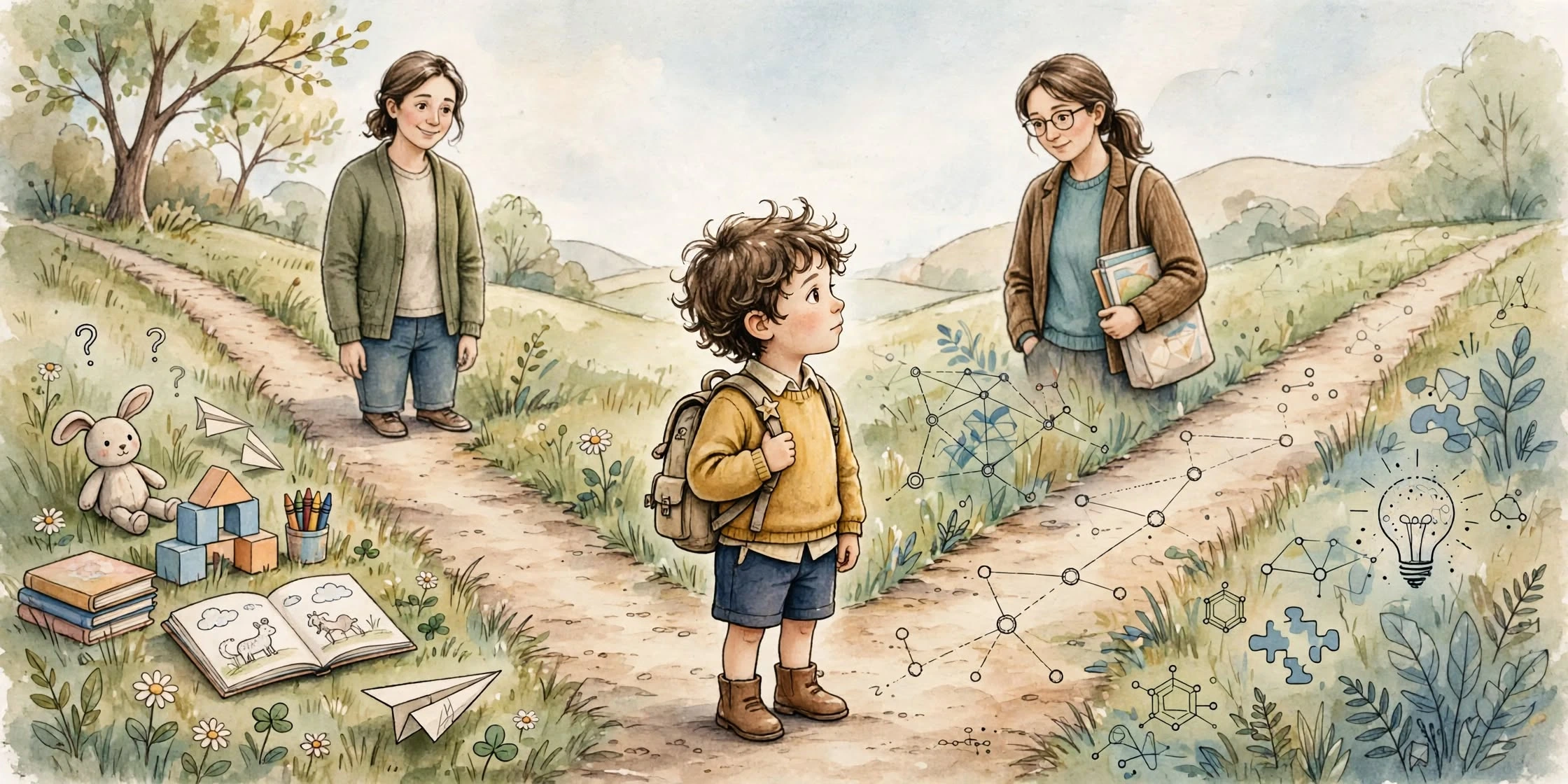
Preparing young children for an AI-driven world does not begin with teaching AI. It begins with strengthening the human capacities through which children understand the world.
Building Feature Minds
Preparing young children for an AI-driven world does not begin with teaching AI. It begins with strengthening the human capacities through which children understand the world.
AI literacy tells us what learners should understand and do. But what must develop in a young child before those competencies can meaningfully begin?
Children may encounter AI before they know that AI is present. This raises a fundamental question: what developmental foundations should come before formal AI literacy?
Everyone is racing to teach kids AI literacy. Almost no one is asking what has to come before it.
AI literacy frameworks typically begin around age 8 — and rightly so. They focus on skills: how AI works, how to use it, how to evaluate it. But the years before age 8 are not a waiting room. They are the prime years.
In those years, children form the foundations that make later AI literacy possible at all: the vocabulary to question AI, the cognitive sense-making to grasp what it is and is not, the early trust calibration that becomes healthy scepticism, the socio-ethical awareness to notice unfairness, and the empathic attunement that keeps human relationships primary.
We call this AI Pre-Literacy — “pre” as in prime, not before. And we’ve built 12 free games for ages 3–8 to help.
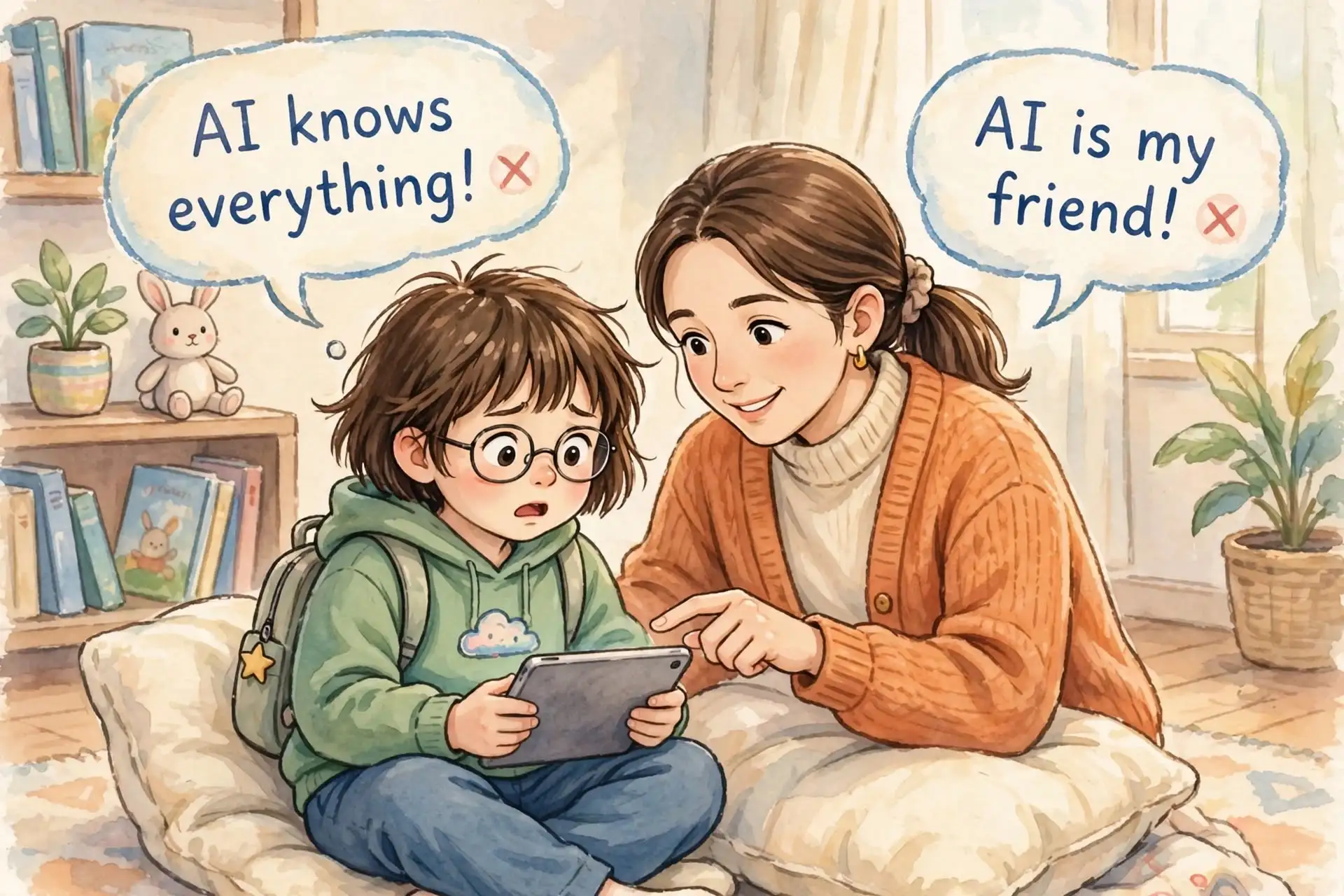
“Alexa knows everything.”“The robot is my friend.”“If the tablet says it, it must be true.” If your child has ever said something like this, they are not alone. Children worldwide are forming ideas about artificial intelligence—and many of those ideas are not true. Research shows that children develop misconceptions about AI based on what they … Read more
“Mom, how does Alexa know the answer?”“Dad, why does the tablet always know what I want to watch next?”“Where does the voice come from?” If your child has ever asked a question like this, they are already showing you something important: they are ready to learn about AI. Many parents wonder when the “right time” is … Read more
Discover why AI vocabulary matters more than coding for young children. Backed by UNESCO, OECD, and early childhood research.